The objective of this study is to evaluate the effect of preoperative embolization on carotid body tumor resection. A systematic review and meta-analysis were conducted following the Preferred Reporting Items for Systematic Reviews and Meta-Analyses (PRISMA) statement. PubMed, Scopus, and Web of Science were screened for studies published between 2010 and 2022. Primary outcomes investigated were intraoperative blood loss, operative time, length of hospital stay, and perioperative complications such as transient ischemic attack (TIA)/stroke, vascular injury, and cranial nerve injury (CNI). A random effects model was used in cases where study heterogeneity was high. Overall, 25 studies were included in the systematic review, involving 1649 patients: 23 studies were eligible for meta-analysis. The incidence of vascular injury was significantly less in the preoperative embolization group (odds ratio (OR) = 0.60; 95% CI: 0.42–0.84; P = .003). There was no statistically significant difference between the two groups regarding intraoperative blood loss, operative time, length of hospital stay, incidence of TIA/stroke, and CNI. Subgroup analyses did not demonstrate significant difference between Shamblin I, II, and III subgroups regarding operative time. This meta-analysis found preoperative embolization to be significantly beneficial in reducing incidence of vascular injury.
Introduction
Carotid body tumors (CBTs) or carotid body paragangliomas are rare neoplasms originating from the glomus (chemoreceptor) cells of the carotid body, located at the bifurcation of the common carotid artery.1 They make up approximately 60%–70% of all head and neck paragangliomas2 and have an incidence ranging from 1 in 100,000 to 1 in 30,000 individuals.1,3 A higher prevalence is observed among females, with a ratio reported between 1.4:1 and 4:1.4 Typically, these tumors are diagnosed during the fourth and fifth decades of life.4 They are highly vascularized, often receiving supply from branches of the external carotid artery (ECA).
Patients are commonly asymptomatic at presentation with a painless mass on the anterior neck. Characteristically, the tumor can be displaced laterally but their vertical movement is limited (Fontaine’s sign).5 Patients start to develop symptoms including hoarseness, dysphagia, stridor, and foreign body sensation6 once the tumor gets large enough to compress nearby structures (mainly glossopharyngeal, vagus, accessory, and hypoglossal nerves).
A diagnosis is made through clinical examination and imaging. Commonly used imaging modalities are computed tomography (CT) and magnetic resonance angiography (MRA), although digital subtraction angiography remains “gold standard.”7 CBTs are classified using the Shamblin classification which divides the tumors into type I (small tumors with minimal vascular attachment), type II (large tumors without total encasement of carotid arteries), and type III (large tumors encasing the carotid arteries completely).8
The management of CBTs can be conservative (i.e., radiotherapy) or surgical.1 The primary goal of surgical management is complete resection while preserving vascular integrity and minimizing complications associated with cranial nerve injury and carotid artery involvement. Preoperative embolization of CBTs has been proposed by Shick et al.9 in 1980 as a technique to reduce operative blood loss and perioperative complications. However, the literature presents varying results concerning the efficacy of this technique, and it is not currently included in any established guidelines for CBT resection. Therefore, use of preoperative embolization depends largely on surgeon preference and tumor size.
Preoperative embolization is often carried out 24–48 h prior to surgery via a trans-arterial or percutaneous (direct intralesional) route.10 Variable embolic agents can be used including those comprising of polyvinyl alcohol (PVA) or microcoils.11
The aim of this study was to analyze the effect of preoperative embolization on operative time, intraoperative blood loss, postoperative hospital stay, and perioperative complications such as transient ischemic attack (TIA)/stroke, vascular injury, and cranial nerve injury in CBT resection surgery.
Methods
A systematic review and meta-analysis were conducted according to the Preferred Reporting Items for Systematic Reviews and Meta-Analyses (PRISMA) 2020 statement.12
Eligibility Criteria
All studies reporting data on patients who were managed with surgical resection for a CBT and make comparisons on operative time, intraoperative blood loss, postoperative hospital stay, and perioperative complications between patients who have received preoperative embolization and those who have not were included in this study. All systematic reviews, meta-analyses, and case reports were excluded. Studies in a language other than English and studies published before Jan, 1, 2010 were excluded. Older studies were excluded to limit bias and comparability in results due to differences in technology and embolic agents used. 2010 was selected as the cutoff year as newer embolization technology was introduced around this year that was then utilized by some of the recent studies. A sharp increase in papers published in CBT embolization is also seen in 2010.
Information Sources
A literature search was conducted on PubMed, Scopus, and Web of Science. In order to include articles that have very recently been accepted for publication, we also screened articles in press for the following journals: European Journal of Vascular and Endovascular Surgery, Journal of Vascular Surgery, Angiology, Journal of Cardiothoracic Surgery, Journal of Thoracic and Cardiovascular Surgery, European Journal of Cardiovascular Surgery, and Annals of Vascular Surgery. The last date of access to these sources was December 26, 2022.
Search Strategy and Selection Process
There were no filters or limits used except for the language (English) and the publication date. Keywords such as “carotid body tumor,” “carotid body paraganglioma,” “paraganglioma,” “carotid paraganglioma,” and “glomus carotid body tumor” were combined with keywords such as “surgical resection,” “embolization,” “tumor embolization,” “preoperative embolization,” “embolism,” and “resection” to conduct the search. On PubMed, medical subject headings (MeSH terms) were identified and used whenever possible. The keywords were connected via AND and OR Boolean operators. Details of the search query are provided as a supplementary document in the appendix (Appendix A).
The search results were pooled on Endnote (version 20). The same software was used to scan for duplicates in the search results. The list of duplicates was manually scanned before deletion to avoid mistakes related to the software used. The remaining results were screened based on title, abstract, and patient characteristics. Eligibility assessment was carried out using the predetermined inclusion and exclusion criteria. A PRISMA flowchart was used to demonstrate the results.
Data Extraction and Outcomes
Data regarding study name, publication year, study design, patient enrollment period, country, total number of patients, patient characteristics such as gender and mean age, mean tumor diameter, Shamblin classification, type of embolization, embolic agent used, time from embolization to surgery, and follow-up period were extracted.
Data regarding outcomes of mean operative time, intraoperative blood loss, postoperative hospital stay, and incidence of perioperative complications such as TIA/stroke, vascular injury, and cranial nerve injury were extracted. While extracting data for cranial nerve injuries all reports of temporary or permanent nerve paralyses were included. While extracting data for vascular injury, all reports of vascular events during surgery such as artery rupture, resection, ligation, or reconstruction were included.
Two authors (M.G.K. and D.B.) completed data extraction independently from each other. Extracted data were cross-checked for any inaccuracies. A third author (S.R.) was consulted to resolve any disagreements.
A dataset was formed from the extracted data and was demonstrated using a Microsoft Excel (version 16.49) spreadsheet.
Data Preparation Measures
Any missing data was identified with a “-” on the dataset. In cases where multiple data were provided for a single outcome within one patient group (i.e., operative time reported per Shamblin grade in an embolization group), a weighted average was calculated in order to obtain one single data point for that outcome or characteristic. Where standard deviation was missing, the equation provided by Hozo et al.13 was used to calculate mean and standard deviation from median and interquartile range (IQR).
Risk of Bias Assessment
Risk of bias was determined using the Newcastle-Ottawa Scale (NOS). Bias was assessed for each study on 3 domains: selection, comparability, and outcome assessment with a maximum attainable score of 9. Funnel plots and Egger’s regression test were used to assess possible publication bias for each outcome with ≥10 selected studies.
Data Synthesis and Analysis
RevMan (version 5.4, The Cochrane Collaboration, London, UK) was used as software to conduct the statistical analysis. For continuous outcomes, standardized mean difference (SMD), 95% confidence intervals (CIs), and P-value are reported. For dichotomous data, an odds ratio (OR) is reported, with 95% confidence intervals. Heterogeneity was assessed by utilizing Higgins I2 statistic. I2 <50% indicated low heterogeneity, whereas I2 >50% was considered indicative of significant heterogeneity. A random effects model was preferred in cases where there was high study heterogeneity. Results were demonstrated with the use of Forest plots.
Results
Study Selection
The study selection process is demonstrated in Figure 1. A total of 2320 studies were identified during the initial search; 1081 of them were duplicates and were removed. The remaining 1239 studies were screened on title and abstract for eligibility criteria; 952 studies were removed on the grounds that they reported data on other paragangliomas, focused on diagnosis of CBTs rather than management of it or reported data on patients managed conservatively.
Figure 1. Preferred reporting items for systematic reviews and meta-analyses (PRISMA) flowchart. CBT indicates carotid body tumor.
The remaining 287 studies were assessed on their full text; 262 studies were excluded for failing to meet the eligibility criteria. Most common reason of exclusion was the study being a case report. Finally, 25 studies in total were eligible for systematic review and 23 studies were eligible for meta-analysis.
Study and Patient Characteristics
Characteristics of the selected studies are summarized in Tables 1 and 2. Twenty-four studies were retrospective studies, and one study14 was a randomized trial. Of total, 1649 patients were included in total, 663 were managed by preoperative embolization followed by a surgical resection of the tumor (EMB) whereas 986 were managed by surgical resection alone (NEMB). Patient enrollment period ranged from 1972 to 2020.
Table 1. Study Characteristics of Included Studies.
All studies reported embolization via a trans-arterial route. The most frequently used embolic agent was polyvinyl alcohol (PVA). Time from embolization to resection of the tumor ranged from 0 to 144 h, although embolization was carried out within 48 h before surgery at most centers.
Patient characteristics of selected studies are summarized in Table 3. Overall, more female patients were enrolled than male patients. The pooled mean age was 54.67 ± 8.96 years. The mean tumor size in the embolization group was 4.49 ± 0.44 cm (range 3.5 to 6 cm), while in the non-embolization group, it was 3.98 ± 0.56 cm (range 3 to 5.09 cm). This was statistically comparable between the two groups (P > .05).
Table 3. Patient Characteristics of Selected Studies.
Five studies17,18,22,27,36 did not report Shamblin classification. Two20,33 studies did report it but did not differentiate between the embolization and non-embolization groups. Regarding those studies that did report the Shamblin groups specific for each patient group, the total number of patients with each Shamblin grade were more or less equal in the embolization and the non-embolization groups.
Outcomes
The primary outcomes (operative time, intraoperative blood loss, post-op hospital stay, TIA/stroke, vascular injury, and cranial nerve injury) of this study are summarized in Table 4. Two studies31,33 were excluded from the meta-analysis as they had missing data making the calculation of standard deviation not possible. The results of the meta-analysis are demonstrated in Figures 2–3.
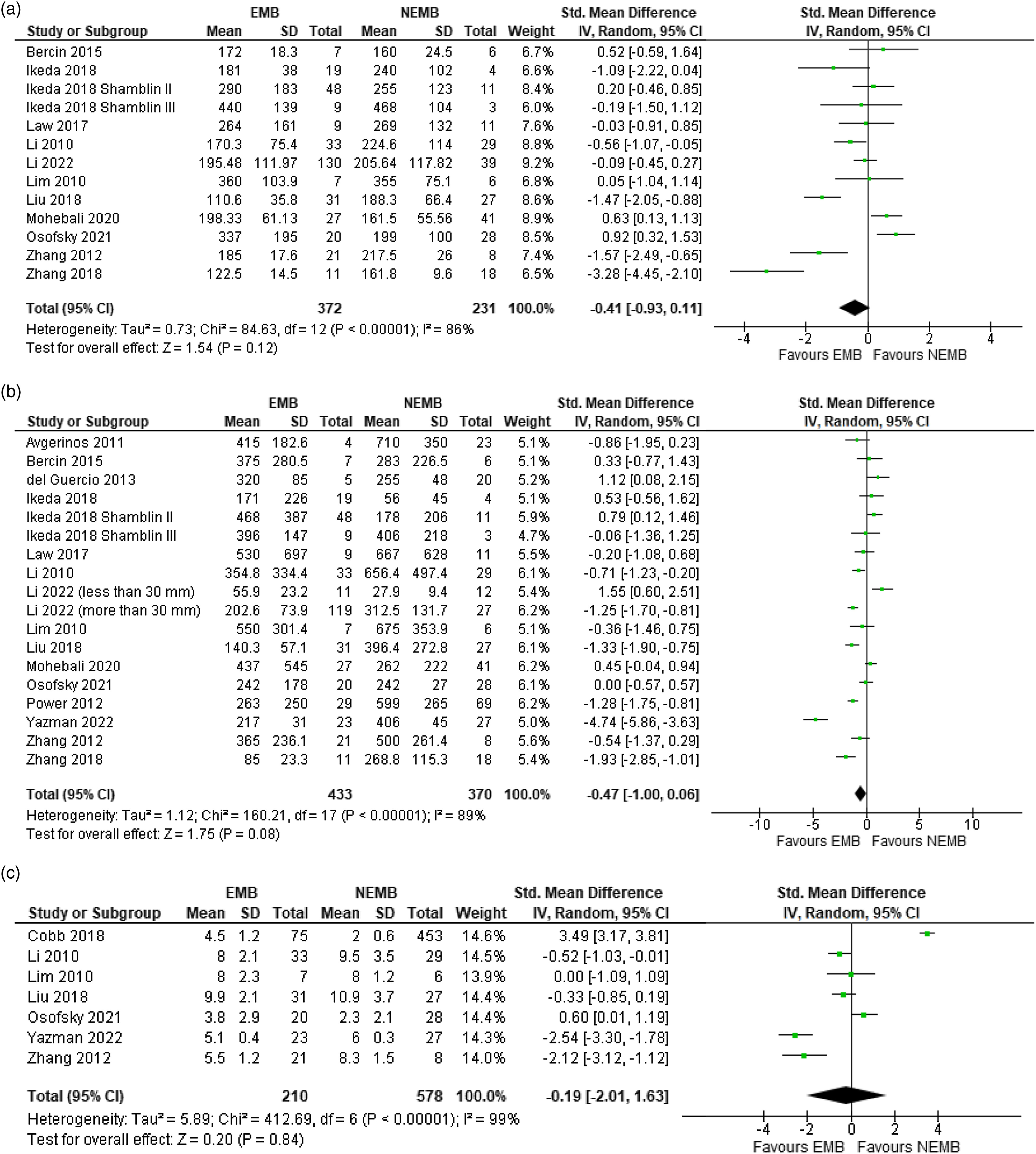
Figure 2. Forest plots comparing operative time (a), intraoperative blood loss (b), and post-operative hospital stay (c) in embolization (EMB) and non-embolization groups (NEMB). CI indicates confidence interval.
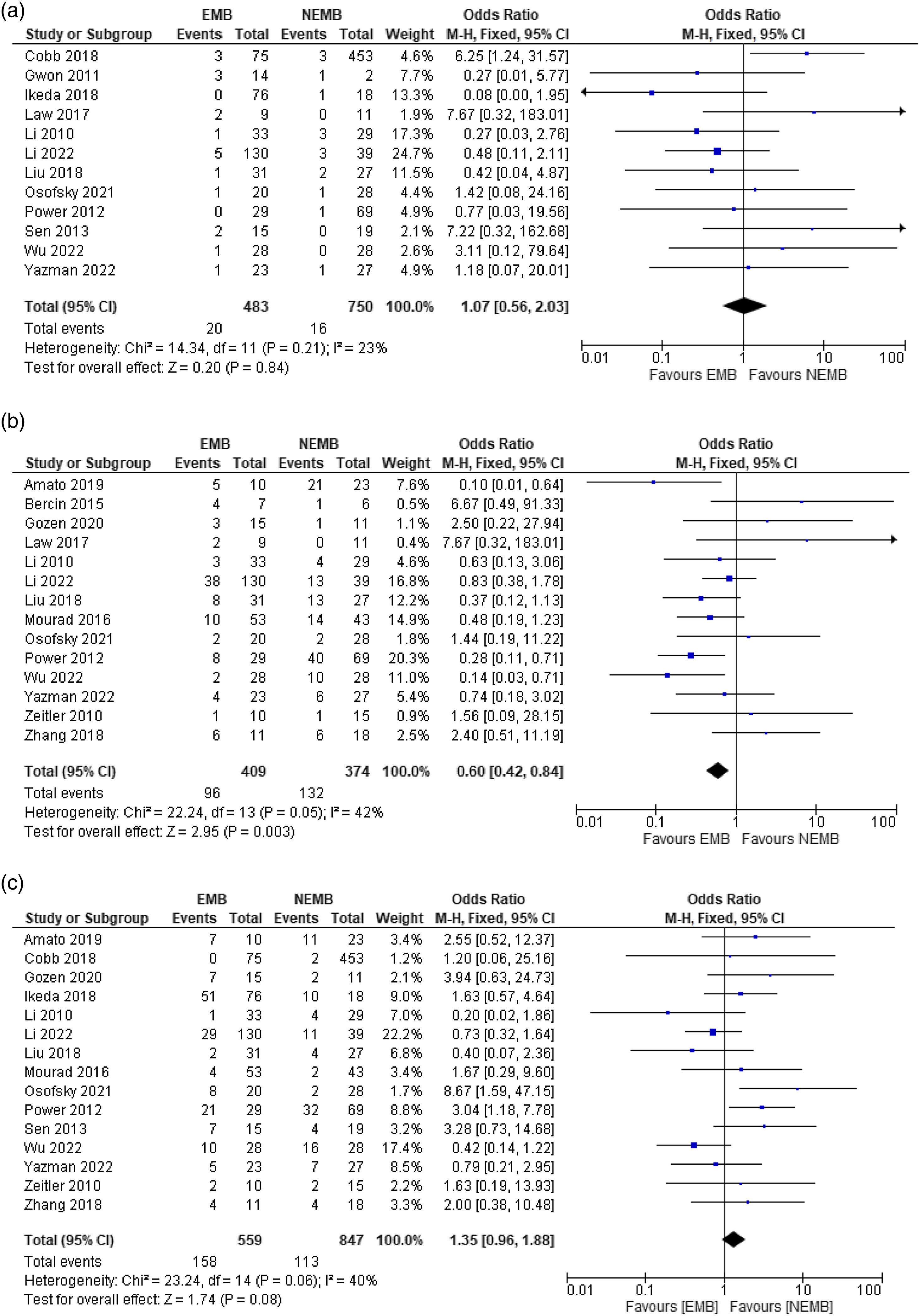
Figure 3. Forest plots comparing incidence of transient ischemic attack (TIA) and stroke (a), vascular injury (b), and cranial nerve injury (c) in embolization (EMB) and non-embolization groups (NEMB). CI indicates confidence interval.
Operative Time
Eleven studies16,21–27,29,37,38 reported data on mean operative time. Pooled analysis demonstrated that there was no statistically significant difference in operative time between those patients who were treated with preoperative embolization and those who were not (SMD = −0.41; 95% CI: −0.93 to 0.11; P = .12) (Figure 2). Significant heterogeneity was found among selected studies (I2 = 86%, P < .00001) (Figure 2).
Intraoperative Blood Loss
Fifteen studies15,16,18,21–27,29,30,35,37,38 reported sufficient data on estimated intraoperative blood loss. Pooled analysis demonstrated that there was no statistically significant difference in intraoperative blood loss between patients who were managed with preoperative embolization and those who were not (SMD = −0.47; 95% CI: −1.00 to 0.06; P = .08) (Figure 2). There was significant heterogeneity between studies (I2 = 89%; P < .00001) (Figure 2).
Postoperative Hospital Stay
Seven studies17,23,25,26,29,35,37 reported sufficient data for postoperative hospital stay. Pooled analysis demonstrated that there was no statistically significant difference in postoperative hospital stay between patients who were managed with preoperative embolization and those who were not (SMD = −0.19; 95% CI: −2.01 to 1.63; P = .84) (Figure 2). There was significant heterogeneity between studies (I2 = 99%; P < .00001) (Figure 2).
Perioperative Complications
A major criterion of exclusion from the meta-analysis was studies failing to report incidence of complications separately for each group (EMB and NEMB).
TIA/Stroke
Twelve studies17,20–24,26,29,30,32,34,35 reported sufficient data for TIA/stroke incidence. Pooled analysis demonstrated that there was no significant difference in incidence of TIA/stroke between patients who underwent preoperative embolization and those who did not (OR = 1.07; 95% CI: 0.56–2.03; P = .84) (Figure 3). There was low heterogeneity between studies (I2 = 23%; P = .21) (Figure 3).
Vascular Injury
Fourteen studies14,16,19,22–24,26,28–30,34–36,38 reported sufficient data for incidence of vascular injury. A total of 783 patients (409 patients in embolization (EMB) group and 374 in non-embolization (NEMB) group) were included in total. Comparative analysis demonstrated that incidence of vascular injury was significantly lower in patients who had preoperative embolization (OR = 0.60; 95% CI: 0.42–0.84; P = .003) (Figure 3). There was low heterogeneity between studies (I2 = 42%; P = .05) (Figure 3).
Cranial Nerve Injury
Fifteen studies14,17,19,21,23,24,26,28–30,32,34–36,38 reported sufficient data for incidence of cranial nerve injury for both groups of patients. No significant difference was found between patients who were managed with preoperative embolization and those who were not (OR = 1.35; 95% CI: 0.96–1.88; P = .08) (Figure 3). There was low heterogeneity between studies (I2 = 40%; P = .06) (Figure 3).
Sub Analysis According to Shamblin Grade
A subgroup analysis according to Shamblin grade was performed for the outcome of operative time. Two studies21,24 reported sufficient details. There was no statistically significant difference between the two groups of patients regardless of Shamblin grade of the tumor.
Quality Assessment
Newcastle-Ottawa Scale (NOS) was used to assess risk of bias and quality of selected observational studies. The result for each study is demonstrated in Table 5. None of the selected studies scored as low quality (total NOS ≤3 stars).
Table 5. Scoring of Each Paper for Each Category of the Newcastle-Ottawa Scale (NOS).
Publication bias could not be assessed for postoperative hospital stay as the outcome had <10 included studies. A funnel plot and Egger’s test were used to ascertain publication bias for all other outcomes.
The funnel plots for the outcomes of operative time and intraoperative blood loss (Figure 4) demonstrate a relatively symmetrical distribution of studies, hence suggesting low possibility of publication bias, which was supported by an Egger’s regression test reporting a P-values of .36 and .25, respectively.
Figure 4. Funnel plot to assess publication bias for the outcomes of operative time (a) and intraoperative blood loss (b).
The funnel plot for the outcome of vascular injury (Figure 5) demonstrates a relatively asymmetrical distribution, hence suggesting a possibility of publication bias. This finding was not supported by an Egger’s regression test which reported a P-value of .11, suggesting a low probability of publication bias.
Figure 5. Funnel plots to assess publication bias for the outcome of transient ischemic attack (TIA) and stroke (a), vascular injury (b), and cranial nerve injury (c).
The funnel plots for TIA/stroke and cranial nerve injury (Figure 5) demonstrates a relatively symmetrical distribution of studies, hence suggesting low possibility of publication bias, which was supported by an Egger’s regression test reporting a P-values of .43 and .34, respectively.
Discussion
Our findings did not demonstrate a statistically significant advantage of preoperative embolization in relation to intraoperative blood loss, operative time, and postoperative hospital stay. Nevertheless, we observed a statistically significant reduction in the incidence of one specific intraoperative complication, namely, vascular injury, as a result of preoperative embolization. However, there was no statistically significant advantage of this technique in terms of other perioperative complications.
We were able to perform a subgroup analysis by Shamblin grade with regards to one of the outcomes, operative time. We did not find a statistically significant difference in operative time regardless of Shamblin grade of the tumor. It should be noted, however, that the subgroup analysis was limited by the inclusion of only two studies.
Schick et al.9 pioneered the use of preoperative embolization as an adjunctive procedure for CBT resection in 1980. Their work highlighted that embolization effectively diminishes tumor vascularity, resulting in a reduction of intraoperative bleeding. Although preoperative embolization is becoming increasingly widely used, no consensus has yet been made on its benefit.17
Vascular injury is one of the complications observed in CBT resection surgery given the location of these tumors. The risk is particularly higher in case of large Shamblin III tumors, which commonly require vascular reconstruction.39 Devascularization of the tumors through embolization prior to surgery would cause a decrease in tumor size,40 enhancing the safety of the resection. This, in turn, would be expected to reduce the incidence of intraoperative complications such as vascular injury, as observed in our study.
Our findings in this study are partially consistent with a previous meta-analysis conducted by Abu Ghanem et al.,41 as they also did not find preoperative embolization to be effective in reducing operative blood loss and operative time. However, this contrasts with the results of two other meta-analyses by Jackson et al. (2015)42 and Texakalidis et al. (2019),43 wherein they report favorable outcomes associated with preoperative embolization. Notably, our study is the first to recognize a reduction in the incidence of vascular injury following embolization. Our results with regards to other perioperative complications such as TIA/stroke and cranial nerve injury were congruent with the previous meta-analyses.
The observed disparities in the results can be attributed to several potential factors. Firstly, our study excluded studies published prior to January 1, 2010, whereas previous analyses incorporated older studies into their analyses. Among the more recent studies included in our meta-analysis (published between 2019 and 2022), Mohebali et al.27 presented data that contradicted the use of embolization in terms of both operative time and blood loss. Furthermore, Jackson et al.42 included single-arm studies, which were excluded from our study. Although Texakalidis et al.43 and our study included a similar number of patients, Jackson et al.42 included a smaller patient cohort. Considering these differences, patient population included in our study significantly differed from that of the previous meta-analyses, which could account for the observed discrepancies.
Limitations
All included studies were retrospective comparative in nature except for one randomized trial, limiting the level of evidence of the study. Absence of universal guidelines on patient selection for preoperative embolization introduces selection bias as, allocation to treatment group relied largely on patient and/or surgeon preference. Additionally, surgical technique differed between studies. Rao et al.31 proposed an “INT-EX” approach to dissection of the tumor, where the surgeon begins the resection by separating the tumor from the internal carotid artery as opposed to the external carotid artery, suggesting that this technique can lead to a reduction in operative time and vascular injury. Not all included studies utilized this technique. Moreover, surgeon’s experience may also influence operative time as well as perioperative complications.
Although most of the studies had a similar design comparing two patient groups (EMB and NEMB), one study (Avgerinos et al.)15 reported a third patient group managed with external carotid artery (ECA) stenting. This group of patients were disregarded. In the majority of the studies, embolization was performed within 48 h preceding the surgery. However, one study (Li et al.)23 reported a maximum interval of 144 h between embolization and surgery. Intraoperative blood loss is an estimated value, depending on accurate reporting from the surgical staff. Hence, the accuracy of the data for this may be contested. Furthermore, while blood loss was mostly reported in milliliters, one study (Gözen et al.)19 reported it as “amount of hematocrit lost.” Results from this study could not be incorporated into the overall analysis, and thus were disregarded. Lastly, some of the studies lacked data on how long the patients were followed up for in the postoperative period, introducing ambiguity regarding the time interval over which the data was collected.
Future Perspectives
Given the predominantly retrospective nature of the existing studies on this topic, there is a need for additional research with a higher level of evidence, such as prospective studies or randomized trials, to enable a more robust and reliable analysis. Another area of focus would be investigating the effect of time from embolization to surgery, tumor size or Shamblin grade, and surgical resection techniques on the outcomes outlined above.
Surgery is generally preferred over radiotherapy in the management of CBTs, as it’s believed that radiotherapy alone seldom leads to complete tumor regression.44 However, findings of a systematic review conducted by Suarez et al. (2014)45 contradict this, indicating that radiotherapy offers a similar degree of tumor control as surgery whilst avoiding complications that might arise from surgery. Nevertheless, cervical irradiation does carry its own risks, such as the risk of stroke, which is reported to be as high as 12% in the long term.46 Unfortunately, a limited number of comparative studies exist in literature rendering conducting a formal meta-analysis challenging. Further research should be done in this regard to optimize patient care.
Conclusion
This systematic review and meta-analysis demonstrated that while incidence of vascular injury was lower in patients who were managed with preoperative embolization, there was no statistically significant benefit of embolization on intraoperative blood loss, operative time, postoperative hospital stay, and perioperative complications of TIA/stroke and cranial nerve injury.
Declaration of Conflicting Interests
The author(s) declared no potential conflicts of interest with respect to the research, authorship, and/or publication of this article.
Funding
The author(s) received no financial support for the research, authorship, and/or publication of this article.
Author Contributions All authors contributed to: (1) substantial contributions to conception and design, or acquisition of data, or analysis and interpretation of data, (2) drafting the article or revising it critically for important intellectual content, and (3) final approval of the version to be published.
Previous Presentations The current version of the text was presented as a poster at the Association of Surgeons in Training (ASIT) annual conference 2023 in Liverpool, UK, on 04/03/2023.
References
1. Davila VJ, Chang JM, Stone WM, et al. Current surgical management of carotid body tumors. J Vasc Surg. 2016;64:1703–1710.
3. Gad A, Sayed A, Elwan H, et al. Carotid body tumors: a review of 25 years experience in diagnosis and management of 56 tumors. Ann Vasc Dis. 2014;7:292–299.
4. Barnes L, Eveson JW, Reichart P, et al. Pathology and genetics of head and neck tumours (1st ed.). Geneva, Switzerland: World Health Organization, 2005.
6. Chen Y, Li Y, Liu J, et al. The clinical characteristics and outcomes of carotid body tumors in Chinese patients: A STROBE-compliant observational study. Medicine (Baltim). 2020;99:e18824.
13. Hozo SP, Djulbegovic B, Hozo I. Estimating the mean and variance from the median, range, and the size of a sample. BMC Med Res Methodol. 2005;5:13.
17. Cobb AN, Barkat A, Daungjaiboon W, et al. Carotid Body Tumor Resection: Just as Safe without Preoperative Embolization. Ann Vasc Surg. 2020;64:163–168.
19. Gözen ED, Tevetoğlu F, Kara S, et al. Is Preoperative Embolization Necessary for Carotid Paraganglioma Resection: Experience of a Tertiary Center. Ear Nose Throat J. 2022;101:NP180-NP185.
22. Law Y, Chan YC, Cheng SW. Surgical management of carotid body tumor - Is Shamblin classification sufficient to predict surgical outcome? Vascular. 2017;25:184-189.
23. Li J, Wang S, Zee C, et al. Preoperative angiography and transarterial embolization in the management of carotid body tumor: a single-center, 10-year experience. Neurosurgery. 2010;67:941-948.
24. Li N, Wan Y, Chen W, et al. Beneficial effects of preoperative superselective embolization on carotid body tumor surgery: A 13-year single-center experience. Front Oncol. 2022;12:930127.
25. Lim JY, Kim J, Kim SH, et al. Surgical treatment of carotid body paragangliomas: outcomes and complications according to the shamblin classification. Clin Exp Otorhinolaryngol. 2010;3:91-95.
26. Liu J, Li Y, Yang L, et al. Surgical resection of carotid body tumors with versus without preoperative embolization: Retrospective case-control study. Head Neck. 2018;40:2590-2595.
27. Mohebali J, Edwards HA, Schwartz SI, et al. Multispecialty surgical management of carotid body tumors in the modern era. J Vasc Surg. 2021;73:2036-2040.
28. Mourad M, Saman M, Stroman D, et al. Evaluating the role of embolization and carotid artery sacrifice and reconstruction in the management of carotid body tumors. Laryngoscope. 2016;126:2282-2287.
29. Osofsky R, Clark R, Das Gupta J, et al. The effect of preoperative embolization on surgical outcomes for carotid body tumor resection. New York, NY: Sage Open Med, 2021, vol. 9.
30. Power AH, Bower TC, Kasperbauer J, et al. Impact of preoperative embolization on outcomes of carotid body tumor resections. J Vasc Surg. 2012;56:979-989.
31. Rao USV, Chatterjee S, Patil AA, et al. The “INT-EX Technique”: Internal to External Approach in Carotid Body Tumour Surgery. Indian J Surg Oncol. 2017;8:249-252.
32. Sen I, Stephen E, Malepathi K, et al. Neurological complications in carotid body tumors: a 6-year single-center experience. J Vasc Surg. 2013;57:64S-68S.
33. Wernick BD, Furlough CL, Patel U, et al. Contemporary management of carotid body tumors in a Midwestern academic center. Surgery. 2021;169:700-704.
34. Wu Z, Qiu P, Pu H, et al. Efficacy and safety of preoperative embolization in carotid body tumor treatment: A propensity score matching retrospective cohort study. Head Neck. 2022;44:1414-1421.
36. Zeitler DM, Glick J, Har-El G. Preoperative embolization in carotid body tumor surgery: is it required? Ann Otol Rhinol Laryngol. 2010;119:279-283.
38. Zhang J, Fan X, Zhen Y, et al. Impact of preoperative transarterial embolization of carotid body tumor: A single center retrospective cohort experience. Int J Surg. 2018;54( A):48-52.
39. Wen D, Zhou J, Li Y, et al. A new potential risk factor for permanent cranial nerve injury following carotid body tumor resection. Quant Imaging Med Surg. 2023;13:384-393.
41. Abu-Ghanem S, Yehuda M, Carmel NN, et al. Impact of preoperative embolization on the outcomes of carotid body tumor surgery: A meta-analysis and review of the literature. Head Neck. 2016;38:E2386-E2394.
42. Jackson RS, Myhill JA, Padhya TA, et al. The Effects of Preoperative Embolization on Carotid Body Paraganglioma Surgery: A Systematic Review and Meta-analysis. Otolaryngol Head Neck Surg. 2015;153:943-950.
43. Texakalidis P, Charisis N, Giannopoulos S, et al. Role of Preoperative Embolization in Carotid Body Tumor Surgery: A Systematic Review and Meta-Analysis. World Neurosurg. 2019;129:503-513.e2.
45. Suárez C, Rodrigo JP, Mendenhall WM, et al. Carotid body paragangliomas: a systematic study on management with surgery and radiotherapy. Eur Arch Oto-Rhino-Laryngol. 2014;271:23-34.
46. Haynes JC, Machtay M, Weber RS, et al. Relative risk of stroke in head and neck carcinoma patients treated with external cervical irradiation. Laryngoscope. 2002;112:1883-1887.
Search: Carotid body tumor + embolization/tumor embolization/preoperative embolization
157
((carotid body tumor [MeSH terms]) OR (carotid body tumor) OR (carotid body tumors) OR (carotid body tumors [MeSH terms])) AND ((embolization, therapeutic [MeSH terms]) OR (embolization) OR (embolization) OR (embolism) OR (tumor embolization) OR (preoperative embolization)) AND (English [Language]) AND ((“2010/01/01” [Date - publication]: “2022/09/30” [Date - publication]))
((Paraganglioma, carotid body [MeSH terms]) OR (paraganglioma, extra adrenal [MeSH terms]) OR (carotid body paraganglioma [MeSH terms]) OR (carotid body paragangliomas [MeSH terms]) OR (paraganglioma) OR (paragangliomas) OR (carotid paraganglioma) OR (carotid paragangliomas) OR (carotid body paraganglioma) OR (carotid body gangliomas)) AND ((embolization, therapeutic [MeSH terms]) OR (embolization) OR (embolization) OR (embolism) OR (tumor embolization) OR (preoperative embolization)) AND (English [Language]) AND ((“2010/01/01” [Date - publication]: “2022/09/30” [Date - publication]))
3
Search: Glomus carotid body tumor + embolization
23
(glomus carotid body tumor) AND ((embolization, therapeutic [MeSH terms]) OR (embolization) OR (embolization) OR (embolism) OR (tumor embolization) OR (preoperative embolization)) AND (English [Language]) AND ((“2010/01/01” [Date - publication]: “2022/09/30” [Date - publication]))
4
Search: Carotid body tumor + surgical resection/resection
271
((Carotid body tumor [MeSH terms]) OR (carotid body tumor) OR (carotid body tumors) OR (carotid body tumors [MeSH terms])) AND ((surgical resection) OR (resection)) AND (English [Language]) AND ((“2010/01/01” [Date - publication]: “2022/09/30” [Date - publication]))
5
Search: CBT + ultrasonography/mediums
260
((Carotid body tumor [MeSH terms]) OR (carotid body tumor) OR (carotid body tumors) OR (carotid body tumors [MeSH terms])) AND ((cyanoacrylate) OR (ultrasonography) OR (micronized tantalum powder) OR (ethylene vinyl alcohol copolymer)) AND (English [Language]) AND ((“2010/01/01” [Date - publication]: “2022/09/30” [Date - publication]))
Scopus 744
10
TITLE-ABS-KEY (“carotid body tumor” OR “paragangliomas” OR “paraganglioma” OR “glomus carotid body tumor” OR “carotid body paraganglioma” OR “carotid paraganglioma” AND “embolization” OR “embolism” OR “surgical resection”) AND PUBYEAR >2009 AND PUBYEAR <2023 AND (LIMIT-TO ( LANGUAGE, “English”) )
744
Web of Science 543
16
((TS = (carotid body tumor)) AND TS = (embolization)) AND DOP=(2010-01-01/2022-09-30)
237
17
((TS = (paraganglioma)) AND TS = (embolization)) AND DOP = (2010-01-01/2022-09-30)
242
18
((TS = (glomus carotid body tumor)) AND TS = (embolization)) AND DOP = (2010-01-01/2022-09-30)
64
Journals
19
European journal of vascular and endovascular surgery
0
20
Journal of vascular surgery
0
21
Angiology
0
22
Journal of cardiothoracic surgery
0
23
Journal of thoracic and cardiovascular surgery
0
24
European journal of cardiothoracic surgery
0
25
Annals of vascular surgery
0
Cite
Cite
Cite
OR
Download to reference manager
If you have citation software installed, you can download citation data to the citation manager of your choice
This article is distributed under the terms of the Creative Commons Attribution-NonCommercial 4.0 License (https://creativecommons.org/licenses/by-nc/4.0/) which permits non-commercial use, reproduction and distribution of the work without further permission provided the original work is attributed as specified on the SAGE and Open Access page (https://us.sagepub.com/en-us/nam/open-access-at-sage).
Section of Vascular Surgery, Cardio Thoracic Vascular Department, Foundation Institute for Research, Hospitalization and Healthcare (IRCCS) Cà Granda Ospedale Maggiore Policlinico, Milan, Italy
Cambridge University Hospitals NHS Trust, Cambridge, UK
Section of Vascular Surgery, Cardio Thoracic Vascular Department, Foundation Institute for Research, Hospitalization and Healthcare (IRCCS) Cà Granda Ospedale Maggiore Policlinico, Milan, Italy
Department of Clinical Sciences and Community Health, University of Milan, Milan, Italy
Section of Vascular Surgery, Cardio Thoracic Vascular Department, Foundation Institute for Research, Hospitalization and Healthcare (IRCCS) Cà Granda Ospedale Maggiore Policlinico, Milan, Italy
Department of Clinical Sciences and Community Health, University of Milan, Milan, Italy
Multimodal Approach to the Management of a Carotid Body Tumor With Preoperative Direct Puncture Embolization Followed by Surgical Resection: A 2-Dimensional Operative Video
I can access personal subscriptions, purchases, paired institutional access and free tools such as favourite journals, email alerts and saved searches.