Increased digitalization and globalization are causing accelerated societal changes. To keep pace with the constantly evolving society and a rapidly changing labor market, individuals are challenged to continuously acquire new skills and knowledge. It requires them to be lifelong learners (
European Council, 2018). Lifelong learning is a broad concept that can be operationalized on both a societal and an individual level. On the individual level, lifelong learning entails both behavioral and attitudinal aspects (
Hojat et al., 2006). It involves the ability to continuously acquire new knowledge and flexibly accommodate existing knowledge over the lifespan (
Parisi et al., 2019). It entails a continuous willingness to learn and requires individuals to take responsibility for their own learning by identifying knowledge gaps, using functional and adaptive learning strategies, and being able to lead themselves in their own learning process (
Hojat et al., 2006;
Wielkiewicz & Meuwissen, 2014). In the current paper, we entertain this broad definition of lifelong learning from an individual's perspective, similar to
Wielkiewicz and Meuwissen (2014) and
Hojat et al. (2006). We also acknowledge that lifelong learning can take many forms, and can include formal, nonformal, and informal learning and encompass educational engagement for personal development as well as for professional development (for a review, see
Thwe & Kálmán, 2024).
Attitudes to lifelong learning are strong determinants of behavioral lifelong learning (
Wielkiewicz & Meuwissen, 2014) and these attitudes have positive associations with important outcomes, such college grade point averages (
Wielkiewiecz & Meuwissen, 2014), perseverance of effort among college students (Weisskirch, 2018), and a deep approach to learning, which in turn predicts better work adjustment (
Drewery & Pretti, 2023). A better understanding of attitudes to lifelong learning could, hence, potentially improve educational performance and people's ability to adjust to new work requirements.
Research has identified several determinants of attitudes and engagement in lifelong learning, including previous experiences and contextual factors, such as learning experiences, parents’ education, and expectations in a workplace (
Tuckett & Field, 2016). The role of psychological variables such as personality (e.g., openness, curiosity, etc.) should arguably also play a role, but these factors have been relatively neglected prior to this study and particularly understudied in samples of persons within working life. Understanding how individual differences in psychological factors underpin attitudes to lifelong learning could, for example, be useful in individualized interventions to promote lifelong learning.
The primary objective of this study was to explore the significance of individual-level determinants, specifically focusing on the roles of personality, propensity for self-reflection, and motivation, in shaping attitudes towards lifelong learning among adults within working life. Each of these factors are important in predicting individual differences in learning outcomes (e.g.,
Schneider & Preckel, 2017), but less is known about their relationship to lifelong learning. The inclusion of all these factors in the same study further permitted analysis of each factor's relative importance in determining attitudes to lifelong learning, that is, whether some of these factors are more important than others.
Personality and Lifelong Learning
Personality is often defined as a set of behavioral, cognitive, and emotional patterns that characterize a person and makes that person different from others. People's personality tends to be very stable after young adulthood, with little if any change across the lifespan (
Bleidorn et al., 2022). This may have interesting implications for the role of personality in lifelong learning. It could mean, for example, that individual differences in personality traits must be taken into account when devising strategies to promote lifelong learning. However, very few studies have so far investigated the relationship between personality traits and lifelong learning.
The most frequently used model of personality in research on education and learning is the five-factor model (FFM;
Costa & McCrae, 1992). According to the FFM, personality can be described according to five broad dimensions or traits (
Costa & McCrae, 1992): (1) openness [to experience] (i.e., the degree to which a person is creative, original, curious, liberal, imaginative, and prefer variety), (2) extraversion (i.e., the degree to which a person is affectionate, talkative, active, passionate, fun loving, and like to join in other's activities), (3) neuroticism (i.e., the degree to which a person is emotional, self-conscious, self-pitying, temperamental, and vulnerable), (4) agreeableness (i.e., the degree to which a person is trusting, generous, lenient, good-natured, soft-hearted, and acquiescent), and (5) conscientiousness (i.e., the degree to which a person is ambitious, preserving, well-organized, hardworking, and conscientious). Out of the traits of the FFM, conscientiousness is the strongest predictor of academic performance (
Mamadov et al., 2022) and educational attainment (
O’Connell & Marks, 2022). However, conscientiousness may not be as important for lifelong learning; in this context, openness to experience may play a more prominent role. For example, using further training (i.e., the tendency to engage in occupation-related training after obtaining a job) among adults within working life as a proxy for lifelong learning, both
Laible et al. (2020) and
Offerhaus (2013) found that openness to experience was the strongest predictor of lifelong learning. These results are in line with
Wielkewicz and Meuwissen (2014) who found that intellect/imagination, a facet of openness to experience, was related to self-reported attitudes to lifelong learning in a sample of college students.
Openness to experience is related to another personality-like variable called trait curiosity. While both openness to experience and trait curiosity concern an interest in the unknown, they are not necessarily identical (
Woo et al., 2014). Curiosity can be a motivator for learning (
Kidd & Hayden, 2015) and when curiosity is triggered, people become more focused, more persistent, engage in deeper information processing, and become better at remembering information (
Silvia, 2006). Curiosity can thus have consequences for the outcome of the immediate learning situation. The concept has also been linked to lifelong learning and pointed out as a prerequisite for its manifestation (
Fulcher, 2008). Trait curiosity depicts more stable individual differences in the willingness and drive to continuously acquire new knowledge and experiences (for an overview, see
Kashdan et al., 2009). On this view, we expect trait curiosity to be an important determinant of attitudes to lifelong learning. For adult learners specifically, there is some evidence that trait curiosity is associated with knowledge seeking in the workplace (
Reio Jr & Wiswell, 2000).
As noted above, there is some conceptual overlap between trait curiosity and openness to experience, and trait curiosity can be viewed as a subfacet of openness (for an overview, see Tan et al., 2023) with openness referring more broadly to a preference for novelty and variety (
Woo et al., 2014). However, given the close links between learning and curiosity and the emphasis on seeking out novel intellectual stimulation in the definition of trait curiosity, it is reasonable to expect that trait curiosity has unique associations with attitudes to lifelong learning over and beyond associations with openness to experience. Studies examining the direct relationship between trait curiosity and lifelong learning are, to the best of our knowledge, non-existent.
Self-Reflection and Lifelong Learning
Self-reflection is a meta-cognitive activity whereby people think about their own thoughts and behaviors. Self-reflection is central to self-regulated learning (e.g.,
Zimmerman, 1986), which is “the process of developing agency over the learning process and its meaning and can be summarized with the phrase
learning how to learn” (
Taranto & Buchanan, 2020, p. 6). On this view, several scholars have suggested that self-regulation learning skills (including self-reflection) should be integrated into educational curricula to promote lifelong learning (
Dunlap & Grabinger, 2003;
Taranto & Buchanan, 2020). Self-reflection, in particular, has further been highlighted as a key facilitator of lifelong learning (
Chuprina & Zaher, 2011). It could play a causal role in fostering lifelong learning by aiding learners to meta-cognitively reflect on their own learning processes and strategies, as well as to identify knowledge gaps (e.g.,
Brownhill, 2022;
Desautel, 2009). Regarding its importance specifically for adult learners, self-reflection has been highlighted as a critical component for lifelong learning in the context of continuous professional development (for a review, see Jayatilleke & Mackie, 2013).
Empirical studies directly testing the relationship between self-reflection and lifelong learning are sparse. One exception is a study by
Dujardin et al. (2023), demonstrating correlational evidence for a role of self-reflection in lifelong learning. Specifically, individual differences in the tendency to engage in self-reflection were moderately related to attitudes and preparedness for lifelong learning.
Motivation and Lifelong Learning
Another psychological construct with potential consequences for lifelong learning is motivation. There are many theories of motivation (for a review, see Cook & Artino, 2016). One common theoretical model within research about learning is the distinction between intrinsic vs. extrinsic motivation as described within the framework of self-determination theory (SDT;
Ryan & Deci, 2000,
2020). Intrinsically motivated behaviors are driven by joy and interest, i.e., doing an activity because it is intrinsically rewarding in itself. Extrinsically motivated behaviors or activities are those that are driven by reasons other than the inherent joy associated with the activity (
Ryan & Deci, 2020). Extrinsic motivation is described according to four subcategories (external regulation, introjected regulation, identified regulation, and integrated regulation) that lie on a continuum from controlled to autonomous types of motivation and reflect the degree to which behaviors are externally or internally regulated (
Ryan & Deci, 2020). At the most controlled and externally regulated end lies external regulation, reflecting behaviors driven by, for example, external reward or punishment. At the most autonomous and internalized end of the extrinsic motivation spectrum lies integrated regulation. It reflects a type of motivation evoked when a person identifies with and recognizes the value of an activity (
Ryan & Deci, 2020). In addition to the intrinsic/extrinsic dimensions, SDT also outlines a third dimension, amotivation, comprehending lack of motivation (
Ryan & Deci, 2020). Intrinsic or extrinsic motivation is determined by situational circumstances and current states (
Ryan & Deci, 2020), but it can also be linked to more stable tendencies in individuals, like the degree to which an individual is driven by intrinsic vs. extrinsic motivation at work (
Tremblay et al., 2009) or in education (
Vallerand et al., 1992).
Intrinsic motivation to learn has been suggested as imperative for lifelong learning (
Ng, 2019) and is part of several operationalizations of lifelong learning (e.g.,
Hojat et al., 2006;
Kirby et al., 2010;
Wielkiewiecz & Meuwissen, 2014). A higher degree of work intrinsic motivation has further been associated with more positive attitudes towards engaging in lifelong learning within one's profession (
van der Burgt et al., 2019), suggesting that it is a relevant factor for lifelong learning in adult learners.
Summary and Aim
Taken together, previous research indicates that attitudes to lifelong learning could be underpinned by personality traits (primarily openness to experience and trait curiosity), individual differences in tendencies to engage in self-reflection, and the tendency to be motivated by intrinsic rather than extrinsic factors in relation to work and education. Although all these factors may contribute to the scientific understanding of lifelong learning, their relative importance is unknown. Against this background, the aim of the current study was to examine these factors’ association to attitudes to lifelong learning in a sample of adults in working life. The current study addressed the following research questions: (a) In what way are attitudes to lifelong learning related to individual differences in personality traits, self-reflection and motivation? and (b) what is the relative importance of these factors in their contribution to attitudes to lifelong learning? Our study is the first to include all factors in the same study and the main focus was to disentangle each factor's association with attitudes to lifelong learning. This is important, because it accounts for potential overlap between factors as well as the unique explanatory power of each factor.
Method
Participants
A total of 717 persons were included in the study (72% female, 27.3% male, 0.4% reporting another gender and 0.3% did not want to disclose their gender). The participants’ mean age was 47.93 years (SD = 9.07, range: 22–72). A total of 7.9% had conducted postgraduate studies, 59.1% had studied for longer than 3 years at university (but not at postgraduate level), 11.6% had studied up to 3 years at university, 6.8% had studied up to 2 years at university, 7.8% had conducted post upper secondary school studies outside the university, 6.4% had only studied at upper secondary school, and 0.3% had only studied at elementary school. The majority of the participants were currently employed full-time (75.2%), whereas a smaller proportion were employed part-time (10.9%), self-employed (12.6%) currently unemployed (0.7%), or did not specify their occupation (0.7%).
Participants who had skipped one or more of the included measurements were excluded from the study (n = 57). Although the study was directed to adults within working life, a couple of participants stated either retirement or studies as their main occupation and were therefore also excluded (n = 16). Additionally, a small proportion of data points (<1%) was missing completely at random according to Little's MCAR test, and these data points were estimated using the Expectation Maximization method.
Procedure
Data was collected through a digital questionnaire that was advertised on social media platforms (Facebook and LinkedIn) in March to June 2023 and the first two weeks of September 2023. The questionnaire was set up in Swedish language, distributed to people living in Sweden and the advertisement stated the objective of the study, and that the target group was adults within working life. Participants could reach the questionnaire through a link in the advertisement. More detailed information about the study and informed consent were included on the first page of the questionnaire and participants gave digital consent to participate in the study. Given the mode of data collection, the sample should be viewed as a convenience sample. The study followed the Declaration of Helsinki, was reviewed, and followed the advisory opinion given by the Swedish Ethical Review Authority (Dnr: 2022-06177-01).
Materials and Instruments
The digital questionnaire was put together by previously established self-report instruments. To minimize respondent fatigue, we prioritized brief instruments. The instruments used to measure lifelong learning attitudes, trait curiosity and self-reflection had not previously been translated into Swedish and were therefore translated for the purpose of this study. These instruments were translated to Swedish by an authorized translator. The Swedish translations were independently reviewed by the first and second author (EÅ and DS) with minor adjustments made where necessary and were back translated to ensure consistency with the original versions of the instruments. Finally, the translated and original versions were compared by an independent researcher fluent in Swedish and English language.
Lifelong Learning Scale
The Lifelong Learning Scale (LLS;
Wielkewicz & Meuwissen, 2014) was used to measure attitudes to and self-reported behavior in relation to lifelong learning. LLS specifically measures lifelong learning according to attitudes and behaviors in a broad sense, independent of context. The instrument consists of 16 statements answered on a 5-point Likert scale ranging from 1 =
never to 5 =
always or daily. Sample items include “I like to learn new things” and “I pursue a wide range of learning interests.” The instrument has demonstrated excellent internal consistency (α = .92;
Wielkewicz & Meuwissen, 2014) and convergent validity with related constructs (
Wielkewicz & Meuwissen, 2014). Internal consistency in the current sample is presented in
Table 1.
Self-Reflection and Insight Scale
The Self-Reflection and Insight Scale (SRIS;
Grant et al., 2002) was used to measure self-reflection. It entails 20 items that are rated on a 7-point Likert scale ranging from 1 =
strongly disagree to 7 =
strongly agree. Twelve of the items measure self-reflection (α = .91;
Grant et al., 2002) and eight measure insight (α = .87;
Grant et al., 2002). Sample items include “I rarely spend time in self-reflection” (reverse coded item) and “I frequently take time to reflect on my thoughts.” Internal consistency in the current sample is presented in
Table 1.
Curiosity and Exploration Inventory-II
The Curiosity and Exploration Inventory-II (CEI-II;
Kashdan et al., 2009) consists of 10 items measuring trait curiosity. Sample items include “I actively seek as much information as I can in new situations” and “Everywhere I go, I am out looking for new things or experiences.” Items are rated on a 5-point Likert scale ranging from 1 =
very slightly or not at all to 5 =
extremely. The questionnaire has demonstrated good internal reliability (α = .85) and convergent validity with related constructs (
Kashdan et al., 2009). Internal consistency in the current sample is presented in
Table 1.
Ten Item Personality Inventory
Personality traits were measured with the self-report instrument Ten Item Personality Inventory (TIPI;
Gosling et al., 2003; Swedish translation provided by
Lundell, 2014). TIPI is based on the five-factor model of personality (e.g.,
Costa & McCrae, 1992) and conceptualizes personality as consisting of five overarching traits or dimensions: emotional stability (neuroticism), extraversion, openness to experience, agreeableness, and conscientiousness. The TIPI contains ten items that are rated on a 7-point Likert scale from 1 =
do not agree at all to 7 =
completely agree. Each trait is measured by two items with one reverse coded item within each item pair. TIPI has shown acceptable convergent validity with more comprehensive measures of the five-factor model (
Gosling et al., 2003) as well as acceptable test-retest reliability (for a review, see
Thorissen & Sadeghi, 2023). Internal consistency averaging across several studies was reported as ranging between .37 (agreeableness) to .64 (extraversion;
Thorissen & Sadeghi, 2023). The relatively low estimates of internal consistency were explained as a consequence of the TIPI being a very brief measure (
Thorissen & Sadeghi, 2023). Internal consistency in the current sample can be found in
Table 1.
Work Extrinsic Intrinsic Motivation Scale
The Work Extrinsic Intrinsic Motivation Scale (WEIMS;
Tremblay et al., 2009; Swedish translation by
Davnert & Martinsson, 2021) was used to measure work motivation. WEIMS includes 18 items that load on six dimensions of motivation: amotivation, external regulation, introjected regulation, identified regulation, integrated regulation, and intrinsic motivation. Each dimension is measured by three items that are rated on a 7-point Likert scale ranging from 1 =
does not correspond at all to 7 =
corresponds exactly. Items are contextualized with the instruction “Why do you do your work?” and sample items include “For the satisfaction I experience when I am successful at doing difficult tasks” (loading on intrinsic motivation) and “Because it allows me to earn money” (loading on external regulation). Internal consistency ranges from α = .60 (amotivation) to α = .84 (integrated regulation) across the six dimensions (
Tremblay et al., 2009). Internal consistency in the current sample can be found in
Table 1.
Results
Table 1 reports descriptive data for attitudes to lifelong learning, self-reflection and insight, trait curiosity, personality traits as measured by the TIPI and work extrinsic/intrinsic motivation.
Table 2 reports the correlation coefficients among the study variables. Of note, attitudes to lifelong learning had significant, positive correlations with several of the variables, although many of the correlations were weak in magnitude (
r < .30). Lifelong learning was most closely related to self-reflection, trait curiosity, openness to experience, and work intrinsic motivation with correlations in the moderate range (
r > .30).
Education, Gender, Age and Career Change
A total of 395 participants reported that they at some point in their work life had taken further education with the purpose of obtaining a different job and 317 reported that they had not. These two groups (career changers and non-career changers) differed in their attitudes to lifelong learning, as found with an independent samples t-test, t(710) = 2.71, p = .01. Career changers had a higher mean (M = 4.11, SD = 0.50) than non-career changers (M = 4.01, SD = 0.54). This finding validates the lifelong learning scale and suggests that career change at some point during work life is expected in people high in attitudes to lifelong learning.
Individual differences in participants’ age were also related to attitudes to lifelong learning, r(715) = .13, p < .001. Higher age was associated with a more positive attitude to lifelong learning. There was no statistically significant difference in attitudes to lifelong learning among females (M = 4.08, SD = 0.52) and males (M = 4.00, SD = 0.53), as found with an independent samples t-test, t(710) = 1.76, p = .71. There was, in turn, a linear relation between length of education and attitudes to lifelong learning. Mean lifelong learning attitudes among participants who had conducted postgraduate studies was 4.32 (SD = 0.43), 4.12 (SD = 0.51) among those with more than 3 years at university (but not at postgraduate level), 3.99 (SD = 0.50) among those who had studied up to 3 years at university, 3.98 (SD = 0.51) among those who had studied up to 2 years at university, 3.86 (SD = 0.57) among those who had conducted post upper secondary school studies outside the university, 3.82 (SD = 0.57) among those who had only studied at upper secondary school, and 3.47 (SD = 0.04) among those who had only studied at elementary school. These means were also statistically different as found with an analysis of variance with lifelong learning attitudes as dependent variable and educational level as independent variable, F(6, 710) = 7.43, p < .001.
Personality Traits, Work Motivation and Self-Reflection as Predictors of Attitudes to Lifelong Learning
Multiple regression was used to examine the main research questions, that is, attitudes to lifelong learning in relation to personality traits, work motivation, and self-reflection, and the relative importance of each of these factors. This was conducted in two steps. In the first step, we singled out the most important personality dimensions of the TIPI in explaining variations in attitudes to lifelong learning. We also singled out which dimensions of work motivation explained a unique part of the variance in attitudes to lifelong learning. In the second and final step, we conducted a multiple regression analysis with the most important predictors from the past two regression analyses as predictor variables.
In the first regression analysis, the relationship of the five personality dimensions of the TIPI that relate to attitudes to lifelong learning were examined. Lifelong learning was entered as the dependent variable and the five personality dimensions of the TIPI were treated as independent variables and were entered simultaneously in a single block. The results are reported in
Table 3. The model explained about 10% of the variance,
R2 = .10,
F(5, 711) = 15.97,
p < .001. Of the five personality dimensions, individual differences in openness to experience was the personality dimension that had the strongest association with individual differences in attitudes to lifelong learning. It was also the only personality dimension that explained a unique part of the variance with statistical significance. Higher openness was associated with a more positive attitude to lifelong learning.
In the second regression analysis, we tested how the six dimensions of work motivation in WEIMS related to attitudes to lifelong learning. Lifelong learning was entered as dependent variable and the six dimensions of work motivation as independent variables were entered simultaneously in a single block. The results are reported in
Table 4. The model explained about 11% of the variance,
R2 = .11,
F(6, 700) = 13.98,
p < .001. Among the six dimensions of motivation, individual differences in intrinsic motivation had the strongest association with individual differences in attitudes to lifelong learning. None of the other predictors reached significance.
A final multiple regression analysis was conducted to have the predictor variables compete regarding how much unique variance in attitudes to lifelong leaning they could explain. In this analysis, attitudes to lifelong learning were entered as dependent variable. Because of significant correlations (
p < .01) with attitudes to lifelong learning, age (
r = .13) and education level (
r = .23) were included as control variables. Openness to experience was selected as an independent variable as it contributed significantly among the FFM personality dimensions to the explanation of attitudes to lifelong learning (see
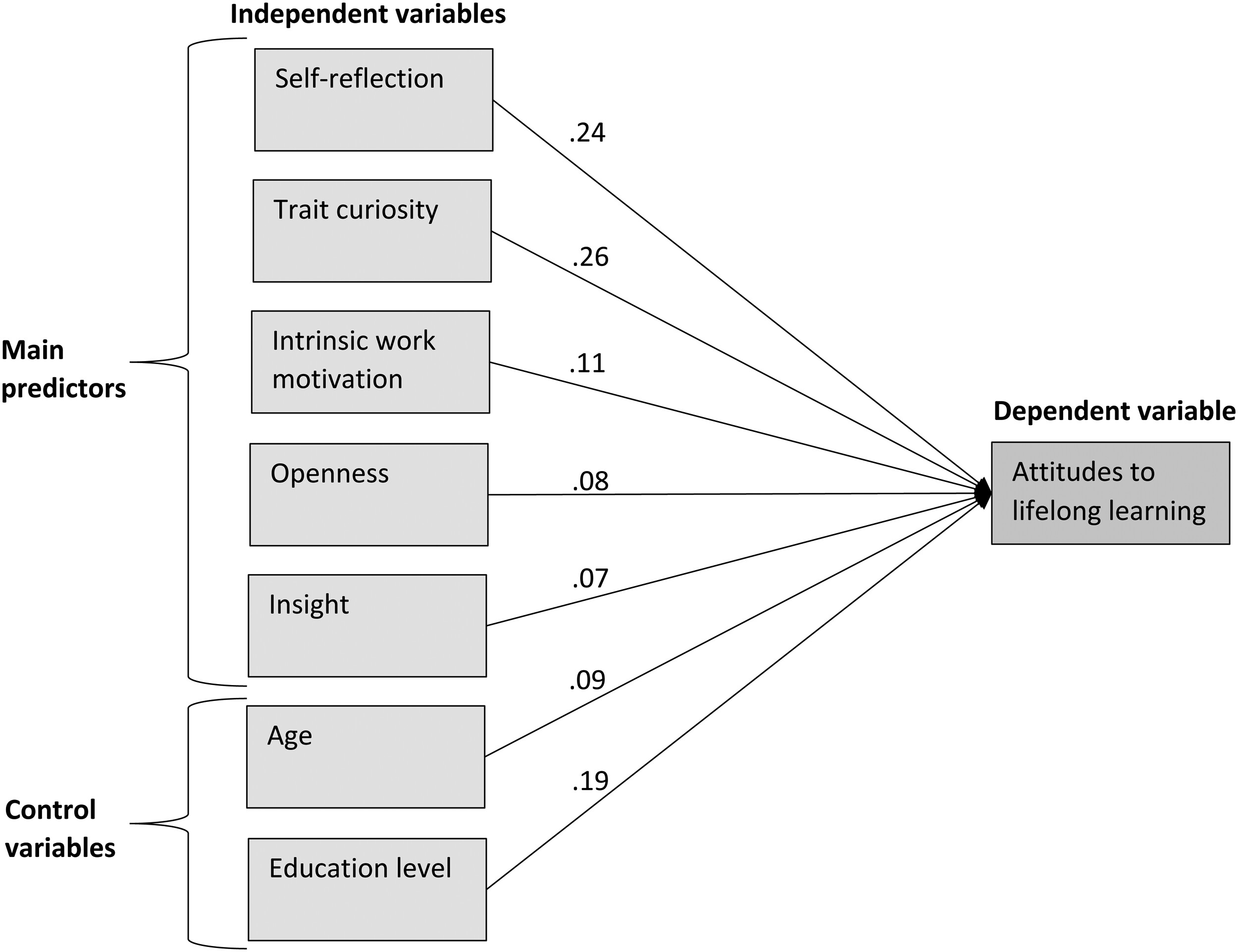
Table 3). Trait curiosity was also entered as an independent variable, as were self-reflection, insight, and work intrinsic motivation. All independent variables were entered simultaneously in the same block. The results are reported in
Table 5. The model is visualized in
Figure 1. The full regression model explained about 31% of the variance,
R2 = .31,
F(7, 699) = 45.14,
p < .001. We can conclude that all predictor variables explained a unique portion of the variance in attitudes to lifelong learning (even when age and level of education were statistically controlled for). Self-reflection and trait curiosity were the two strongest predictors, followed by work intrinsic motivation, then openness to experience and insight. All these factors were positively related to attitudes to lifelong learning. Thus, a higher degree of trait curiosity and openness to experience, for example, was associated with a more positive attitude to lifelong learning.
Discussion
The current study set out to test the extent to which individual differences in attitudes to lifelong learning are predicted by individual differences in a range of psychological factors. Together, the most relevant predictors accounted for a substantial portion (31%) of the interindividual differences in attitudes to lifelong learning. Each specific psychological factor had a relatively small explanatory power, however. Self-reflection and trait curiosity were the two strongest predictors, but the Beta values were relatively small. Intrinsic work motivation was also a significant predictor, but with a smaller Beta value. Furthermore, the personality trait openness to experience and insight also contributed significantly but to an even more marginal degree. Taken together, the results depict attitudes to lifelong learning as a multifaceted construct with multiple contributing factors.
Personality Traits and Attitudes to Lifelong Learning
The results concerning the relation between attitudes to lifelong learning and personality traits were consistent with past research (
Laible et al., 2020;
Offerhaus, 2013). Openness to experience was found to be the personality trait of the five-factor model with the strongest relationship with attitudes to lifelong learning. Of note is that
Laible et al. (2020) as well as
Offerhaus (2013) measured lifelong learning according to behaviors directed towards lifelong learning (as operationalized through further training), indicating that openness to experience is important in relation to both attitudinal and behavioral aspects of lifelong learning.
This further harmonizes with the findings concerning trait curiosity. Trait curiosity (a sibling to openness to experience) was also related to attitudes to lifelong learning and explained a unique portion of the variance that was bigger than the portion explained by openness to experience. The importance of trait curiosity and openness to lifelong learning is intriguing, given the large number of studies that have demonstrated that high conscientiousness (another of the personality traits of the Five Factor model) is a consistent predictor of other outcomes related learning, such as academic performance (for a recent meta-analysis, see
Mamadov, 2022). Success in academic training and other educational programs often involve dedicated and persistent work towards specific goals and delivery on predetermined deadlines; goals and deadlines that are often dictated by a course syllabus, a teacher or other rule sets determined by others. While lifelong learning can also share some of these features, it also comprises a larger portion of more loosely defined goals of exploration. These differences might explain why conscientiousness and openness to experience/trait curiosity are differently related to the two forms of learning contexts. Here, it is also interesting to note that research has shown that openness to experience is a moderate predictor of academic performance at very young ages (at middle and elementary school levels), but that its relationship to academic performance starkly diminishes at higher educational levels (
Mamadov, 2022). Following the reasoning outlined above, a paradox is thus that characteristics associated with lifelong learning may not be advantageous at later stages of the educational system, whereas it can be an important driving force behind adaption to a changing working life.
A challenge lies in how to better facilitate lifelong learning in those who are less inherently curious. One way could be by designing learning situations and activities so they to a larger extent enhance curiosity in those for whom it does not come as naturally, perhaps by tapping into individual interests. Another way and an important topic for future research is to increase understanding of what could potentially modulate attitudes and engagement in lifelong learning based on different personality traits. This knowledge could then be used to tailor strategies that promote lifelong learning while taking individual differences in personality into account.
Self-Reflection, Intrinsic Motivation and Attitudes to Lifelong Learning
The results reported in the current study also reinforce past findings highlighting a central role of self-reflection in lifelong learning (
Dujardin et al., 2023; Jayatilleke & Mackie, 2013) and suggest that self-refection might be one of the most important psychological determinants of attitudes to lifelong learning. While personality traits (such as openness to experience and trait curiosity) appear to be largely unchangeable across the lifespan after young adulthood (
Bleidorn et al., 2022), self-reflection is a meta-cognitive skill. As it is a skill, self-reflection should be possible to improve through practice. Self-reflection might therefore be an appealing target for changing attitudes to lifelong learning and improving people's willingness to engage in lifelong learning, by, for example, increasing people's ability to identify knowledge gaps and areas for improvement. By encouraging self-reflection and changing attitudes to lifelong learning, recent studies in the field showed that self-assessment (and self-assessment with explicit feedback in particular) had a positive impact on learning by increasing academic achievements (
Guo, 2022;
Theobald, 2021;
Yan et al., 2023). The importance of self-assessment and self-reflection also aligns with calls to integrate self-regulated learning skills into teaching curriculums to promote lifelong learning (e.g.,
Taranto & Buchanan, 2020).
Practicing specific skills, such as self-reflection, might influence willingness to engage in lifelong learning. However, the relation between lifelong learning and skill development could also be bi-directional. Apart from improving specific skills under practice when engaged in lifelong learning activities (e.g., developing a new skill for a future job opportunity), lifelong learning activities could themselves improve self-reflection and possibly other generic abilities such as entrepreneurship (
Puerta Gómez et al., 2024). Future research could explore in more detail how lifelong learning could improve context-specific and generic skills and disentangle potential bi-directional effects of personality and lifelong learning.
Intrinsic motivation could perhaps play a similar role as self-reflection in promoting lifelong learning. Among the six dimensions of work motivation, work intrinsic motivation was moderately correlated with attitudes to lifelong learning (see
Table 2). Notably, attitudes to lifelong learning also had significant, albeit weaker, correlations with integrated regulation and identified regulation, i.e., more autonomous and internally regulated forms of extrinsic motivation. However, when all motivation dimensions were simultaneously analyzed as predictors of attitudes to lifelong learning in the same regression model, only intrinsic motivation accounted for unique variance (see
Table 4). When ranked against the other factors in the study, work intrinsic motivation explained unique variance in attitudes to lifelong learning at level with openness to experiences, whereas it did not reach the same level of importance as curiosity and self-reflection (see
Table 5). Intrinsic motivation is something that can be increased through interventions (
Xu et al., 2021), like self-reflection. Consequently, an intervention program with the objective to improve people's willingness to engage in, and successfully achieve, lifelong learning, would arguably benefit from targeting both self-reflection and intrinsic motivation. Similar strategies could be extended to teachers involved in adult education. Providing meaningful learning experiences that foster intrinsic motivation to learn as well as scaffolding and encouraging self-reflection on the learning process may enable teachers to cultivate lifelong learning among adult learners.
Strengths, Limitations and Future Research
Although the current study had several strengths including a relatively large sample size and the exploration of an important yet relatively understudied research topic, it also had limitations. All data was measured cross-sectionally, which prevents drawing conclusions about associations between the variables across time. A related limitation is the potential overlap between the predictor variables, especially curiosity and motivation, and the questionnaire used to measure lifelong learning attitudes as it taps into curiosity and motivation for learning. However, this limitation is partially mitigated by the fact that curiosity and motivation were measured in broader or contextually distinct ways. Curiosity was assessed as a general trait, while motivation was assessed according to work motivation. Additionally, the correlations between these variables and the lifelong learning questionnaire were only small to moderate (see
Table 2), which further suggests a distinction between the underlying constructs.
Another limitation concerns that the sample is based on a convenience sample recruited through social media. This could limit the generalizability of the findings because the sample may not be representative of the whole population and those willing to participate may have had a particular interest in the study topic. In the current study, the majority of the participants were female and had a university degree, which to some extent limits generalizability of the findings to other socio-demographic groups. Also, the study was conducted in Sweden, therefore, the findings might not be generalizable to other settings, cultures or countries. Even though this study focused on lifelong learning from the perspective of individual differences, structural and cultural factors also play a role, for example, the conditions of the labor market, the structure of the educational system, opportunities for adults to pursue further education or the extent to which lifelong learning is on a societal level viewed as something desirable. Finally, the current investigation did not consider individual differences related to ethnicity. Especially in light of previous research highlighting the lack of diversity among participants at lifelong learning institutes (
Hansen et al., 2019), future research should address how ethnicity might clarify the conclusions from the current study.
The finding that individuals who had engaged in further education with the purpose of making a career change had a more positive attitude to lifelong learning than non-career changers had, could warrant an extended discussion. This finding validates the lifelong learning scale at face value, such that more positive attitudes to lifelong learning should predict the tendency to obtain further education and change career, i.e., lifelong learning in the context of professional development. Future research should investigate whether these results differ or extend to lifelong learning activities in the context of personal development and whether these domains are predicted by the same or different factors. It is also possible that there is an interaction between personal development and professional development, such that educational engagement for professional development could be driven by a need for personal development. Future research should try to distinguish between these different domains of lifelong learning activities to get a fuller understanding of the complex interaction between attitudes, lifelong learning and behavior and a better understanding of the concept of lifelong learning per se.
Conclusions
In conclusion, the current study revealed the relative importance of a range of psychological factors to attitudes in lifelong learning among adults in working life. Some of these factors, most notably self-reflection and intrinsic motivation, are susceptible to change whereas others can be expected to be more robust throughout a lifetime. These insights might be useful in guiding interventions to increase the propensity of lifelong learning among the working population. This could be of great importance in enabling individuals to adapt to the continuously changing labor market and the ever-changing societal demands.
Declaration of Conflicting Interests
The authors declared no potential conflicts of interest with respect to the research, authorship, and/or publication of this article.
Funding
The authors disclosed receipt of the following financial support for the research, authorship, and/or publication of this article: This study was supported by a grant from Vinnova (grant no: 2021-02361) to Jessica K. Ljungberg. Vinnova had no role in the study design, data collection, analyses or interpretation of the data, writing the article, or the decision to submit the article for publication.