Field experiences are considered the most critical component of special education teacher preparation (e.g.,
Brownell et al., 2019;
Nagro & deBettencourt, 2017). Through field experiences, teacher candidates can engage in authentic learning across a range of dynamic classroom environments. These structured learning opportunities allow teacher candidates to use theory in practice while actively developing instructional skills with frequent and meaningful feedback and guidance (
Maheady et al., 2014;
Nagro & deBettencourt, 2018). As special education teacher candidates navigate teaching realities during these hands-on experiences, they learn real-time problem-solving skills, gain confidence in their ability to educate students with disabilities, and begin to view themselves as professional educators (
Englert et al., 2020;
Leko & Brownell, 2011;
Ludlow et al., 2007). Therefore, it is not surprising leading accreditation organizations assert the importance of field experiences throughout their standards for teacher preparation. For example, the Council for the Accreditation of Educator Preparation (CAEP; 2021) designates an entire standard to the development and implementation of field experiences. Similarly, the Council for Exceptional Children’s (CEC; 2022) Initial Preparation Standards emphasize the importance of sequenced field experiences, and through this recent revision of the standards, placed a greater emphasis on practice-based learning. Across both teacher preparation research and policy, it is acknowledged that high-quality field experiences provide special education teacher candidates meaningful opportunities to incorporate knowledge, skills, and theory into practice in a continuum of settings as such experiences increase in complexity and authenticity (
Brownell et al., 2019).
Broadly, field experiences can be defined as practice-based learning opportunities in authentic settings with P-12 students. Under the umbrella term of field experience, distinctions tend to be made between
student teaching experiences (sometimes referred to as internships) and
coursework-based practicum experiences. During a
student teaching experience, teacher candidates engage in a culminating, supervised experience where they assume the role of the special education teacher in a comprehensive way (
Nagro & deBettencourt, 2017). Conceptually, this differs from a
coursework-based practicum experience, where teacher candidates engage in a targeted experience that is tied to coursework, such as working with students one-on-one or in small groups for a few times each week to target a specific instructional skill (
Nagro & deBettencourt, 2017). There are variations within each type of field experience as well. For example, a
teacher residency experience, is a full-year student teaching experience that emphasizes full emersion into teaching realties (
Reagan et al., 2021), which can be quite different in design when compared with traditional preparation program student teaching experiences. This example illustrates the challenge in understanding best practices in structuring and facilitating field experiences given the potential for noteworthy differences in purpose and design across various field experiences. Such can be said for multiple field experiences within one preparation program as these experiences each have a unique aim and scope, but variance can and likely does exist between special education teacher education programs given differing contexts (e.g., state licensure requirements).
Despite the importance of field experiences to special education teacher preparation, there is still limited research to support a unified vision of what field experiences should entail, and which components are critical for promoting special education teacher candidate growth (
Brownell et al., 2019;
Nagro & deBettencourt, 2017;
Sindelar et al., 2010).
Nagro and deBettencourt (2017) conducted a review of the literature on special education teacher candidate field experiences in the United States published between 2000 and 2014 to explore common placement types and activities, as well as to synthesize evidence linking field experiences to teacher candidate professional growth. The review included 107 teacher preparation programs and 1,091 teacher candidates, of which 442 were seeking licensure in special education. Of the 36 empirical articles reviewed, 78% were descriptive (
n = 18) or qualitative (
n = 10) in design, including, but not limited to, program descriptions, case studies, and exploratory studies. Given the largely descriptive nature of the studies and the limited number of studies (
n = 5) measuring change in teacher candidates’ practices as a result of their field experiences,
Nagro and deBettencourt (2017) refrained from drawing conclusions about the effects of specific field experience components in relation to teacher candidate growth. Despite not making claims about best practices,
Nagro and deBettencourt (2017) did identify common student teaching field experience parameters and activities. The authors concluded with five recommendations for future empirical research measuring teacher candidate changes resulting from participating in different types of field experiences.
Since
Nagro and deBettencourt’s (2017) review, which included peer-reviewed articles through 2014, there have been important shifts in special education teacher preparation and research. First, special education research standards have been updated and have called for more rigor in reporting research (e.g.,
Cook et al., 2015). In addition, since 2014, there has been an increasing call for more research in the field of special education teacher preparation, specifically around practice-based approaches including field experiences (e.g.,
Brownell et al., 2019). In their review of empirical articles published in
Teacher Education and Special Education from 2010 to 2019,
Brownell et al. (2020) concluded that “our field’s current trajectory of knowledge accumulation will not be sufficient to enhance teacher educators’ understanding of how to support the complex needs of general and special educators entering the teaching profession” (p. 36), thereby indicating the critical need for an increase in special education teacher preparation research. Thus, given the changes in special teacher preparation research since 2014, it is important to re-examine the extant literature on field experiences.
Method
Search Procedure
We conducted an initial database search on October 6, 2020 in EBSCOHost using the following databases: Education Research Complete, Academic Search Complete, ERIC, and Teacher Reference Center. Search terms included: field* OR clinical OR practicum OR applied OR experience OR student teach* [AND] “special ed*” OR disabilit* [AND] “student teach*” OR “teacher candidate*” OR preservice OR pre-service OR trainee OR intern* [AND] “teacher preparation” OR “teacher education.” Manuscripts were limited to those in English published during the years 2013 to 2020 and to peer-reviewed, academic journals. Since
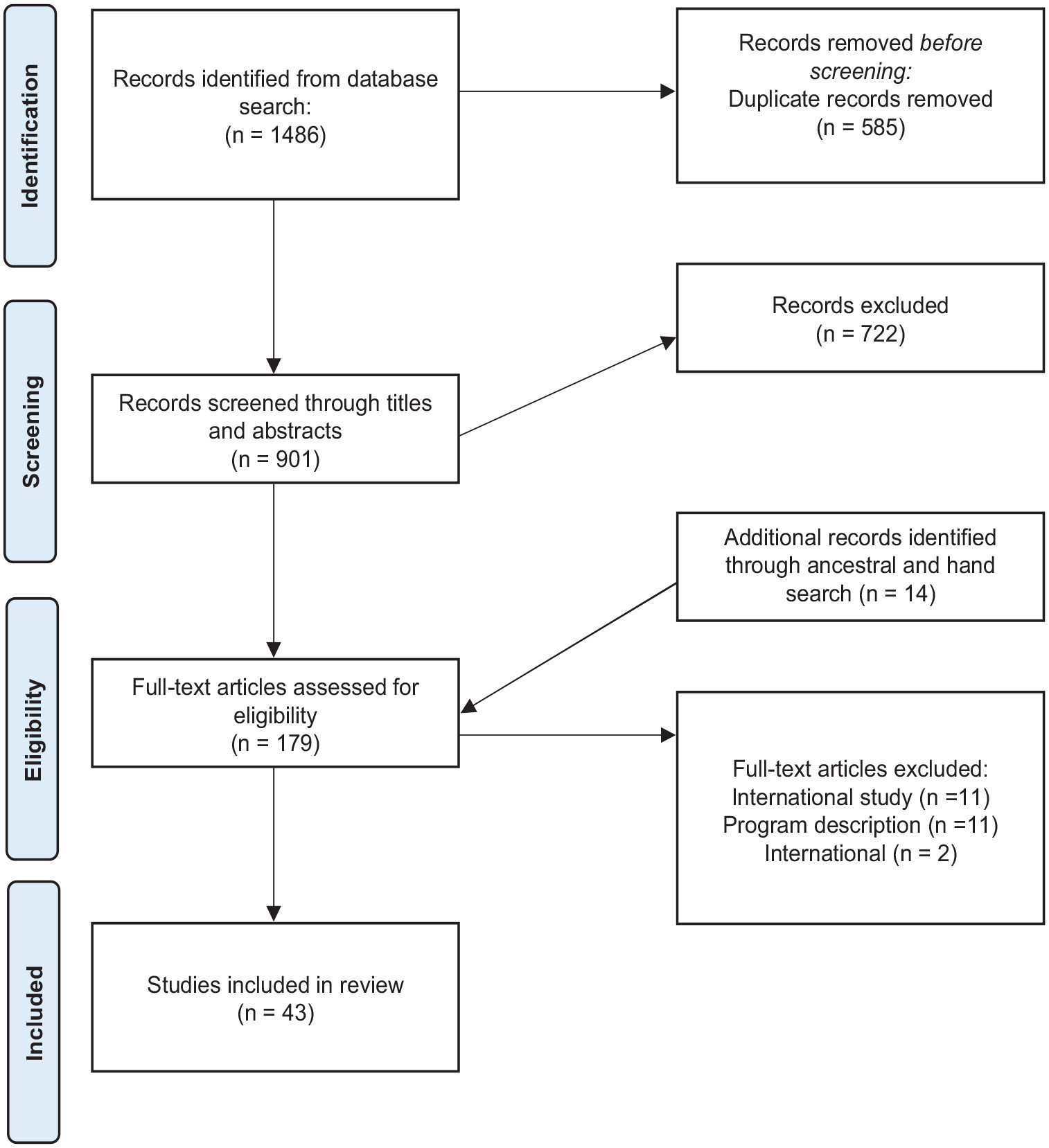
Nagro and deBettencourt’s (2017) review included articles through August 2014, we expanded our search to 2013 to ensure that we fully captured any possible articles published during this time that may not have been identified in their review (e.g., online first publications). This initial search resulted in 1,486 articles. After removing duplicates, 901 independent articles remained. It is important to note that this initial database search was conducted as part of a broader project that included international articles and program descriptions, which were excluded at the end of the screening process in the current review due to the focus on empirical studies conducted in the United States. See
Figure 1 for the Preferred Reporting Items for Systematic Reviews and Meta-Analyses (PRISMA) flow diagram of search procedures for the current review.
After the database search, we conducted an initial screening of the title and abstract for the 901 articles. For inclusion during this screening, articles had to meet the following criteria: (a) published between 2013 and 2020; (b) written in English; (c) from a peer-reviewed journal; (d) described or measured any type of field experience, practicum, student teaching, clinical experience, field-based experience, clinical field experience, service learning, or apprentice teaching; and (e) involved special education teacher candidates. Articles that did not specify type of teacher candidates were included during this round of coding and revisited during the full article screening. After double coding all articles, there was 89.90% agreement. Of the 901 articles, 179 met inclusion criteria, including program descriptions and international studies.
Subsequently, we conducted a full article review for the articles that made it past the initial screening. During the full article review, we used the following inclusion criteria: (a) Publication: the article was published in a peer-reviewed journal between 2013 and 2020, and written in English; (b) Setting: the article described or measured the impact of any type of field experience developed and facilitated as part of a teacher preparation program that included special education teacher candidates; (c) Purpose: the article included special education teacher preparation, such as measuring changes within special education teacher candidates populations after participating in field experiences; and (d) Methodology: the article used any type of methodologies. It should be noted that the inclusion criteria around setting specifies that the field experience had to include special education teacher candidates. Thus, articles could have been included if they had participants seeking other licensure areas, as long as they also had special education teacher candidates as participants. We excluded articles if they: (a) targeted community service hours that were not intentionally part of a special education teacher preparation program, (b) included students with disabilities in teacher candidates’ field experiences but focused on teacher preparation programs outside of special education (e.g., elementary education), (c) focused on practice-based activities (e.g., role-play, simulation) that occurred in university-based settings but not in P-12 school settings, (d) examined field experiences as part of courses offered by special education teacher preparation programs but did not clarify if participants were special education teacher candidates, (e) included teacher candidates as participants but did not clearly specify inclusion of special education teacher candidates, (f) studied perceptions of field experiences broadly without focusing on a specific field experience, or (g) focused on professional development.
Using the inclusion and exclusion criteria during the full article review, four trained raters coded an initial 20 articles (95% agreement). The remaining 159 articles were coded by two raters, and discrepancies (n = 8) were discussed with the full research team until we reached consensus, for 94.94% agreement across pairs of raters. After the full review, 63 articles met inclusion criteria. For the purpose of the current review, we excluded studies conducted in international (n = 11) or U.S. and international settings (n = 2), as well as program descriptions (n = 11), for a total of 39 empirically based studies that were conducted in the United States.
Hand Search
Following the database search, we conducted a hand search of two prominent peer-reviewed journals focused on teacher preparation: Journal of Teacher Education and Teacher Education and Special Education. Two additional coders were thoroughly trained to agreement (i.e., 90% or higher), and two pairs of coders double coded all hand searched articles. First, coders screened the titles and abstracts of all issues from 2013 to 2020; there were 449 articles coded with 94.88% agreement. After discussion, the research team determined that two additional articles met inclusion criteria.
Ancestral Search
All reference lists of the initial 39 articles identified in the database search were screened in an ancestral search. Two pairs of coders double coded approximately 20 articles each. Procedures were similar to the hand search: (a) a title screen, (b) an abstract screen, and (c) a full article read of those included from the abstract screen. The title screen resulted in 32 articles included with a total agreement of 98.48%. The abstract screen resulted in eight articles included and a total agreement of 84.38%. The full article review resulted in the inclusion of two additional articles. Across all search procedures conducted, we identified a total of 43 articles that met inclusion criteria.
Coding
To answer our research questions, we coded all included articles for key information. We first met as a team to identify the information that would need to be gathered from each article for each research question. We created coding categories with clear descriptions of what information should be identified. For example, when coding for the number of teacher candidates included in the study, we specified that the coding should include authors’ precise terminology given the variety of ways in which teacher candidates were described (e.g., pre-service teachers, undergraduates, residents, student teachers). In addition, we included definitions within coding categories, such as definitions for coursework-based practicums and student teaching when we coded for the type of field experience. In our coding sheet, we also included examples in some coding descriptions. For example, to answer Research Question 4, we coded field experience activities into various categories which included example activities to ensure team members were coding reliably. Next, using the categories and definitions we created, we developed a coding spreadsheet. We randomly selected four articles to code in pairs. After each pair coded their assigned articles, we met as a team to discuss any discrepancies and questions about the coding definitions. We adjusted definitions as needed. Once we came to consensus on all coding categories and definitions, we coded the 43 articles by splitting up the articles among the last three authors. The first two authors conducted randomized checks of the coding to ensure clarity and accuracy.
Once coding was complete, we organized the studies by field experience type: coursework-based practicums (i.e., teacher candidates engage in a targeted experience that is tied to coursework) and student teaching (i.e., teacher candidates engage in a culminating, supervised experience where they assume the role of the special education teacher in a comprehensive way), given the differences in experience types. We included residency models as a sub-type of student teaching due to the unique nuances of residency student teaching experiences. Thus, when presenting results, we analyze differences by field experience type. As shown in
Figures 2 and
3, we also organized data by program level (i.e., undergraduate or graduate teacher candidates). Any identified differences by program level that emerged during data analysis are presented in the results below.
Results
Our search resulted in 43 studies that met inclusion criteria (see
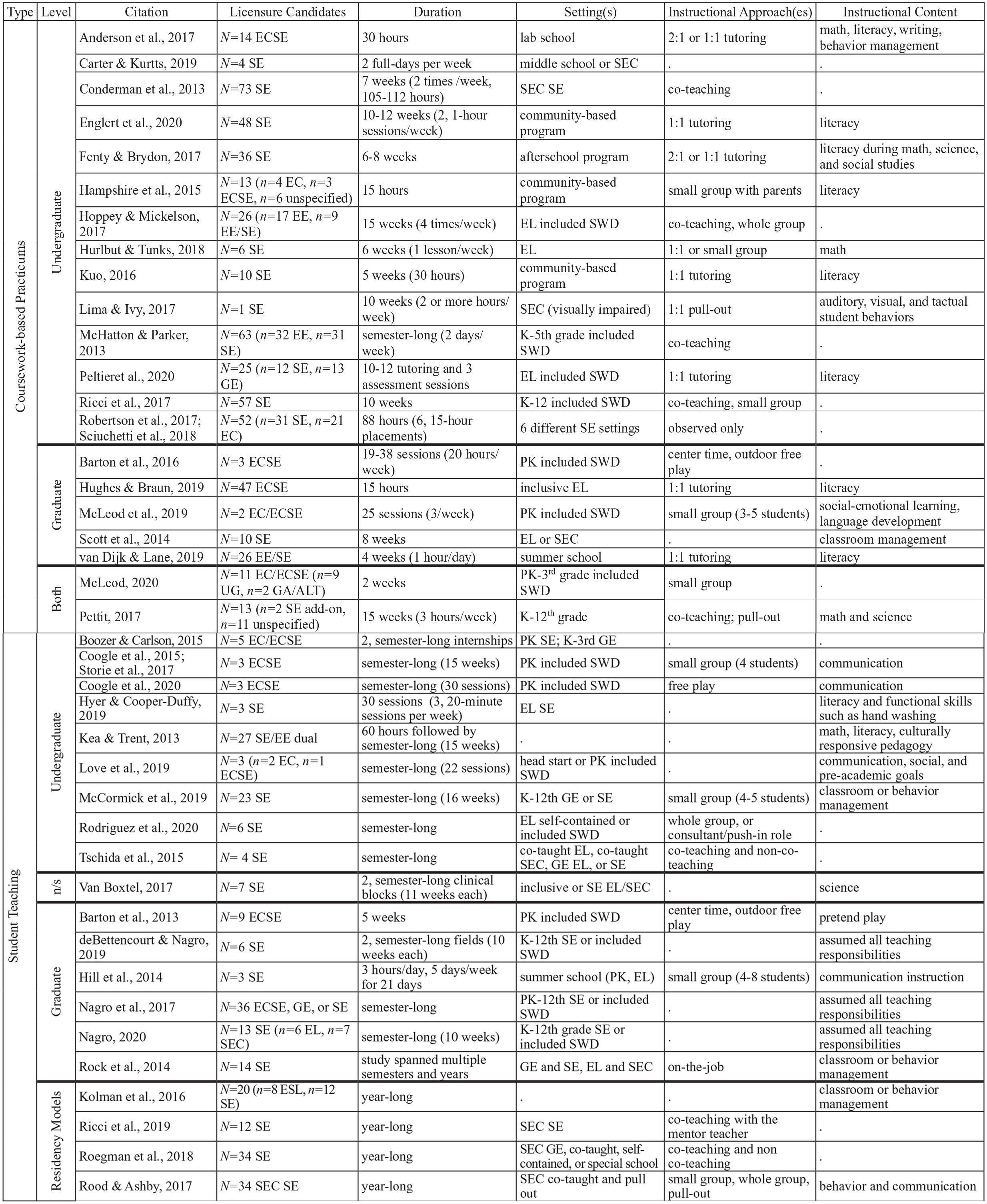
Figure 2), of which 22 focused on coursework-based practicums, and 21 focused on student teaching. In the sections below, we present results for each of the five research questions of the study. Importantly, of the 43 studies, two reported separate analyses that came from the same sample; the sample from the work of Robertson et al. (2017) was also used by Sciuchetti et al. (2018), and the sample from the work of Coogle et al. (2015) was also used by Storie et al. (2017). To avoid overinflating the number of participants or field experiences, hereafter when presenting results for Research Questions 1 to 4, we include related studies that share the same sample as one field experience. Thus, we present results for 41 field experiences, including 21 coursework-based practicum experiences and 20 student teaching experiences.
Research Question 1: Field Experience Participant Contexts
Across all field experiences, there were 805 teacher candidate participants, and most (81.4%; n = 655) were seeking licensure in special education (including early childhood special education, an add-on endorsement in special education, or dual licensure that included special education). Of the remaining participants, 12.0% (n = 97) were seeking licensure in other areas (e.g., elementary education, early childhood), and 6.6% (n = 53) were unspecified (i.e., the authors noted that special education teacher candidates were included but did not specify how many).
Although there were approximately the same number of studies that investigated coursework-based practicums as those that examined student teaching, most of the participants were in coursework-based practicum experiences. Specifically, 67.1% (n = 540) of all teacher candidates were completing coursework-based practicums compared with 32.9% (n = 265) of participants in student teaching experiences. In addition, across all field experiences, participants were more often undergraduate than graduate students, with 62.7% (n = 505) undergraduate and 33.4% (n = 269) graduate and residency teacher candidate participants. Importantly, about one-third (37.7%; n = 100) of teacher candidates in student teaching experiences were in residency models.
In sum, across the 41 field experiences represented by 43 studies identified in our review, a little over 80% of participants were seeking special education licensure. Most of the participants were in coursework-based practicums and most were undergraduate students. Of the teacher candidates in student teaching experiences, a little over one-third were in residency models.
Research Question 2: Field Experience Parameters
Researchers reported the duration of field experiences in a variety of ways (see
Figure 2). The most commonly reported duration of field experiences was in number of weeks, reported in about half of the field experiences (46.3%;
n = 19). Researchers in 31.7% of field experiences (
n = 13) also reported the length of field experience by semester, while the number of hours of the field experience was less frequently reported (19.5%;
n = 8). Yet, coursework-based practicums were more likely to report duration in number of weeks (57.1% of coursework-based practicums;
n = 12), while studies of student teaching experiences were more likely to report duration by semester (60% of student teaching experiences;
n = 12). Studies of coursework-based practicums were also much more likely to report frequency of the field experience as times, hours, or days per week, while studies of student teaching experiences rarely reported this information.
Across field experiences, duration was more consistent in student teaching experiences than in coursework-based practicums. Most student teaching experiences lasted for one semester, with the number of weeks per semester ranging from 10 to 16 weeks (M: 12.8 weeks). All studies of student teaching residency models reported duration as 1 year. Although duration was reported in many different ways for coursework-based practicums, we calculated descriptive statistics of the most commonly reported duration measures (weeks and hours) to gauge the typical length of coursework-based practicums. On average, coursework-based practicums were 42.1 hours (range: 15-112 hours) in duration and lasted for 8.5 weeks (range: 2-15 weeks). Thus, there was more variability across the duration of coursework-based practicums than the student teaching experiences.
Across all field experiences, researchers most commonly reported the field experience setting as a range of grades (e.g., K-12) or as elementary or secondary school levels. Specifically, in 25% (
n = 10) of the field experiences, researchers described a range of P-12 grade levels as the field experience setting, while an additional 17.5% (
n = 7) and 15% (
n = 6) described settings as elementary or secondary levels, respectively. Similarly, of the 20 student teaching experiences, the most frequent setting was also P-12 settings (30%;
n = 6), indicating that teacher candidates in student teaching experiences were in a range of grade-level settings. Coursework-based practicum experiences occurred in a variety of settings, with the most frequent setting as those in elementary levels (19%;
n = 4). Compared with the settings of student teaching experiences, coursework-based practicums were more likely to occur in non-traditional P-12 school settings, such as community-based settings, an after-school program, a lab school, or summer school (see
Figure 2).
Thus, overall across the 41 field experiences, researchers reported duration in different ways, most often reporting number of weeks or semesters. Coursework-based practicums had greater variety in how duration was reported than student teaching experiences, but on average they lasted 42 hours and for 8.5 weeks. Student teaching experiences typically lasted for one semester, which, on average, lasted a little under 13 weeks. The most consistent duration was for residency models of student teaching, which lasted for 1 year. In terms of field experience settings, researchers tended to report the settings in a range of grade or as school levels (e.g., elementary, secondary), while coursework-based practicums were more likely to occur in non-traditional school settings.
Research Question 3: Field Experience Instructional Approaches and Content
As shown in
Figure 2, researchers described the instructional approaches in the field experience in a little under three-fourths of field experiences (73.2%;
n = 30), with small group instruction as the most common instructional approach (22%;
n = 9). Other instructional approaches frequently described as part of the field experience included co-teaching (20%;
n = 8) and one-on-one tutoring (17.1%;
n = 7). Of the 21 coursework-based practicums, however, the most common instructional approach described was one-on-one tutoring (33.3%;
n = 7), followed by small group instruction (23.8%;
n = 5), and co-teaching (23.8%;
n = 5). Conversely, no student teaching experiences described one-on-one tutoring as the instructional approach. In fact, almost half of researchers (45%;
n = 9) did not report any instructional approaches within the 20 student teaching experiences, and when they did, the most common approach was small group instruction (20%;
n = 4).
Although researchers reported instructional content areas in the field experience less often than instructional approaches (i.e., 68.3% or 28 of the 41 field experiences described the instructional content areas), the most common instructional content area included across field experiences was literacy instruction (24.4%; n = 10), followed by behavior or classroom management (14.6%; n = 6). Similarly, literacy instruction was also the most common for coursework-based practicums (38.1%; n = 8). Student teaching experiences, however, most frequently included classroom and behavior management (20%; n = 4), followed by assuming all teaching responsibilities (15%; n = 3). Across all field experiences and regardless of field experience type, around one-fifth of field experiences (22% all field experiences; 23.8% coursework-based practicums; 20% student teaching experiences) included more than one type of instructional content area. Researchers describing student teaching experiences were more likely to report the instructional content areas than those examining coursework-based practicums, with 75% (n = 15) of student teaching experiences compared with 61.9% (n = 13) of coursework-based practicums that described instructional content areas.
To summarize, across field experiences, the most common instructional approach was small group instruction, followed by co-teaching and one-on-one tutoring. While coursework-based practicums most frequently included one-on-one tutoring, none of the student teaching experiences included this approach. Researchers in a little under half of student teaching experiences did not report any instructional approaches, and of those that did report instructional approaches, small group instruction was the most common. Across all field experiences, literacy was the most common content area in the field experience, and about one-fifth of field experiences included more than one type of content area.
Research Question 4: Field Experience Activities
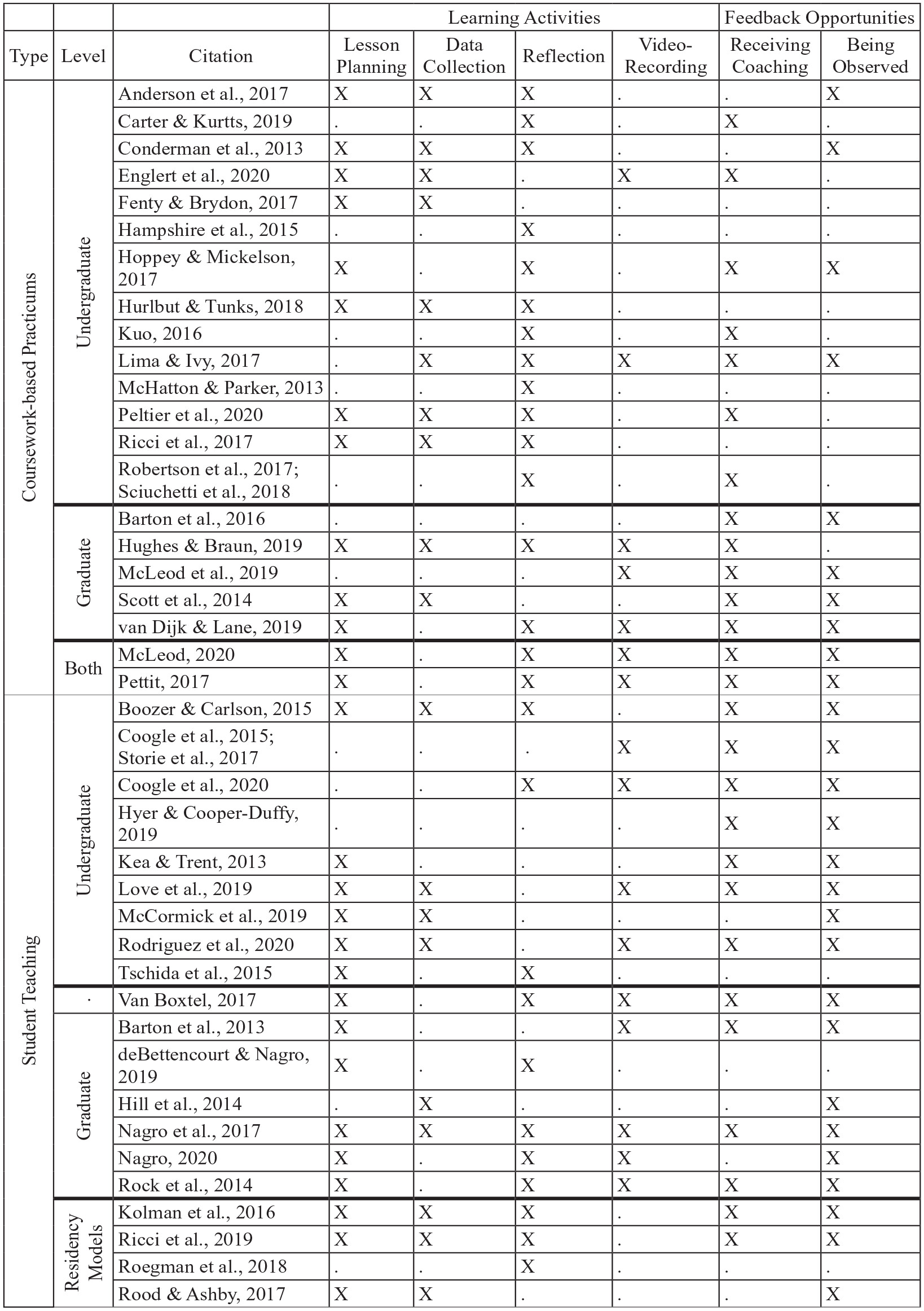
To answer Research Question 4, we reviewed the learning activities and feedback opportunities within each field experience to understand common practice as described in this body of research. The common field experience learning activities based on this body of research were broadly categorized as lesson planning, data collection, reflection, and video-recording (see
Figure 3), which were common field experience components identified by
Nagro and deBettencourt (2017) in their review.
Lesson Planning Activities
First, we found that more often than not field experiences included lesson planning. Of the 41 field experiences, 68.3% (n = 28) reported requiring teacher candidates to prepare lesson plans. Specific to coursework-based practicum experiences, 61.9% (n = 13) referenced lesson planning as part of the practicum activities, which ranged from 1 to 12 or even daily lesson planning. Specific to student teaching experiences, 75% (n = 15) referenced lesson planning as a student teaching activity, and most often this was at the graduate level or part of a residency experience. As reported, undergraduates completing their student teaching experience were less likely to be required to prepare lesson plans (67% of the time) when compared with graduate students completing student teaching field experiences (80% of the time).
Data Collection Activities
Data collection, as a learning activity, included various opportunities for teacher candidates to collect, analyze, and make decisions about student data. Overall, 46.3% (n = 19) of field experiences included reference to at least one example where teacher candidates were asked to collect student data. Often, these activities were related to behavior and classroom management instructional decisions, but data were also collected during activities where teacher candidates were implementing a content specific intervention or collecting pre- and post-measures to assess growth in student learning. When considering the two categories of field experiences, 48% (n = 10) of coursework-based practicums and 45% (n = 9) of student teaching experiences included mention of data collection activities.
Reflection Activities
Reflection activities included (a) open-ended journal entries; (b) written reflections using prompts, guiding questions, checklists, or graphic organizers; (c) responding to open-ended survey, questionnaire, or interview questions; and (d) conversational reflection activities with a coach, mentor, peer, co-teacher, or university supervisor. Generally speaking, 65.9% (n = 27) of the field experiences included at least one reflection activity. Most often, these reflection activities took place during coursework-based practicums. Specifically, 76.2% (n = 16) of coursework-based practicums included reflection activities. Typically, these reflection activities were less structured, weekly or ongoing, reflection journals, or open-ended questionnaire-type reflection activities. This trend was most evident with undergraduates completing coursework-based practicums, as 86% (n = 12) of undergraduates in practicum experiences engaged in open-ended written reflection journal (n = 7) or questionnaire-type (n = 5) activities. In comparison, 55% (n = 11) of student teaching experiences included mention of reflection activities, and most (63.6%, n = 7) occurred at the graduate or residency level rather than the undergraduate level, where only 27.3% (n = 3) of student teaching experiences mentioned reflection activities. In one of the 11 student teaching experiences including reflection activities (9.1%), it was unknown if teacher candidates were graduates or undergraduates.
Video-recording Activities
Video-recording activities included (a) teacher candidates recording their instructional episodes for others, such as peers, coaches, or university supervisors to review, measure growth, or provide feedback in combination with bug-in-ear activities or as standalone observation sessions; (b) coaches using video, both recorded and streaming, to connect with candidates before, during, and/or after instructional episodes; (c) teacher candidates watching P-12 students captured on video to practice data collection; or (d) teacher candidates recording their instructional episodes to then review the video evidence for self-evaluation or self-reflection purposes. Overall, video-based technology was referenced in 39% (n = 16) of field experiences. During coursework-based practicums, 33% (n = 7) of field experiences made mention of video-recording activities. Only two of the 14 undergraduate coursework-based practicums (14%) as compared with 60% (n = 3) of the graduate practicums included video-recording activities. In almost all cases, the video-recording activities referenced in practicum experiences were feedback driven as opposed to teacher candidates using the video evidence to engage in self-evaluation or self-reflection. Similarly, when considering student teaching, 45% (n = 9) included mention of video-recording activities, and most often it seemed unlikely that teacher candidates were expected to review their own instruction. It is worth noting that in four of five cases, where teacher candidates were asked to review their own video-recorded instruction as part of their field experience, the studies included graduate students.
Feedback Opportunities: Coaching and Observations
In about 66% of the field experiences, researchers reported that teacher candidates received feedback through coaching (n = 27) or observation (n = 27) opportunities. In many cases, these feedback opportunities occurred in real-time and were referred to as bug-in-ear coaching since the teacher candidate was wearing a Bluetooth earpiece that allowed them to receive feedback while teaching. Other common feedback opportunities included written observation forms, checklists, or graphs as well as one-way or reciprocal verbal discussions where feedback was shared with the teacher candidate through web conferencing, video-recordings, email, online platforms, or in written form. Coaching sessions were more common during practicum experiences (67%; n = 14) as compared with observations (48%; n = 10). In contrast, observations were more common during student teaching experiences (85%; n = 17) as compared with coaching sessions (65%; n = 13).
In sum, lesson planning and reflection activities were the most common field experience activities reported across all contexts. Specific requirements regarding the frequency and structure of both lesson planning and reflection activities varied greatly. Practicum experiences included more open-ended or unstructured reflection opportunities, more frequent coaching sessions, and less formal observation sessions. Student teaching experiences included more opportunities for structured reflection activities, some of which were paired with video-recording activities, and often included formal teaching observations. Residency models had the least variability as most seemed to include the same learning activities and feedback opportunities, but this small set of four studies may not be representative of residency models overall. Differences emerged between the experiences of undergraduate and graduate teacher candidates across both practicums and student teaching, where graduate students had increased expectations for engaging in lesson planning, data collection, guided reflection, and video-based self-review.
Research Question 5: Field Experience Methodologies
To examine the methodologies used to study special education teacher candidates’ field experiences, we categorized each article’s research methods as quantitative, qualitative, or mixed methods. Within the quantitative category, we identified studies as single-case design, pre-experimental group design (i.e., within group analyses), quasi-experimental group design (i.e., non-random sampling with random or non-random group assignment), or true experimental group design. When answering Research Question 5, we included all 43 studies since each study had its own analysis.
Across all 43 studies in our review, researchers equally used quantitative and qualitative methodology, with 17 studies (39.53%) of each, while nine studies (20.93%) used mixed methods. Of the quantitative studies, there were nine (20.93%) single-case design, four (9.30%) pre-experimental group design, and four (9.30%) quasi-experimental group design; no studies used a true experimental group design. Studies of coursework-based practicums most commonly used qualitative methodology (50%; n = 11) while student teaching studies most often used quantitative methodology (47.6%, n = 10), which was primarily single-case design (33.3%, n = 7). Of the four student teaching studies that examined residency models, most (75%; n = 3) used qualitative methodology.
Overall, of the 43 studies included in the review, around 40% used quantitative methods, 40% used qualitative methods, and 20% used mixed methods. Most of the quantitative studies used single-case design, with no studies using a true experimental group design. Most studies of coursework-based practicums used qualitative methodology, student teaching experiences mostly used quantitative methodology, and student reaching residency models tended to use qualitative methods.
Discussion
The purpose of our study was to systematically review the research published since
Nagro and deBettencourt’s (2017) review on field experiences that include special education teacher candidates. As we continue the quest set forth by
Nagro and deBettencourt (2017) to find common practices in special education teacher preparation field experiences, there are important conclusions to draw from our findings. Below we highlight several insights and suggestions for how researchers and teacher educators can continue to study field experiences and work toward a unified vision of field experiences in special education teacher preparation.
First, as others have noted (e.g.,
American Association of Colleges for Teacher Education [AACTE], 2018), we encountered a wide variety of terminology in the articles included in this review, with researchers reporting teacher candidates and field experiences in different ways. Using varied terminology and reporting on different aspects of the field experience, it is a challenge to synthesize this body of research. Yet, as noted in the findings of our review, the research on special education field experiences is beginning to coalesce around some key features. For example, the coursework-based practicums were more targeted in nature and shorter in duration than student teaching experiences, which lasted for one semester, on average, and involved taking over instructional responsibilities. Within student teaching experiences, residency models emerged as a distinct category of field experiences, with unique nuances of coursework intertwined with field experiences. In addition, researchers often reported field experience settings as a range of grade levels, indicating that special education teacher candidates as a whole are included in a variety of settings during their field experiences. Finally, in our examination of the activities and feedback opportunities across all field experiences, we found that overall teacher candidates were receiving opportunities to learn in authentic school settings through lesson planning, data collection, reflection, and video-recording, and they received feedback through coaching and observations. Thus, while researchers may be using different terminology, we are seeing patterns emerge within the field experience literature.
Another key finding is that special education teacher candidates are often engaging in instruction within their field experiences, most often in small group instruction. This is encouraging because teacher candidates need opportunities to practice high-leverage and evidence-based practices in increasingly authentic and complex settings (
Brownell et al., 2019). We also found that the most common instructional approach in coursework-based practicums was tutoring, while none of the student teaching experiences included tutoring. This could indicate that tutoring is an approach used to scaffold teacher candidates’ practice from more structured and controlled settings (e.g., university classrooms) to more authentic school settings working with students prior to being immersed in the full dynamic classroom environment. Interestingly, almost half of the researchers examining student teaching did not report instructional approaches within the field experience compared with only around 10% of coursework-based practicums. It could be that there is an assumed, more consistent conceptualization of a student teaching experience, while there is more variability in conceptualizations of coursework-based practicums. Thus, researchers may not have explicitly included information about the instruction happening during student teaching. Yet, in studies of student teaching, researchers were more likely to discuss the instructional content of the experience than those of coursework-based practicum studies. We recommend that researchers consistently describe instructional approaches and content included in all field experiences to support conclusions about field experiences and to also facilitate replication.
The most common type of instructional content described in field experiences was literacy instruction, which is encouraging given the importance of field experiences in preparing special education teachers candidates for literacy instruction (e.g.,
Bishop et al., 2010). Yet, only two studies of student teaching experiences described literacy instruction as part of the field experience. Even though four studies of student teaching experiences explained that the teacher candidates took over all teaching responsibilities within the field experience, literacy instruction was not explicitly described. Interestingly, the most frequently described instructional content area within student teaching was classroom and behavior management, which is important given that special education teachers may not be adequately prepared for classroom and behavior management (
Oliver & Reschly, 2010).
In addition, the results of our literature review highlight important differences in teacher candidate learning activities and feedback opportunities within the field experiences. For example, teacher candidates in coursework-based practicum experiences more frequently engaged in lesson planning and reflection activities than those in student teaching experiences, while researchers described teacher candidates engaging in data collection learning activities and video-recording activities at approximately the same amount across field experience types. Since the student teaching experience is where teacher candidates take over instructional responsibilities in a comprehensive way (
Nagro & deBettencourt, 2017), lesson planning should be a vital aspect of student teaching, as it is a critical skill for special education teachers (CEC, 2022). Similarly, given the importance of reflection for teacher candidate learning (Nagro, 2020), it is surprising that those in student teaching experiences were asked to reflect less often than those in coursework-based practicums. In terms of feedback opportunities, coaching was more common in coursework-based practicum experiences, while observations were more common in student teaching experiences. This finding may indicate that teacher candidates in more targeted coursework-based field experiences were given coaching as a support for teacher candidate learning (
Kretlow & Bartholomew, 2010), whereas teacher candidates in the culminating student teaching experience were more formally observed as an assessment of their skill level (
McCall et al., 2014).
Importantly, as we analyzed learning and feedback opportunities within field experiences, we found instances in which the difference in opportunities was not between field experience type, but instead was between undergraduate and graduate teacher candidates. For example, when reporting activities of student teaching experiences, overall researchers described lesson planning and reflection activities less frequently for undergraduate teacher candidates than graduate teacher candidates, indicating that student teaching activities may differ for undergraduate students. Although undergraduate and graduate student teaching experiences are both designed to prepare teacher candidates to become special education teachers, the studies in this review indicate that there may be important differences in their opportunities and expectations, with undergraduates engaging in lesson planning and reflection less often during their student teaching. Similarly, within coursework-based practicums, undergraduate teacher candidates were engaged in video-recording activities much less frequently than graduate teacher candidates, and although across all field experiences, it was rare for teacher candidates to use video-recorded instruction for self-evaluation or self-reflection, when it did occur it was with graduate teacher candidates. This is another instance where undergraduates may be asked to engage in fewer or less complex learning opportunities than graduate teacher candidates. Thus, as teacher educators and policy makers examine where licensure should be conferred and how to best prepare special educators, it is critical to consider the findings highlighted in our review.
Finally, compared with the findings of
Nagro and deBettencourt’s (2017) review, our review found many more empirical studies of field experiences overall, with more quantitative studies in particular. In their review of studies from 2000 to 2014, Nagro and deBettencourt identified 36 studies, which were mostly descriptive (
n = 18, 50%) or qualitative (
n = 10, 27.8%). The remaining studies used quantitative methods (
n = 6, 16.7%), including four single-subject design and two quasi-experimental design, and mixed methods (
n = 2, 5.6%). Given the need for more research on special education teacher preparation and field experiences (e.g.,
Brownell et al., 2019), it is encouraging that we identified 43 studies from 2013 to 2020, which was half of the years covered in the previous review but more than twice the number of empirical studies. Furthermore, the increase in quantitative studies from six studies in the 14 years covered by Nagro and deBettencourt’s review to 17 studies in the 7 years covered in the current review indicates that more researchers are beginning to answer questions about causality and the effects of field experiences on special education teacher candidates. Similar to Nagro and deBettencourt, we were not surprised that we found no studies using a true experimental design, and we encourage researchers to continue using quasi-experimental design studies of field experiences to ask empirical questions and continue seeking what elements of field experiences make a difference for teacher candidates.
Limitations
It is important to acknowledge limitations of the current literature review that may impact conclusions. First, it is possible that our list of search terms may not have sufficiently captured all possible studies, particularly given the variety of terminology used by researchers to describe field experiences. Second, although we included multiple search methods to conduct a thorough review, we did not conduct a forward search or include any gray literature, which may have resulted in possible studies for inclusion that were missed. Third, we chose to exclude descriptive studies, which were included in
Nagro and deBettencourt’s (2017) review; thus, additional insight from descriptive studies may have been missed in the current review. Fourth, the data we gathered and analyzed from each study were our interpretation from the information provided in the article. In some studies, the purpose was not necessarily to describe in detail specific field experience activities. Thus, in these cases, we had to draw conclusions about how to code article information to answer our research questions. Finally, some studies did not disaggregate data for special education teacher candidates from teacher candidates seeking other licensure areas, which may have impacted our findings.
Implications
From our review, more empirical research on special education teacher field experiences is needed. We urge researchers to continue using a variety of methodological approaches to not only examine teacher candidate experiences and perceptions, but also continue to seek causal links between field experiences activities and teacher candidate outcomes. Researchers should describe field experiences in detail, so that, clear conclusions can be drawn from a study and to ensure possible replication. In publications of field experience studies, using consistent and clear terminology to describe not only the field experiences but also the teacher candidates will be key, including student level (i.e., graduate, undergraduate) and licensure being sought. Future research will also be needed to examine the methodological rigor of this literature and to determine the evidence base of field experiences in special education teacher preparation. It is through continued empirical investigation of field experiences that we will be able to better determine what activities are critical in preparing special educators and, ultimately, improving outcomes for students with disabilities.
Finally, our review emphasizes the need for teacher educators and researchers to continue to follow the five steps set forth by
Nagro and deBettencourt (2017) for designing field experiences and studying their effectiveness, as our review highlights additional considerations within those five steps. First, it is important to
set the extent of the field experience, and our review indicates documenting the duration and setting of the field experience will be important. Second,
teaching activities are selected, and clarity should be provided around the instructional approaches and content areas, as well as teacher candidates’ practice and feedback opportunities within the field experience. It will be critical that researchers continue to report these details of the field experience being studied, even for student teaching experiences. The findings of our review also highlight that teacher educators should examine field experience activities closely to align with field experience outcomes, especially in student teaching where we found differences between undergraduate and graduate student teaching experiences. Teacher educators will need to examine their program as a whole to determine how coursework-based practicums can be scaffolded over time to create a coherent approach to field experience that prepares teacher candidates to engage in more complex activities during student teaching. Third, the
products are determined, which aligns with the practice opportunities teacher candidates have in the field experience. Fourth,
teacher candidates are assessed, and fifth,
feedback is provided to teacher candidates. It is through persistent efforts in special education teacher preparation and research that we will continue to learn empirically based activities that help to create profession-ready special educators.