Introduction
Renewable energy systems (RES) have become more reliable, efficient, and sustainable when artificial intelligence (AI) techniques are included. In recent years, a burgeoning body of literature has explored the potential of AI-driven optimization methods to revolutionize various aspects of RES, ranging from resource assessment to system operation and maintenance. However, despite the growing interest and advancements in this field, there remains a critical gap in synthesizing existing literature, critically analyzing research findings, and delineating future research directions. This study intends to address this research gap by providing a detailed review of the literature on optimizing RES through AI methodologies, while offering a nuanced critique of current approaches, and highlighting areas for future exploration. By consolidating insights from diverse studies, this research endeavors to underscore the research originality in synthesizing disparate findings, identifying overarching trends, and elucidating the underlying mechanisms driving the efficacy of AI in RES optimization.
The rationale behind conducting this research lies in the pressing need to harness the full strength of AI technologies to address the multifaceted challenges facing the renewable energy sector. With climate change accelerating and energy demand escalating, there is an urgent imperative to deploy innovative solutions that can maximize the utilization of renewable resources while mitigating environmental impacts and ensuring economic viability. By critically analyzing the state-of-the-art in AI-enabled RES optimization, this study seeks to inform policymakers, researchers, and industry stakeholders about the opportunities and limitations inherent in current approaches and guide future research endeavors toward more effective and sustainable solutions. In the realm of RES, the integration of AI has become a promising avenue for optimization. The convergence of renewable energy technologies and AI presents a novel approach that holds significant potential for enhancing system efficiency, reliability, and sustainability. While previous studies have delved into the applications of AI in various domains, the specific intersection of AI with RES remains relatively underexplored.
1 This research aims to bridge this gap by providing a comprehensive review of the current state of utilizing AI in optimizing RES and outlining prospects in this domain. The rationale behind conducting this research lies in the pressing need to address the limitations faced by traditional RES, such as intermittent, grid integration, and efficiency. By harnessing the capabilities of AI, including machine learning algorithms and predictive analytics, it is possible to develop intelligent systems that can adapt to dynamic environmental conditions, forecast energy production, and optimize resource allocation.
2 This research seeks to critically analyze the existing literature, identify gaps in knowledge, and propose innovative strategies for leveraging AI to overcome the limitations of current RES. Moreover, the originality of this research stems from its focus on the intersection of two cutting-edge fields: renewable energy and AI. By synthesizing insights from diverse sources, including studies on cognitive processes related to future-oriented thinking,
3 brain-computer interfaces,
4 and memory functions,
5 this research aims to offer a unique perspective on how AI can revolutionize the renewable energy sector. The synthesis of these interdisciplinary perspectives will not only contribute to advancing the theoretical understanding of AI applications in RES but also provide practical recommendations for industry, stakeholders, and policymakers. This research endeavors to fill a crucial gap in the existing studies by exploring the untapped potential of AI in optimizing RES. By critically analyzing the current state of research, highlighting the originality of the proposed approach, and outlining future research directions, this study aims to pave the way for innovative solutions that can accelerate the shift to a more efficient and sustainable energy landscape.
The critical analysis of the study entails examining the strengths, weaknesses, and implications of the research, along with its potential contributions to the fields of renewable energy and AI. The study likely employs a systematic literature review methodology to gather and analyze existing research on the topic, ensuring comprehensive coverage and the robustness of the findings. However, the methodology's limitations, such as potential biases in literature selection and subjective interpretation of findings, may impact the study's objectivity and generalizability. The synthesis of diverse literature on AI applications in RES provides useful insights into the current state of investigations and identifies emerging trends and challenges. The analysis may lack depth in certain areas, particularly in critically evaluating the quality and rigor of individual studies, potentially leading to oversimplifications, or overlooking nuances in findings.
The study likely identifies key gaps and shortcomings in existing research, highlighting areas for further investigation and innovation. However, the identification of research gaps may be subjective and influenced by the authors’ perspectives, potentially overlooking important avenues for inquiry or misinterpreting the significance of existing studies. The study likely offers valuable recommendations for future research directions and practical implications for researchers, policymakers, and industry stakeholders. However, the feasibility and applicability of these recommendations may vary depending on contextual factors such as technological readiness, regulatory frameworks, and market dynamics, which warrant careful consideration. The study's contributions lie in its efforts to synthesize existing knowledge, identify research gaps, and offer insights into the potential of AI in optimizing RES. Nonetheless, the study's impact may be limited by factors such as publication bias, geographic and sectoral biases in the literature, and the dynamic nature of technological advancements and policy landscapes.
This research sheds light on several important topics, such as the connections between trade policies and carbon emissions, the influence of energy efficiency on carbon emissions, the dynamics of the environmental Kuznets curve hypothesis, AI’s place in the energy shift, and the potential of Information and Communication Technologies (ICT) in reducing carbon emissions. To underscore its innovative contributions more explicitly, a detailed alignment with recent research findings is here provided.
This study stands at the intersection of several pivotal discussions, as evidenced by recent literature. A study by Li and Wang
6 entitled “The impact of energy efficiency on carbon emissions: Evidence from the transportation sector in Chinese 30 provinces” contributes empirical data that demonstrates the connection between increased energy efficiency and a decrease in carbon emissions in the transportation sector, offering insights into policy interventions to mitigate environmental impacts. Also, a study on “Revisiting the environmental Kuznets curve hypothesis in 208 counties: The roles of trade openness, human capital, renewable energy, and natural resource rent” provides a comprehensive analysis of the Environmental Kuznets Curve (EKC) hypothesis, considering renewable energy, the roles of trade openness, human capital, and natural resource rent in shaping environmental degradation dynamics across counties.
7 “Does artificial intelligence promote energy transition and curb carbon emissions? The role of trade openness” explores the potential of AI in facilitating energy transition and reducing carbon emissions, highlighting the importance of trade openness as a facilitating factor in this process.
8 “Revisiting the EKC Hypothesis of Carbon Emissions: Exploring the Impact of Geopolitical Risks, Natural Resource Rents, Corrupt Governance, and Energy Intensity” revisits the EKC hypothesis of carbon emissions by examining the influence of natural resource rents, geopolitical risks, corrupt governance, and energy intensity on environmental outcomes, offering insights into the complex drivers of carbon emissions.
9This study provides a valuable synthesis of existing research on the integration of AI methodologies into RES. However, its critical analysis should consider methodological limitations, potential biases, and contextual factors shaping the research landscape to enhance credibility, relevance, and impact. One area of novelty lies in comprehensively exploring how AI can optimize RES to mitigate carbon emissions. By synthesizing findings from diverse literature and offering perspectives on the synergistic effects of AI, renewable energy, and environmental policies, the study enriches discourse and contributes to advancing knowledge in this critical area. Ultimately, this thorough analysis provides researchers, practitioners, and policymakers with a road map for navigating the AI-assisted optimization of RES.
By synthesizing existing knowledge and projecting future directions, the article hopes to add to the ongoing discussion about how future developments in sustainable energy will be greatly influenced by AI.
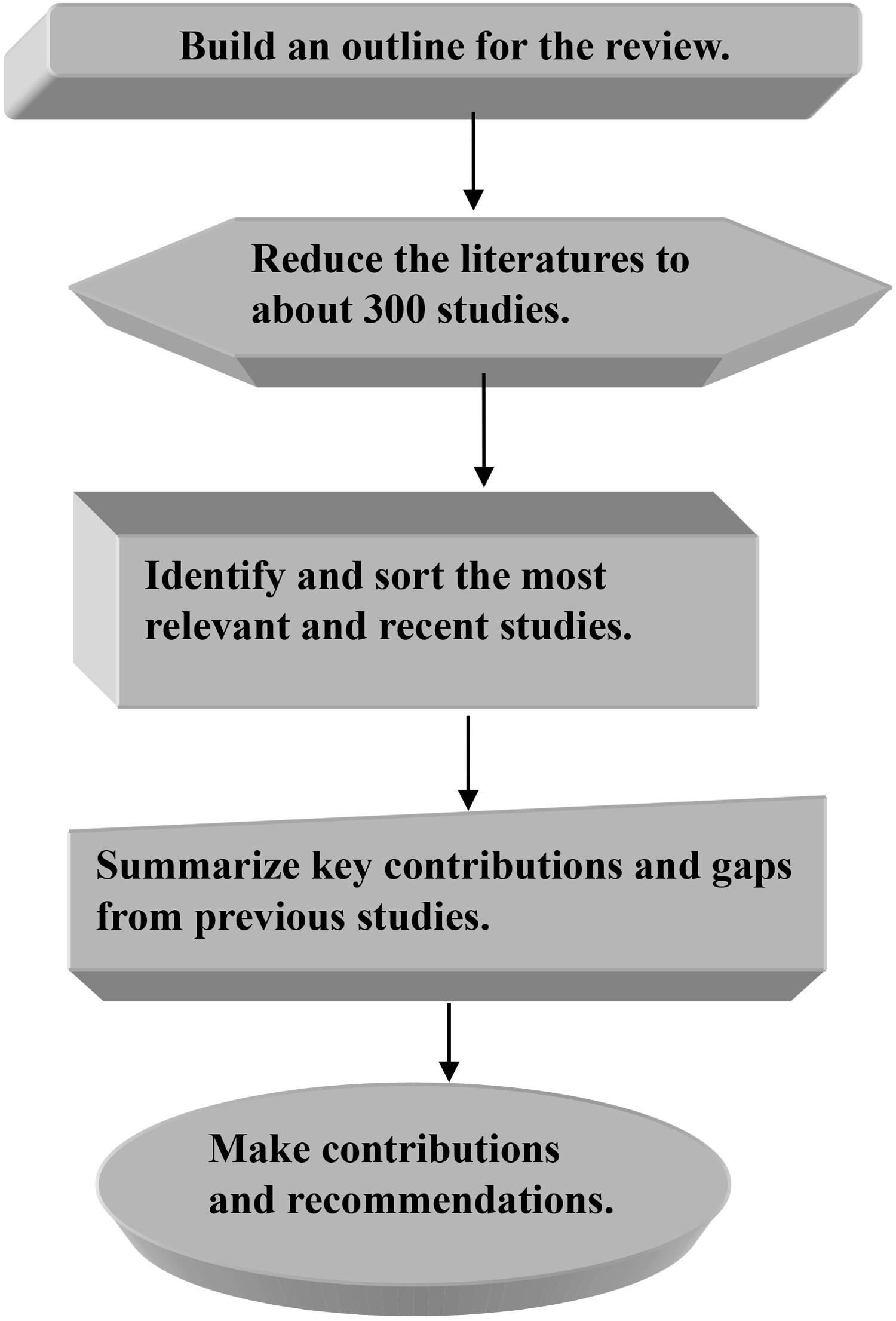
10 The outline of the study is shown in
Figure 1.
Renewable energy systems
In contrast to fossil fuels, which take millions of years to develop, RES are sources of energy that are naturally renewed over a human timeline. They offer a clean and sustainable alternative to traditional energy sources and are becoming increasingly important in the fight against climate change.
11 RES come in a wide variety, each with unique benefits and drawbacks. Some of the most common include geothermal energy, wind energy, solar energy, bioenergy, and hydropower.
12,13 Photovoltaic panels are used to gather solar energy and turn sunlight into electricity. Solar energy is becoming increasingly affordable, efficient, and a popular choice for homes and businesses. Wind turbines are used to capture wind energy and transform the kinetic energy of the wind into electrical power. Wind energy is a proven, environmentally friendly power source that works best in places with steady, strong winds.
14 Hydropower uses the falling water from rivers or dams to produce electricity. Although hydropower is a well-established and dependable renewable energy source, it may have unfavorable effects on the ecosystem, such as upsetting fish populations. The heat from the Earth’s interior is known as geothermal energy. It may be used to raise crops, heat buildings, and produce energy. Although it’s limited in its availability, geothermal energy is a reliable and environmentally friendly renewable energy origin. Bioenergy is energy produced from organic materials, such as wood, crops, or manure.
15 Bioenergy can be used to generate heat, electricity, or transportation fuels. Bioenergy is a versatile renewable energy source, but it can be controversial due to concerns about deforestation and competition with food production.
Compared to conventional energy sources, RES has several benefits. In the fight against climate change, renewable energy sources emit minimal or no greenhouse gases. Unlike fossil fuels, which eventually run out, renewable energy sources are naturally renewed. Renewable energy is getting cheaper quickly, so many RES are now more affordable than conventional energy sources. A consistent electricity supply can be obtained from certain renewable energy sources, such as hydropower, which is incredibly dependable.
16 There are many different types of renewable energy origins, so there is a renewable energy option for almost any location.
Although renewable energy technologies offer benefits, there are several drawbacks as well. Depending on whether the sun is shining or the wind is blowing, many renewable energy sources, such as solar and wind, can only generate electricity intermittently. Because of this, integrating them into the electrical grid may be challenging. Storing renewable energy can be expensive and inefficient. This can make it difficult to use renewable energy to meet peak demand for electricity. Transmitting renewable energy from where it is produced to where it is needed can be expensive and inefficient. Certain renewable energy technologies, like wind farms and hydropower, can need lots of land. This could lead to conflicts with other land uses, like agriculture and conservation. Some renewable energy projects can have negative social impacts, such as displacing local communities or harming wildlife.
17 Renewable energy is the energy of the future, notwithstanding these obstacles. Renewable energy will become more and more crucial to supplying our energy demands as its cost drops and the issues with intermittency and storage are resolved.
18Role of AI in improving the efficiency of RETs
RETs, or renewable energy technologies, are crucial in addressing the global energy challenge. For instance, wind and solar power are examples of RETs that have gained significant attention due to their potential to mitigate environmental impacts and reduce reliance on fossil fuels.
19 However, successfully integrating RETs into energy systems requires comprehensive strategies that consider energy savings, efficiency measures, and sustainability indicators.
20,21 Moreover, the social perspective on renewable energy autonomy emphasizes the need for specific examples and case studies to understand the challenges and opportunities associated with RET deployment, as demonstrated by the cancellation of wind projects due to public opposition.
22 Additionally, the potential of RETs in countries like China and Iran highlights the importance of effectively addressing technology gaps and know-how to harness renewable energy resources.
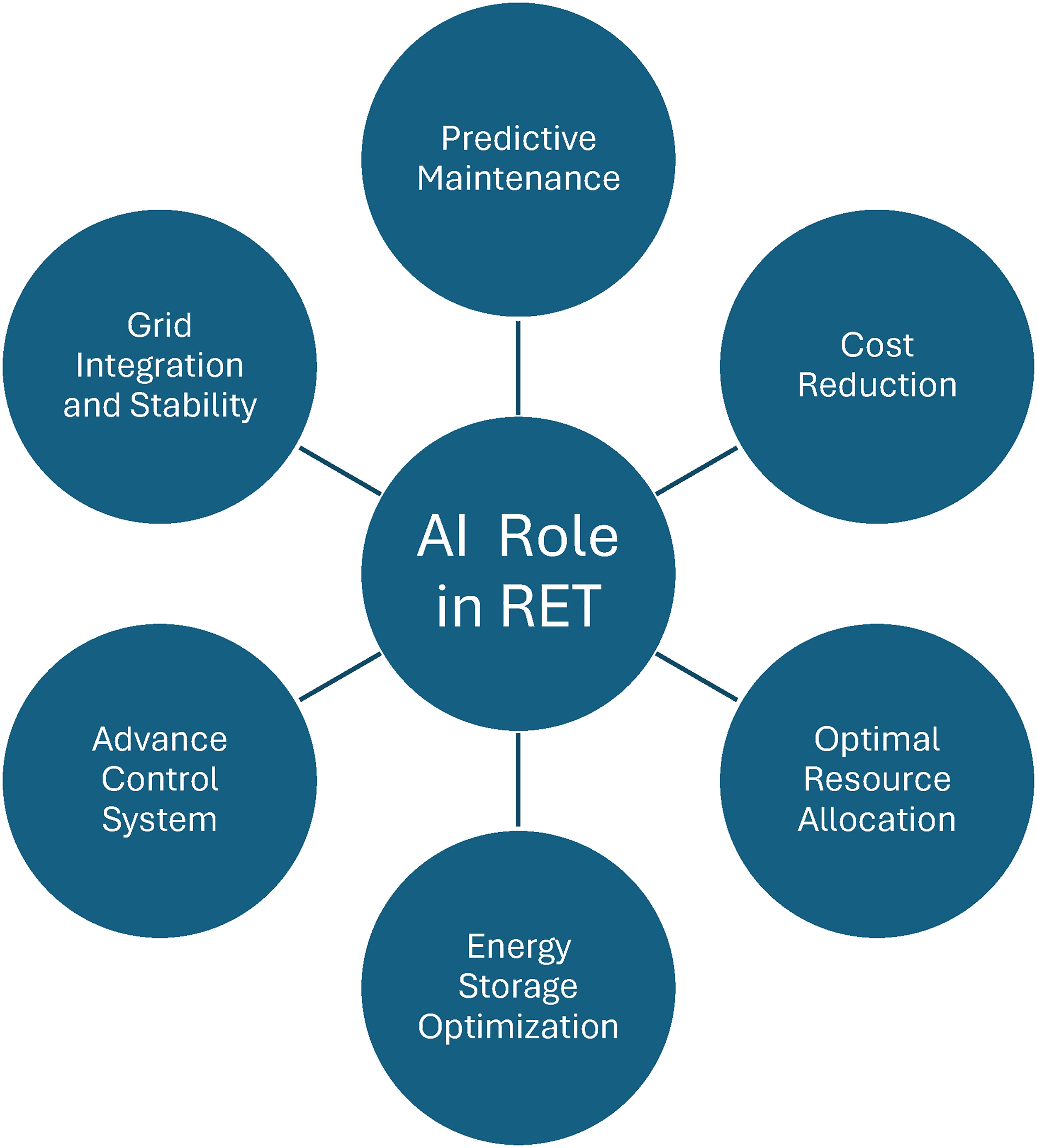
23,24RETs are pivotal in the global shift toward sustainable energy sources. However, to maximize their potential and accelerate the transition to a greener future, enhancing the efficiency of RETs is crucial. AI has emerged as a powerful tool in this pursuit, offering innovative solutions to optimize, monitor, and manage RES. The multifaceted role of AI in improving the efficiency of RETs is summarized in
Figure 2.
AI plays a vital role in predictive maintenance, a proactive approach to equipment maintenance that aims to predict failures before they occur. For RETs such as solar panels and wind turbines, AI algorithms can analyze vast amounts of data, including temperature, performance metrics, and weather patterns. By detecting anomalies or patterns indicative of potential issues, AI can enable timely maintenance, reduce downtime, and maximize energy output. Efficient utilization of renewable resources like sunlight and wind is essential for optimal energy production. AI algorithms can analyze historical and real-time data to predict resource availability. For instance, AI can forecast cloud cover for solar panels or wind patterns for turbines. This information allows for precise scheduling of energy production, ensuring that RETs operate at maximum efficiency. Integrating RETs into existing power grids poses challenges due to their intermittent nature. AI offers solutions for grid stability and management. AI-powered systems can forecast energy production from renewables, enabling grid operators to balance supply and demand effectively.
Moreover, AI can optimize the routing of electricity through the grid, minimizing transmission losses and improving overall efficiency. AI-driven control systems enhance the performance of RETs by continuously adjusting parameters for maximum efficiency. In solar power, AI can optimize the positioning of solar panels to capture the most sunlight throughout the day. Similarly, for wind turbines, AI algorithms can adjust blade angles in real-time to optimize energy capture while minimizing stress on the system. Energy storage is critical for overcoming the intermittent nature of renewables. AI algorithms optimize energy storage systems (ESS) by forecasting energy production and consumption patterns. This allows for intelligent charging and discharging of batteries, maximizing their lifespan and efficiency. Additionally, AI can identify the most cost-effective times to store or release energy based on market prices. By improving efficiency and reducing maintenance costs, AI contributes to the overall cost reduction of RETs. As AI technology advances and becomes more accessible, the scalability of renewable energy projects increases. AI-driven solutions make RETs more economically viable and attractive, from small-scale installations to large solar or wind farms. Integrating AI with renewable energy technologies represents a significant step toward a sustainable and efficient energy future. AI's ability to process vast amounts of data, make real-time decisions, and optimize system performance is revolutionizing the renewable energy sector. As we continue to harness the power of AI, we can expect further advancements in the efficiency, reliability, and affordability of RETs, driving us closer to a cleaner and more sustainable energy landscape.
Critical analysis of work done on AI application in RETs development
AI applications in RETs development have been the subject of extensive research. Different investigations have explored the utilization of AI in various aspects of RETs, such as decision-making processes, optimization algorithms, and supply chain management.
25–27 The integration of AI in RETs has shown promise in enhancing operational performance, sustainability, and data monetization.
25 However, the application of AI in RETs is not without its challenges. Researchers have highlighted drawbacks associated with AI technologies, such as high-power consumption.
27 Additionally, concerns have been raised regarding biases in AI systems, ethical challenges, and the need for responsible development and implementation of AI in various sectors, including education and marketing.
28–30 The potential drawbacks of AI in RETs development include issues related to data processing, analysis limitations, and the necessity to improve AI capabilities for a more comprehensive understanding of nonnumeric data formats.
31 Scholars have proposed various solutions to address these challenges. Some have suggested the use of artificial immune systems (AIS) as an alternative to traditional optimization algorithms to overcome practical limitations.
26 Others have emphasized the importance of a value sensitive design (VSD) technique to coordinate AI applications effectively and address ethical concerns.
32 Furthermore, incorporating lessons from expert systems in the development of AI technologies has been recommended to enhance the performance and dependability of AI systems.
33 While AI applications in RETs development offer significant advantages regarding their efficiency and sustainability, researchers have identified several drawbacks that need to be addressed. By leveraging innovative approaches, such as AIS, VSD frameworks, and lessons from expert systems, the limitations of AI in RETs development can be mitigated, leading to more robust and ethically adequate applications in the renewable energy sector.
AI application in RES
The importance of AI in enhancing RES is becoming more widely acknowledged. Research has demonstrated how AI may improve several renewable energy-related features, including system control, operation, maintenance, storage, and monitoring.
34 The integration of AI in energy systems governance is seen as essential for improving design, operations, utilization, and risk management in the energy sector.
35 Furthermore, the application of AI methods has shown a significant promise in addressing challenges related to renewable energy generation, including upfront costs, geographic limitations, and storage capabilities.
36Efficiency, affordability, and sustainability have all increased because of the substantial improvements made to RES by AI. One key area where AI has been instrumental is in the maintenance, monitoring, operation, and storage of renewable energy sources.
34 AI has enabled better management of renewable energy generation problems such as upfront costs, geographic limitations, and storage constraints.
36 Additionally, AI has been utilized to optimize energy systems, facilitate smart grid management, and support the transition to sustainability.
37,38 Additionally, AI is crucial to the production, conversion, and distribution of renewable energy, offering intelligent solutions to handle the dynamic and complex operations of renewable integrated power systems.
39,40 AI technologies like deep neural networks and the internet of things (IoT) have been employed to enhance the performance of power electronic converters in RES, thereby improving overall system efficiency.
41 Furthermore, AI has been integrated into probabilistic forecasting of renewable energy using physics-based techniques, enabling more accurate predictions for renewable energy generation.
42Several recent scientific studies have concentrated on evaluating the practicality of renewable energy sources using geographic information systems.
43 Four different regions’ renewable solar energy efficiency has been analyzed through the forecasting power of an innovative AI-based evolving generative adversarial fuzzy network.
44 The merging of AI approaches with physics-based methodologies for probabilistic renewable energy forecasting has highlighted the application of AI in evaluating renewable energy potential.
42 Machine learning techniques like Gaussian Process Regression, support vector regression, neuro-fuzzy inference, and artificial neural networks (ANN), have been discussed for integrated renewable power generation, highlighting the challenges posed by intermittent generation patterns and uncertainties in RES.
45From these studies, it can be deduced that the usage of AI in RES extends to predictive maintenance, where AI-assisted systems help in the proactive maintenance of renewable energy infrastructure, ensuring optimal performance and longevity.
46 Additionally, AI has been instrumental in the data analysis of renewable energy materials, reducing production costs, and enhancing material discovery for clean energy applications.
47 AI technologies have also been applied in energy data management schemes for smart IoT devices, contributing to secure and intelligent energy management practices.
48 The incorporation of AI into RES has resulted in revolutionary shifts, improving operational efficiency, enhancing predictive capabilities, and driving advancements in material discovery for clean energy. The combination of AI with renewable energy sources holds great promise for achieving sustainable and efficient energy systems in the future. In the context of electricity markets, AI has the capacity to revolutionize market trading and renewable matchmaking, especially with the continuous integration of renewable sources into smart grids.
49 Additionally, the combination of AI and renewable energy plays a vital role in attaining environmental sustainability and moving toward net-zero emissions.
37 The use of AI in energy markets and power systems is a growing area of research aimed at addressing complex challenges faced by the power sector, such as integrating renewable sources into the grid and managing rising energy demands. Despite the opportunities AI presents, there is still limited focus on applying AI in the renewables domain, both in industry and academia.
38 However, research trends indicate a shift toward leveraging AI for automation in smart cities’ energy systems, emphasizing efficiency and future work in the field.
50 Moreover, the utilization of AI algorithms in optimizing energy efficiency in buildings and smart homes showcases the versatility of AI in energy management.
51,52 The synergy between AI and RES holds immense potential for advancing sustainable energy practices. By harnessing AI technologies, stakeholders can optimize energy generation, improve system efficiency, and aid in the global change to more ecologically friendly energy sources.
AI-powered design optimization tools have been shown to yield substantial enhancements in accuracy, as evidenced by studies indicating a reduction in design errors and iterations by up to 30%.
53 Moreover, the streamlined installation processes facilitated by AI can lead to time savings ranging from 20% to 40% compared to traditional methods.
54 In predictive maintenance systems, AI-based solutions have demonstrated the potential to decrease equipment downtime by up to 50% and extend machinery lifespan by 20% to 40%.
55 Real-time monitoring and control systems driven by AI algorithms have shown promise in enhancing system reliability, with reports of up to a 25% reduction in system failures.
56Furthermore, the application of AI-driven optimization algorithms in industries such as logistics and supply chain management can result in significant cost savings, ranging from 15% to 30%.
54 In the healthcare sector, predictive analytics and machine learning applications have exhibited the ability to generate potential cost savings of up to $100 billion annually through improved efficiency and resource allocation. These findings underscore the transformative impact of AI technologies across various domains, showcasing their capacity to drive efficiency, reduce errors, enhance reliability, and optimize resource allocation. By leveraging AI-powered tools, organizations can unlock substantial benefits in terms of cost savings, operational efficiency, and overall performance.
Outcomes of using AI tools in improving the design, installation, and performance evaluation of RETs
The integration of AI tools has yielded profound outcomes in enhancing the design, installation, and performance evaluation of RETs. By leveraging AI algorithms and data analytics, various stakeholders in the renewable energy sector have realized numerous benefits across these stages of RETs implementation. Firstly, in the design phase, AI tools have revolutionized the process by enabling more accurate and efficient renewable energy system modeling. Large quantities of data can be analyzed using sophisticated algorithms, including geographical, meteorological, and historical energy production data, to optimize system sizing, layout, and component selection. This leads to the development of more cost-effective and reliable RETs tailored to specific environmental conditions and energy demand profiles.
During installation, AI-driven automation streamlines project management and execution processes, reducing costs and time-to-completion. AI-powered drones equipped with sensors and computer vision technology can perform aerial surveys and inspections, facilitating site assessment, land mapping, and construction monitoring. Furthermore, AI algorithms can analyze real-time data from sensors and smart devices to ensure proper equipment installation and commissioning, minimizing errors and maximizing system performance from the outset. In terms of performance evaluation, AI tools offer continuous monitoring and optimization capabilities, enabling proactive maintenance and performance optimization of RETs throughout their operational lifespan. Machine learning algorithms can analyze operational data, identify trends, and forecast potential issues, allowing operators to schedule maintenance activities preemptively and minimize downtime. Additionally, AI-based anomaly detection systems can flag deviations from expected performance, prompting corrective actions to maintain optimal system efficiency and reliability.
Overall, the outcomes of employing AI tools in improving the design, installation, and performance evaluation of RETs are manifold. These include increased accuracy and efficiency in system design, streamlined installation processes, enhanced system performance and reliability, and reduced operational costs. As AI technologies advance and become more sophisticated, their successful integration into the renewable energy sector is expected to further drive innovation and efficiency, accelerating the shift toward an energy future that is more resilient and sustainable.
AI tools have demonstrated significant potential for enhancing design optimization processes, leading to notable improvements in system performance and cost savings. Research has shown that integrating AI into design optimization can result in efficiency gains of 20–30%.
57 This enhancement is attributed to AI-driven systems’ ability to reduce equipment oversizing and increase energy yield, resulting in cost savings ranging from 10% to 20%.
57 Additionally, automating design processes through AI technologies can improve efficiency by 30–40%, thereby reducing project timelines and labor costs.
57 Furthermore, the utilization of AI-driven automation in installation processes has shown the capability to enhance efficiency by 30–40%, resulting in reduced project timelines and labor costs.
58 This automation not only streamlines operations but also contributes to substantial savings in both time and expenses. Additionally, the deployment of AI-enabled drones and automated systems has been associated with cost savings ranging from $50,000 to $100,000 per megawatt installed, attributed to decreased labor and equipment expenses.
58 These findings underscore the tangible benefits of incorporating AI technologies in various stages of design, optimization, and implementation processes.
AI-based performance evaluation has demonstrated significant potential in enhancing system uptime through predictive maintenance and early fault detection. Research has shown that proactive maintenance enabled by AI tools can result in substantial cost savings ranging from $10,000 to $30,000 per megawatt (MW) annually, attributed to decreased downtime and maintenance expenses.
59 The cumulative impact of integrating AI tools across the lifecycle of renewable energy technologies (RETs) can lead to a total performance improvement of 25–40%.
60 Additionally, the utilization of AI-driven efficiencies in renewable energy projects can yield significant cost savings ranging from $100,000 to $200,000 per MW installed, depending on the specific technology mix and application.
59 The effectiveness of AI in predictive maintenance has been emphasized in various studies, highlighting benefits including higher output, better availability and quality, cost savings from automated procedures, early failure detection, reduced downtime, and equipment life prediction.
59 Furthermore, the success of AI in improving maintenance strategies has been demonstrated in diverse sectors, including the petroleum storage industry.
61 In the context of AI’s impact on different industries, including renewable energy and maintenance, the quality of data utilized for evaluation has been identified as an important factor determining the ultimate performance of AI systems.
62 This underscores the significance of robust data collection and analysis processes to ascertain the reliability and effectiveness of AI-driven solutions in predictive maintenance and fault detection.
The incorporation of AI-based performance evaluation in maintenance practices, particularly in the renewable energy sector, offers a substantial opportunity for enhancing system uptime, reducing costs, and improving overall operational efficiency. By leveraging AI tools for predictive maintenance and fault detection, organizations can realize significant benefits in terms of cost savings and performance enhancements throughout the lifecycle of their projects.
AI tool for RETs development
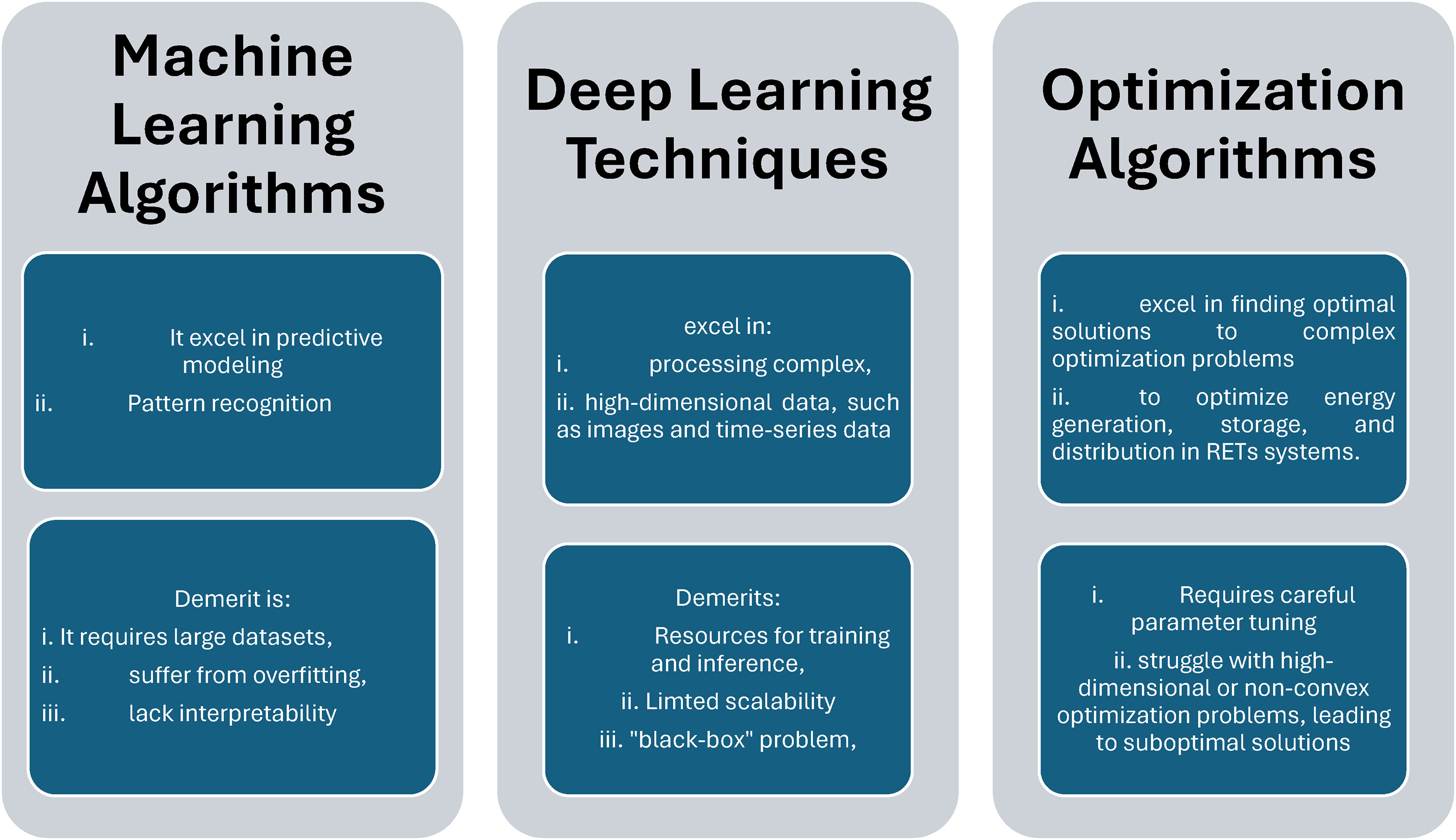
Determining the “best” AI tool for RETs development depends on various factors, including project requirements, technology compatibility, and available resources. Each AI tool has its merits and demerits, as shown in
Figure 3.
Machine learning algorithms
For their merit, support vector machines (SVM) and ANN are examples of machine learning algorithms that has excel in predictive modeling and pattern recognition tasks. They offer flexibility and scalability, enabling them to be utilized for an extensive range of RETs applications, including forecasting, optimization, and fault detection. However, it does have drawbacks. Machine learning algorithms need huge datasets for training and may suffer from overfitting or bias if not properly tuned. It could also be difficult to comprehend the underlying decision-making process due to its potential lack of interpretability.
Deep learning techniques
Deep learning methods, like convolutional and recurrent neural networks, are highly effective at handling complex, high-dimensional data, including time series and picture data. They can attain state-of-the-art performance in tasks like image recognition, speech recognition, and time-series forecasting. However, the demerits are scanty. Deep learning models often need sufficient computational resources for training and inference, limiting their scalability in resource-constrained environments. They also suffer from the “black-box” challenges, where the internal workings of the model are not easily interpretable.
Optimization algorithms
Optimization algorithms, like particle swarm optimization and genetic algorithms, excel in finding optimal solutions to complex optimization problems. They can be utilized to maximize energy generation, storage, and distribution in RETs systems. Optimization algorithms may struggle with high-dimensional or nonconvex optimization problems, leading to suboptimal solutions. They also require careful parameter tuning and may be computationally intensive, especially for large-scale optimization problems.
There is no one-size-fits-all “best” AI tool for RETs development. The best tool to use will depend on the needs and limitations of each project, weighing the merits and demerits of different AI techniques to achieve the desired outcomes effectively and efficiently. AI has significantly contributed to the development of RETs, offering various advantages and challenges. AI optimizes industrial structures, enhances energy storage technologies, and improves energy transmission efficiency, leading to reduced CO
2 emissions.
63 In smart cities, AI automates energy systems, enabling precise management and control of power systems.
50 AI acts as a catalyst for environmental sustainability and achieving net-zero goals by enhancing energy efficiency and lowering greenhouse gas releases.
37 However, integrating AI into RETs development poses challenges. One drawback is the potential risk of reduced creativity and displacement of human capital by AI and other Industry 4.0 technologies, impacting the workforce and production technology.
64 Additionally, successful integration of AI in the energy sector needs careful consideration of user expectations and benefits.
65 When selecting AI tools for RETs development, project-specific needs and objectives must be considered. Different AI tools offer unique capabilities that can be leveraged based on project requirements. AI algorithms and techniques are increasingly used in energy and renewable research to address engineering challenges.
49 Machine learning models are widely applied in energy systems for modeling, design, and prediction, showcasing the versatility of AI tools in the renewable energy sector.
66 While AI offers benefits such as optimization, automation, and sustainability for RETs development, potential drawbacks like workforce implications and the importance of user-centric implementation must be carefully evaluated. The choice of the best AI tool for RETs development should align with project requirements and desired outcomes to optimize the advantages of AI in advancing renewable energy technologies.
One notable example of successful integration between RETs and AI is evident in solar PV systems. AI has revolutionized various aspects of solar PV, significantly enhancing energy production, efficiency, and cost-effectiveness. AI algorithms are instrumental in optimizing system design for solar energy installations. By utilizing geographical and meteorological data, these algorithms can adjust panel orientation, tilt angle, and array configuration to maximize energy yield. This optimization has been shown to result in significant improvements in energy production, with studies indicating enhancements of up to 10–20%.
67 Moreover, the utilization of AI-enabled drones for site assessments can expedite project timelines by 30–40%, leading to substantial cost savings ranging from $20,000 to $50,000 per megawatt installed.
68 This integration has been supported by research that emphasizes the importance of deriving more efficient algorithms for optimizing solar PV parameters.
69 Furthermore, it highlighted the successful application of ANN and SVM in forecasting generation in PV solar plants, showcasing the advancements in AI applications in the field.
70Moreover, the study introduced an AI-based framework to fast-track data-driven policies promoting solar photovoltaics, emphasizing the role of AI resources in policy-making and stakeholder participation.
71 This approach aligns with the need for innovative strategies to enhance the incorporation of RETs and AI in RES. The synergy between RETs and AI, particularly in solar PV systems, has demonstrated significant developments in energy efficiency, cost-effectiveness, and project timelines. The research and advancements in AI techniques for PV applications underscore the potential for further development and optimization in the renewable energy sector.
In performance optimization, AI-driven predictive analytics and monitoring systems increase system uptime by 15–20% through early fault detection and proactive maintenance. This translates into annual cost savings of $10,000 to $30,000 per MW due to reduced downtime and maintenance expenses. Despite these achievements, challenges such as data quality, interoperability, and regulatory constraints persist. Nonetheless, the success of AI in solar PV systems underscores its transformative potential in driving efficiency, reliability, and profitability. As AI technologies continue to develop and become widely accessible, their integration into RETs like solar PV is expected to accelerate further, contributing to the global transition toward a sustainable energy future. Through continued innovation and overcoming existing challenges, AI promises to play a critical role in optimizing RES and advancing the adoption of clean energy technologies.
Optimizing renewable energy systems
The necessity of tackling climate change and shifting toward a sustainable energy future has propelled the integration of RES to the forefront of global energy agendas.
72 Renewable sources like hydro, solar, biomass, and wind offer a clean and inexhaustible alternative to traditional fossil fuels. However, there are substantial obstacles to the dependable and effective production of power due to the inherent fluctuation and intermittent nature of these resources.
73 The optimization of RES has become a crucial focus, aiming to maximize energy yield, enhance system efficiency, and ensure seamless integration into existing power grids.
74 Several key aspects contribute to the multifaceted endeavor of optimizing RES. Understanding and accurately predicting the availability of renewable resources are fundamental to optimization. Advanced meteorological and satellite technologies, coupled with data analytics and machine learning, enable precise resource assessment and forecasting.
75 This empowers energy operators to anticipate fluctuations and plan for optimal energy production. The integration of renewable energy into smart grids is pivotal for efficient energy distribution and utilization.
Smart grids use cutting-edge control and communication technology to provide real-time monitoring, grid balancing, and demand response (DR).
76 Grid stability is preserved while renewable energy consumption is optimized through this integration. Addressing the intermittent nature of renewable resources requires effective energy storage solutions. Storing excess energy during times of high production and releasing it during times of low production, batteries, pumped hydro storage, and other new technologies are essential.
77 This storage capability contributes to grid stability and reliable power supply.
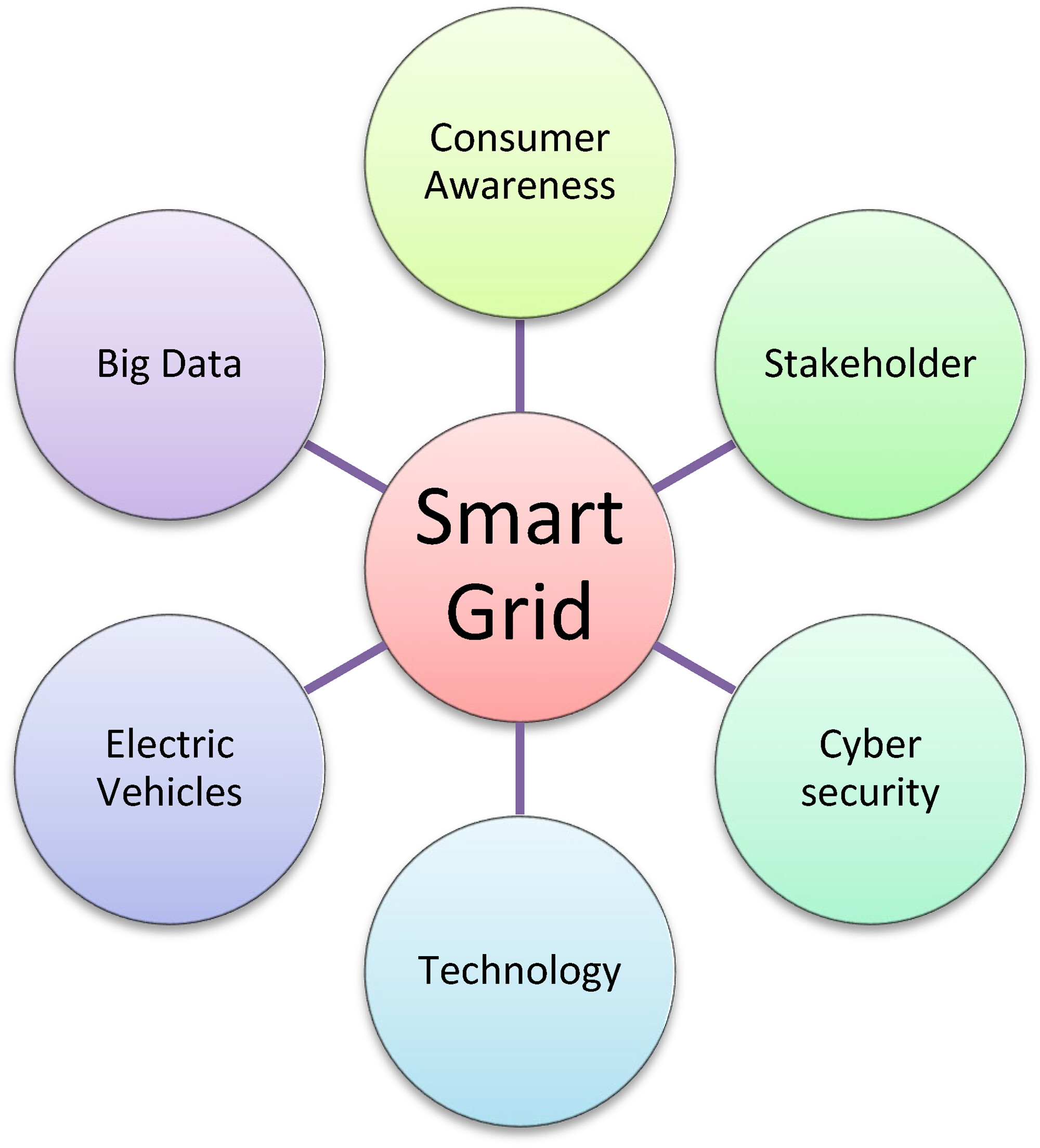
Figure 4 shows the key challenges of smart grids. Implementing sophisticated control algorithms and automation is important for optimizing the performance of RES.
78 Adaptive control strategies, informed by real-time data and predictive analytics, allow for dynamic adjustments to changing conditions, improving overall system efficiency.
The energy concept is a universal approach for urban energy modeling, which might be an efficient method for the necessary modernization of the building sector.
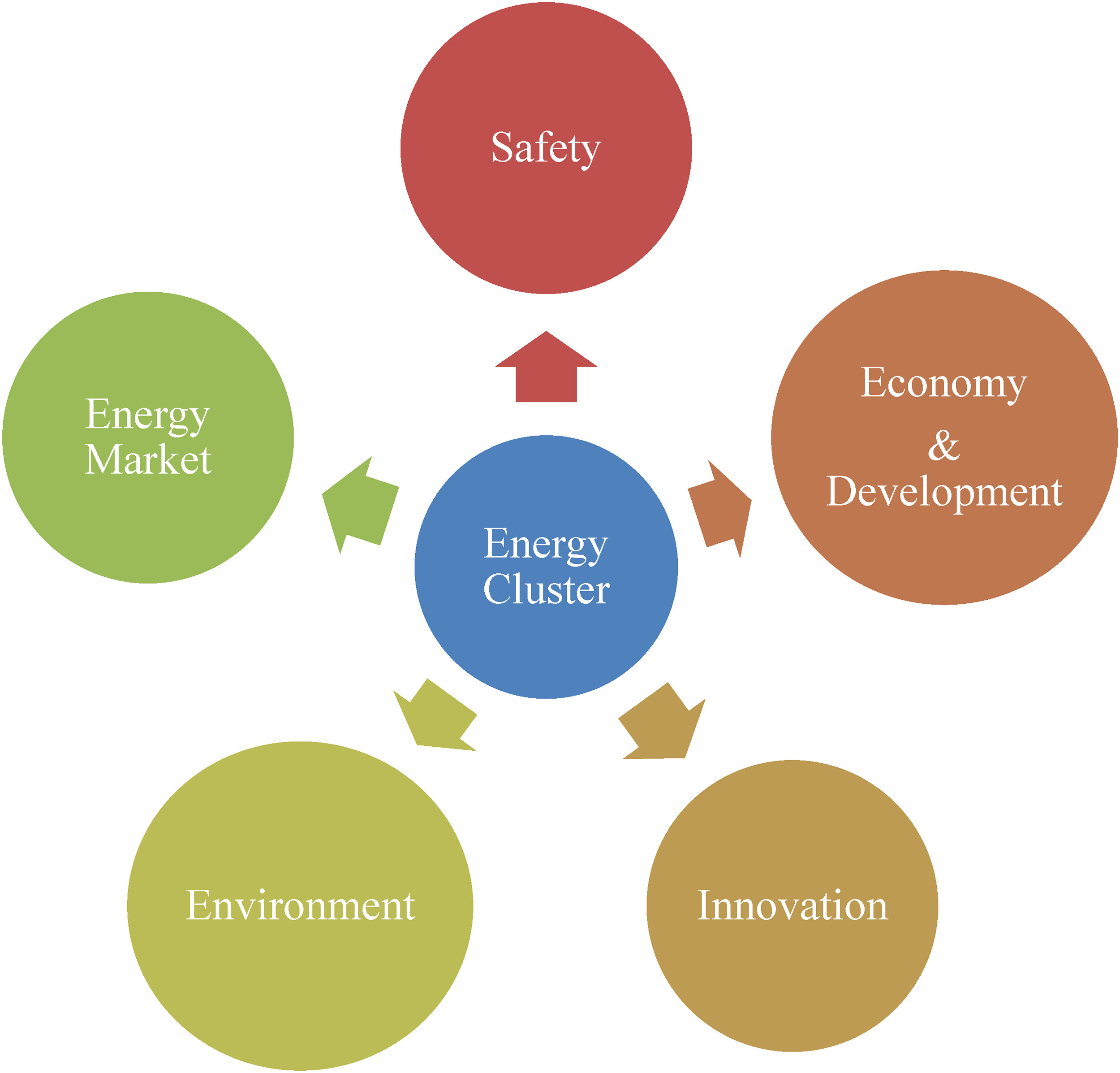
79 Figure 5 shows the energy cluster field concept. Combining different renewable sources and integrating complementary technologies, such as solar with storage or wind with hydro, enhances overall system reliability and performance. Hybrid systems mitigate the intermittency of individual sources, providing a more consistent and dependable energy output.
80Ongoing research and development efforts focus on enhancing the efficiency of renewable energy technologies. Innovations in materials, design, and manufacturing contribute to increased energy conversion rates and reduced costs, further optimizing the economic viability of RES.
75 The abundance of data generated by RES, along with advancements in data analytics and AI, enables data-driven decision-making. Predictive modeling, optimization algorithms, and machine learning models contribute to the more informed and proactive management of renewable energy assets.
81 A conducive policy environment and supportive regulations play an important role in optimizing RES. Clear regulatory frameworks, subsidies, and incentives encourage investments in renewable technologies and foster the growth of a sustainable energy sector.
The optimization of RES requires a holistic approach that encompasses technological innovation, data-driven insights, smart grid integration, and supportive policies.
82 As the world strives to lower carbon emissions and build resilient energy infrastructure, ongoing advancements in optimizing RES are pivotal for achieving a sustainable and low-carbon future.
Current applications of AI in renewable energy
AI is rapidly transforming the landscape of renewable energy, bringing efficiency, optimization, and innovation to every stage of the process. AI and renewable energy meet to form a dynamic frontier where cutting-edge technologies come together to solve problems associated with the integration and optimization of sustainable energy origins.
83Some of the prominent applications where AI is making significant contributions to advanced renewable energy technologies include resource assessment and energy forecasting, predictive maintenance for wind turbines and solar panels, grid management and stability, energy storage optimization, DR and load forecasting, solar panel orientation and tracking, energy efficiency in buildings, advanced control strategies for power plants, carbon footprint reduction, and life cycle assessment.
84Renewable energy forecasting
Predicting the availability of solar and wind power is crucial for grid effective energy management and process stability. AI algorithms trained on a large volume of weather data, historical generation trends, and real-time situations can now forecast renewable energy output with impressive accuracy.
85 This enables utilities to optimize energy storage, dispatch other sources, and ensure a smooth and reliable power supply. These tools enhance the accuracy of resource assessment and energy forecasting, enabling better planning and management of RES.
Renewable energy forecasting is a crucial area of investigation and development that seeks to enhance the accuracy of predicting energy generation from renewable origins, like wind, bioenergy, and solar wind.
86 For energy trading, effective grid management, and integrating renewable energy into current power systems, accurate projections are vital. Previous studies often focused on the incorporation of meteorological data like wind speed, solar radiation, and temperature, into forecasting models.
86–88 Advanced techniques, including numerical weather prediction models, are employed to improve the understanding of weather patterns and their impact on renewable energy production. Machine learning approaches, including regression models, SVM, and neural networks, have been widely utilized for renewable energy prediction.
89,90 These models leverage historical data to learn trends and relationships, improving the accuracy of predictions. Data analytics, including feature engineering and pattern recognition, play a key role in extracting meaningful insights from diverse datasets. Ensemble forecasting involves combining multiple individual forecasts to improve overall accuracy. Previous work explores ensemble methods for renewable energy forecasting, including combining predictions from different models, incorporating multiple weather scenarios, and considering various input features.
89,91,92 Recognizing the inherent uncertainty in renewable energy production, some studies focus on probabilistic forecasting. These approaches provide not only a point estimate of expected energy production but also a range of possible outcomes, helping decision-makers account for uncertainties in their planning and operations.
93 Hybrid models combine the strengths of different forecasting techniques. For instance, integrating statistical time series models with machine learning algorithms or combining numerical weather prediction models with AI methods.
94 These hybrid approaches aim to capture a broader range of factors influencing renewable energy production.
Research often addresses the spatial and temporal aspects of renewable energy forecasting. Spatial forecasting involves predicting energy production across multiple locations, while temporal forecasting focuses on predicting energy production over varying time zones, ranging from short-term to long-term predictions.
95 Remote sensing technology, such as satellite imaging and light detection and ranging (LiDAR), is integrated into certain studies, to enhance the spatial resolution and accuracy of renewable energy forecasting.
96,97 Data from remote sensing is a useful tool for learning about the physical characteristics of renewable energy sources. Recognizing the influence of renewable energy variability on grid stability, research often delves into forecasting methods tailored for grid integration. This includes predicting ramp events, which are rapid changes in energy production, to facilitate smoother integration into the power grid. Previous work explores operational forecasting tailored for energy markets.
91,98–101 Accurate predictions are crucial for market operators and energy traders to make informed decisions regarding energy pricing, scheduling, and market participation. With the rise of hybrid RES that combine multiple origins, like solar and wind, research focuses on forecasting methodologies specifically designed for these integrated systems.
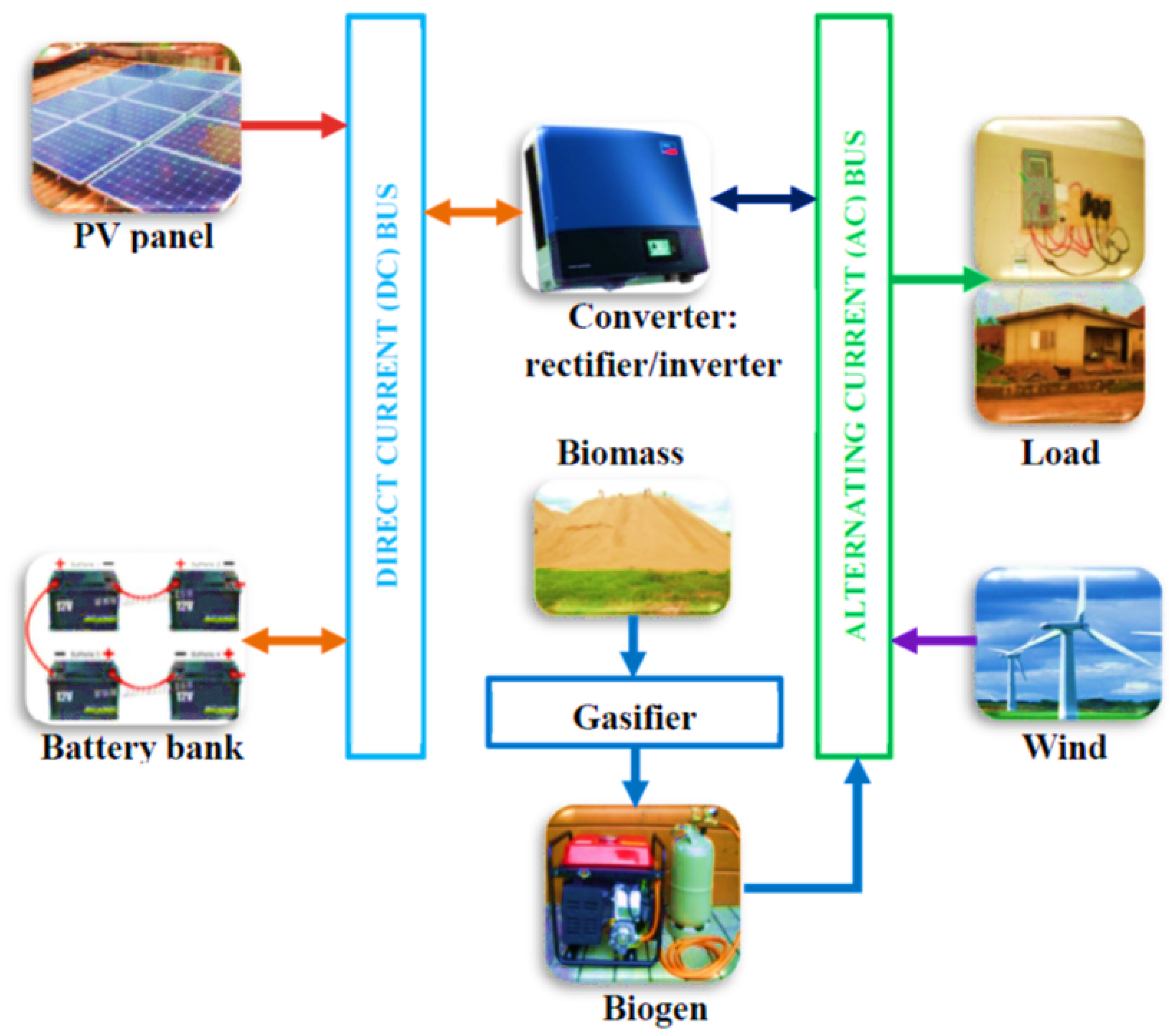
102 This includes optimizing the operation of hybrid systems based on accurate forecasts of each energy source’s contribution. Overall, the body of previous work on renewable energy forecasting reflects a diverse range of methodologies and applications. As technology develops and more data becomes accessible, ongoing research continues to refine and innovate in this critical field.
Figure 6 shows the schematic of a hybrid system configuration involving wind energy, solar Photovoltaics (PV), and biogen.
Smart grid management
Integrating intermittent renewable energy sources into the grid requires intelligent management systems. AI-powered smart grids can monitor and analyze energy flows in real-time, predict outages, and automatically adjust power distribution to maintain grid stability and optimize energy use.
103 This leads to a more adaptable and robust grid that can accommodate the increasing share of renewables.
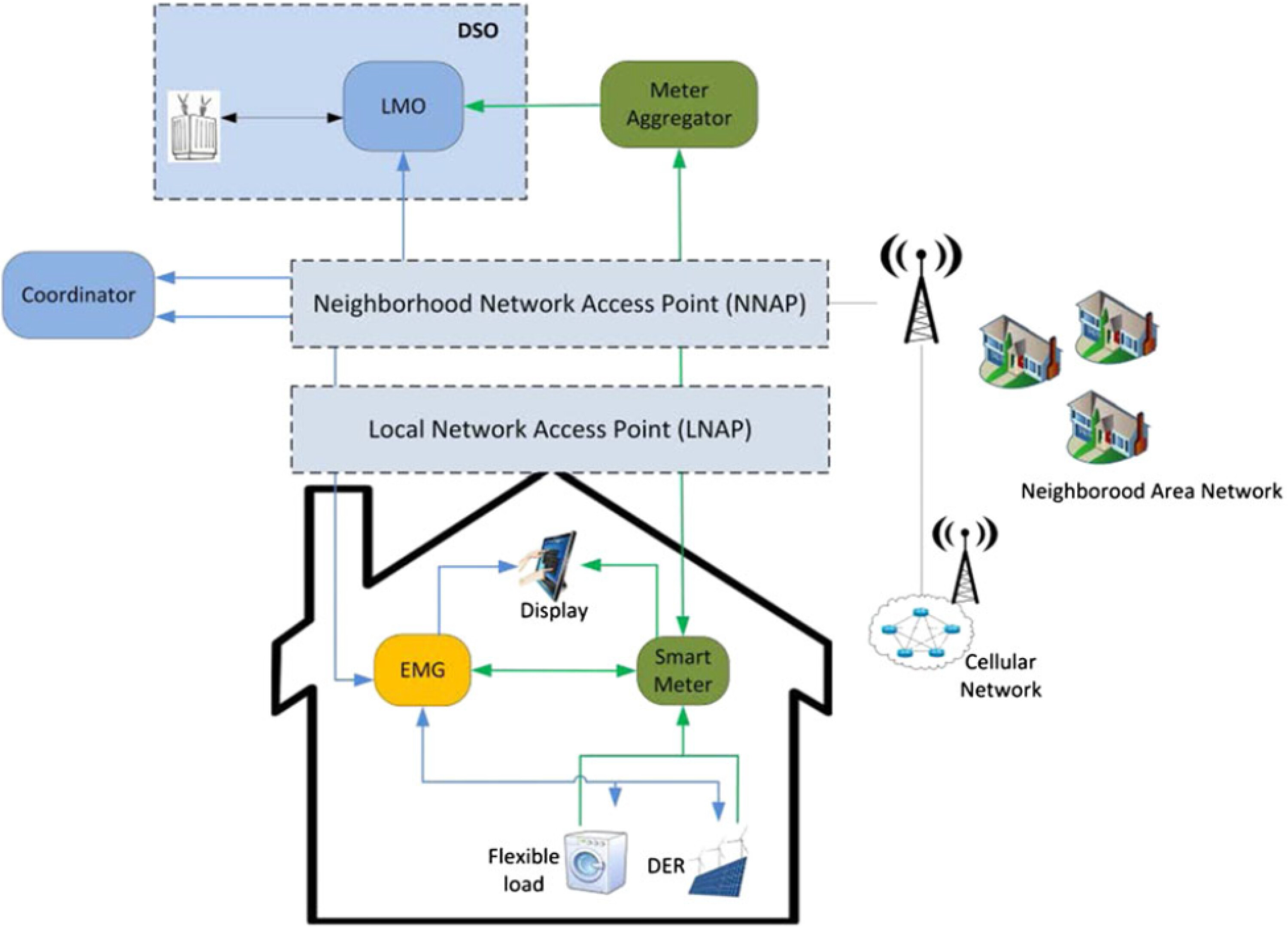
Smart grids powered by AI facilitate real-time monitoring and control of energy distribution. AI algorithms analyze data from sensors and devices across the grid, predicting and mitigating issues such as fluctuations in power supply, grid imbalances, and voltage variations. This enhances grid stability and accommodates the intermittent nature of renewable energy sources.
103 A typical smart grid management system, is illustrated in
Figure 7.
Smart grid management is a dynamic field that entails incorporating cutting-edge technologies to enhance the efficiency, dependability, and sustainability of power distribution systems. Numerous previous investigations have contributed to the understanding and development of smart grid management. Previous studies often focused on communication technologies that allow the exchange of information within various components of the smart grid.
105,106 This includes studies on the application of wired and wireless communication protocols, such as Zigbee, Wi-Fi, and cellular networks, to facilitate real-time data exchange for efficient grid operation. The deployment and effectiveness of advanced metering infrastructure (AMI), which includes smart meters, form a significant focus. Research has examined the ways in which AMI facilitates bidirectional communication between utilities and customers, offering up-to-date information on energy usage.
107–109 This facilitates DR programs, enhances billing accuracy, and supports grid monitoring. Smart grid management involves real-time monitoring and control of the grid to ensure stability and reliability. Previous studies delved into the development and application of supervisory control and data acquisition (SCADA) systems, phasor measurement units, and other monitoring techniques to enable timely decision-making and efficient grid operation. The integration of distributed energy resources (DERs) into the smart grid has been the subject of previous research due to the increasing popularity of renewable energy sources and distributed generation. This includes research on the optimal integration of wind turbines, solar panels, and ESS to improve grid resilience and accommodate fluctuating renewable energy generation. DR programs are explored to balance demand and supply in real-time. Previous studies investigated the effectiveness of DR strategies in optimizing energy consumption, reducing peak loads, and enhancing grid stability during times of high demand or supply variability.
110–112 The increase in the adoption of electric vehicles (EVs) introduces new challenges and possibilities for smart grid management. Studies assess the effects of EV charging on the grid, and research explores intelligent charging solutions, vehicle-to-grid integration, and the potential for using EVs as distributed energy storage resources. As smart grids rely heavily on information and communication technologies, cybersecurity is a critical consideration. Previous studies investigated cybersecurity threats, vulnerabilities, and measures to enhance the resilience of smart grid infrastructure against cyberattacks, ensuring the integrity and reliability of the grid.
113–115 Smart grid management benefits from the application of machine learning and predictive analytics. Previous studies explore the use of these technologies for fault detection, predictive maintenance, and optimizing grid operations.
116–118 Machine learning models are applied to analyze large datasets and make real-time decisions for grid optimization. Research often delves into the regulatory and policy frameworks that support the deployment and operation of smart grids. Studies assess the influence of regulatory measures on the adoption of smart grid technologies and investigate how policy frameworks can incentivize investments in smart grid infrastructure.
119 Studies emphasize the importance of consumer engagement and empowerment in smart grid management. Previous research explores ways to educate and involve consumers in demand-side management, encourage energy efficiency, and foster a more interactive and responsive relationship between utilities and end-users.
120,121In summary, previous studies on smart grid management have contributed valuable insights into the technological, operational, and regulatory aspects of implementing intelligent and responsive power distribution systems. These findings form a foundation for ongoing research and the continued evolution of smart grid technologies toward more sustainable and resilient energy infrastructure.
Predictive maintenance
AI-driven predictive maintenance models leverage sensor data and historical performance metrics to anticipate equipment failures in wind turbines and solar panels. This proactive measure reduces downtime, increases the lifespan of assets, and optimizes the overall operational efficiency of renewable energy installations.
122 Wind turbines, solar panels, and other renewable energy infrastructure are constantly exposed to harsh elements. AI algorithms can analyze sensor data and maintenance logs to identify early signs of equipment failure.
123 This allows for proactive maintenance, preventing costly breakdowns and ensuring optimal performance of RES.
AI-driven predictive maintenance has gained prominence as a transformative method to optimize the performance and reliability of industrial systems. Previous studies on AI-driven predictive maintenance have explored various aspects of this technology, revealing valuable insights into its applications, benefits, and challenges.
124,125 Previous studies emphasize the significance of data-driven approaches in AI-driven predictive maintenance. Machine learning algorithms, such as regression models, decision trees, and neural networks, were used for historical and real-time data to identify patterns indicative of potential equipment failures. The quantity and quality of data play an important role in the accuracy of predictive maintenance models. Research often focuses on the integration of condition monitoring technologies, such as sensors and IoT devices, to gather real-time data on equipment health.
74 Studies explore the effectiveness of different sensor types and configurations for monitoring factors like temperature, vibration, pressure, and fluid levels. AI-driven predictive maintenance aims not only to predict impending failures but also to provide prognostics, estimating the remaining useful life of equipment. Previous research investigated various models and algorithms for accurately forecasting when equipment is likely to fail, enabling proactive maintenance interventions. Feature engineering is a crucial aspect of developing effective predictive maintenance models. Studies delve into the identification and selection of relevant features from diverse datasets, ensuring that the input variables fed into machine learning models capture the essential information for accurate failure predictions. Previous research includes case studies across diverse industries, like manufacturing, energy, transportation, and healthcare. These case studies illustrate the utilization of AI-driven predictive maintenance in specific contexts, showcasing its effectiveness in improving asset reliability, reducing downtime, and optimizing maintenance costs. Previous studies highlight challenges and limitations associated with AI-driven predictive maintenance, including issues related to data quality, interpretability of models, and the need for continuous model retraining.
126,127 Researchers acknowledge that addressing these limitations is important for the successful deployment and sustainability of predictive maintenance systems. Some studies explore the role of human–machine collaboration in predictive maintenance. The integration of AI-driven insights with human expertise is investigated, emphasizing the importance of creating collaborative environments where maintenance teams can leverage AI predictions to make informed decisions. The implications of AI-driven predictive maintenance on regulations and ethical considerations are discussed in certain studies. Researchers explore how regulatory frameworks should adapt to accommodate these technologies while ensuring privacy, security, and the ethical use of data.
128 Previous studies on AI-driven predictive maintenance provide a detailed understanding of the technology's applications, methodologies, and challenges. The insights gained from this body of research contribute to the ongoing evolution of predictive maintenance practices across industries, paving the way for more resilient, efficient, and cost-effective maintenance strategies.
Energy storage optimization
Batteries and other energy storage devices have their charging and discharging cycles optimized using AI algorithms. By analyzing historical data and considering real-time conditions, these systems maximize the efficiency of energy storage, ensuring the availability of stored energy when renewable resources are not actively generating power.
129 Storing excess renewable energy for later use is critical for balancing supply and demand. AI can optimize battery storage systems, determining the most efficient times to charge and discharge batteries based on real-time energy needs and market prices.
130 This optimizes the use of renewable energy and lowers the dependence on fossil fuels during peak demand periods.
Energy storage optimization is a vital aspect of modern energy systems, providing flexibility, stability, and efficiency. Previous studies on energy storage optimization have explored various dimensions of this field, seeking to enhance the performance and economic viability of ESS.
78,131 Studies often address the challenge of determining the optimum size and placement of ESS within power networks. Optimization models and algorithms are employed to analyze factors like grid requirements, renewable energy generation patterns, and load profiles, to determine the most effective locations and capacities for energy storage installations. This includes investigations into charge and discharge scheduling, peak shaving, and load leveling techniques to maximize the use of stored energy while minimizing costs and grid stress. Integration of energy storage with renewable energy sources, such as solar and wind, is the subject of many studies. Optimization models explore how energy storage can mitigate the intermittency and variability of renewables, providing grid support through services like frequency regulation, voltage control, and smoothing of renewable energy output.
132 The optimization of hybrid ESS, which integrate several storage technologies such as flywheels, supercapacitors, and batteries, is being studied. Studies investigate how the complementary strengths of different storage technologies can be leveraged to enhance overall system performance and efficiency.
133,134 Optimization studies often consider the economic aspects of energy storage, analyze market participation strategies, and identify potential revenue streams. This includes participation in energy markets, ancillary services, and DR programs to maximize the economic benefits of energy storage assets. Researchers conduct techno-economic analyses to evaluate the cost-effectiveness and financial viability of energy storage projects. These analyses consider factors like investment costs, operation and maintenance expenses, and revenue generation, providing insights into the economic feasibility of implementing energy storage solutions. Some studies incorporate forecasting models and predictive analytics to optimize energy storage operation. This involves predicting energy demand, renewable energy generation, and market prices to inform real-time decision-making and improve the efficiency of energy storage utilization.
Life cycle assessment studies examine the environmental impact of ESS.
135 Researchers investigate the environmental benefits and trade-offs associated with different storage technologies, considering factors such as manufacturing, operation, and end-of-life disposal. Optimization models are developed to enhance the durability and resilience of ESS. This includes assessing the impact of system failures, developing fault-tolerant strategies, and optimizing maintenance schedules to ensure continuous and reliable energy storage operation. Some studies address regulatory and policy frameworks that impact energy storage optimization.
136 Researchers explore how existing regulations and policies either facilitate or hinder the deployment and optimal operation of ESS, offering perceptions to industry stakeholders and policymakers.
Previous studies on energy storage optimization offer a comprehensive understanding of the technological, environmental, and economic indices of deploying and managing ESS.
137 These insights contribute to the ongoing development of optimized energy storage solutions that play a critical role in the shift to energy systems that are more resilient and sustainable.
Optimizing renewable energy production
AI can assist in fine-tuning the operation of RES for maximum output. For example, AI algorithms can assist with the tilt angles of solar panels to track the sun's movement or optimize the pitch of wind turbine blades to capture more wind energy.
138 This leads to improved energy production and cost-effectiveness of renewable energy projects.
Optimizing renewable energy production is a multifaceted challenge that involves maximizing the efficiency and reliability of RES. Previous studies on this topic have explored different strategies, techniques, and methodologies to enhance the performance of renewable energy sources. Previous investigations often targeted the development and enhancement of advanced prediction methods for renewable energy sources. This includes accurate prediction models for solar irradiance, wind speed, and other weather parameters to anticipate variations in energy production and optimize the incorporation of renewable energy into the grid. Research investigates the optimization of hybrid RES, which combine several sources such as solar, wind, and hydropower. Studies explore how the complementary nature of different renewable sources can be leveraged to achieve a more consistent and reliable energy output.
139 One common goal is to maximize the integration of energy storage devices, like batteries, into RES. Research examines how energy storage can help maintain grid stability and dependability by storing excess energy during times of peak production and releasing it during times of low production. Machine learning and AI are applied to optimize renewable energy production. These technologies are used for real-time monitoring, adaptive control plans, and predictive maintenance, enhancing the overall efficiency and dependability of RES. Research explores grid-friendly operation strategies for RES, considering factors like grid stability, voltage control, and frequency regulation. Optimization models aim to align renewable energy production with grid requirements, ensuring smooth and reliable integration into the existing power infrastructure.
132Studies often delve into the spatial and temporal analysis of renewable energy resources. This includes optimizing the placement of renewable energy installations based on geographical variations and considering the temporal patterns of energy production to enhance overall system efficiency. Optimizing the siting of renewable energy projects is an important aspect of maximizing energy production. Studies employ geographic information systems and optimization algorithms to determine the optimal locations for solar and wind installations, considering factors like available resources, land use, and environmental impact.
140 Efficient operational and maintenance strategies contribute to optimizing renewable energy production. Research investigates best practices for maintenance scheduling, equipment monitoring, and performance optimization to ensure the durability and dependability of sustainable energy infrastructure. Economic and financial considerations are explored in studies that conduct cost-benefit analyses, evaluate different financing models, and assess the economic viability of renewable energy projects. Optimization models assist in identifying the most economical approaches to maximize the return on investment in renewable energy production.
141 Some studies address the influence of regulatory and policy frameworks on optimizing renewable energy generation. Researchers investigate how supportive policies, incentives, and regulatory structures can facilitate the deployment and efficient operation of renewable energy projects.
Previous studies on optimizing renewable energy production cover a wide range of topics, from advanced forecasting techniques and energy storage integration to machine learning applications and economic considerations.
89,129 The collective insights from these studies contribute to the ongoing efforts to maximize the benefits of renewable energy origins in the world energy mix.
Demand response and load forecasting
AI is employed to forecast energy demand trends and optimize load distribution. By analyzing historical consumption data, weather forecasts, and other important factors, AI systems enable utilities to implement DR strategies, adjusting energy production and usage to match fluctuations in renewable energy availability.
81DR and load forecasting are crucial components of modern energy management systems, enabling utilities to balance demand and supply, optimize grid operations, and enhance overall system reliability.
142 Previous studies have extensively explored these topics, providing insights into methodologies, technologies, and strategies. Numerous studies have focused on the development and enhancement of load predicting models. These models consist of ANN, regression models, time series analysis, machine learning algorithms, and hybrid approaches.
143 The goal is to accurately predict future electricity consumption patterns at various temporal resolutions, such as short-term, medium-term, and long-term forecasts. With the increasing penetration of renewable energy sources, studies explore load forecasting techniques that consider the intermittent and variable nature of renewables.
144 Integrating renewable energy forecasts into load forecasting models is crucial for effectively managing the variation and uncertainty related to renewable production. Research mostly emphasizes the application of smart grid technologies on enhance load forecasting and DR. The integration of AMI, smart meters, and real-time data analytics enables more accurate load predictions and facilitates responsive demand-side management. Studies investigate different DR strategies, including time-of-use pricing, incentive-based programs, and automated DR. The effectiveness of these strategies in influencing consumer behavior, reducing peak demand, and enhancing grid reliability is a common focus. The use of data analytics and machine learning techniques is common in load forecasting and DR studies. Researchers leverage these technologies to analyze historical consumption data, weather patterns, and other important factors to improve the accuracy of predictions and optimize DR programs. Understanding the behavioral aspects of energy consumers is an important consideration in DR studies. Research explores how consumers respond to different DR initiatives, the impact of communication strategies, and the factors influencing participation in DR programs. The deployment of advanced metering infrastructure, including smart meters, is a key focus in load forecasting and DR research. AMI enables real-time monitoring of energy consumption patterns, enhances data granularity, and facilitates more responsive demand-side management strategies.
145Recognizing the inherent uncertainty in load forecasting, studies investigate probabilistic forecasting models. These models provide not only point estimates but also probability distributions, allowing utilities to make specified decisions considering the range of potential results. With the rise in the adoption of EVs, studies explore the impact of EV charging patterns on load forecasting and DR. Research investigates strategies to optimize EV charging schedules, manage increased demand, and leverage EVs as distributed energy resources. Some studies delve into the impact of policy and regulatory frameworks on DR and load forecasting. Researchers assess the effectiveness of regulatory measures, incentives, and market structures in promoting DR initiatives and shaping load forecasting practices.
146Previous studies on DR and load forecasting cover a diverse range of topics, from forecasting models and smart grid technologies to behavioral aspects and policy considerations.
92,147 The collective findings assist in the development of more accurate, responsive, and sustainable energy management practices in evolving energy landscapes.
Efficient operation of microgrids
In decentralized energy systems, AI aids in the efficient operation of microgrids. These AI-based systems optimize the balance between local energy production, storage, and usage, enhancing the resilience and reliability of microgrid networks in both urban and remote settings.
148Efficient operation of microgrids is a critical aspect of modern energy systems, especially in decentralized and distributed energy resources. Numerous previous studies have explored various aspects of microgrid operation, aiming to enhance efficiency, reliability, and sustainability. Many studies focus on the development and application of optimization algorithms and control strategies to achieve efficient microgrid operation. These include algorithms for economic dispatch, energy management, and optimal power flow to lower costs and enhance the utilization of available resources. The integration of renewable energy sources, like solar and wind, into microgrids is mostly focused on. Previous research explores strategies to efficiently manage the variability and intermittent nature of renewable generation, considering factors like energy storage, DR, and predictive analytics.
The role of ESS in microgrid efficiency has been extensively studied. Researchers investigate optimal sizing, placement, and operation strategies for energy storage to balance supply and demand, enhance grid stability, and support reliable microgrid operation.
149 Studies explore the integration of DR strategies in microgrids to optimize load profiles, reduce peak demand, and enhance overall system efficiency.
150 Smart DR initiatives and real-time communication technologies are often investigated for their effectiveness in microgrid contexts. Efficient control of distributed energy resources, including generators, storage systems, and flexible loads, is crucial. Research examines advanced control algorithms and coordination strategies to manage DERs optimally, considering factors such as grid constraints, voltage stability, and power quality.
151Resilience and reliability studies focus on ensuring uninterrupted and reliable operation during both normal and challenging conditions. Previous research explores strategies for enhancing microgrid resilience against disturbances, faults, and external threats through adaptive control and robust operation.
152,153 Economic and environmental assessments play a significant role in optimizing microgrid operations. Studies conduct cost-benefit analyses, life cycle assessments, and techno-economic evaluations to ascertain the economic viability and environmental impact of microgrid projects. Efficient operation begins with the planning and design phases. Research investigates optimal microgrid architectures, components, and configurations, considering factors such as resource availability, load profiles, and grid connectivity to ensure efficiency from the outset.
154 Microgrids can operate either connected to the main grid or in islanded mode. Studies explore strategies for seamless transitions between these modes, considering factors like islanding detection, grid synchronization, and the reconnection process to ensure continuity of service and efficient operation.
155Some studies focus on the engagement of communities and prosumers (consumers who also produce energy) in microgrid operation. Research explores how community involvement and prosumer participation can contribute to overall system efficiency, demand management, and a sense of ownership. Previous studies on the efficient operation of microgrids cover a wide range of topics, from optimization algorithms and renewable energy integration to resilience strategies and community engagement.
156,157 The findings from this body of research contribute to the ongoing development and deployment of microgrid solutions that are efficient, reliable, and adaptable to evolving energy landscapes.
Solar panel orientation and tracking
AI algorithms are designed to increase the amount of sunshine that solar panels receive throughout the day by optimizing their tracking and orientation. AI ensures that solar panels are positioned for the best energy capture by monitoring the sun’s position and current weather conditions. This improves overall solar energy conversion efficiency.
75Numerous studies have investigated the optimal orientation and tracking strategies for solar panels to optimize energy capture and enhance the efficiency of solar power generation.
158 Some key themes and findings from prior research on solar panel orientation and tracking are presented. Studies compare the energy yield of fixed-tilt solar panels with that of tracking systems. These investigations assess the impact of various tracking technologies, such as single-axis and dual-axis tracking, on energy production under different climatic conditions and geographical locations. Research considers the geographical location and climatic conditions when evaluating the performance of solar panel orientation and tracking.
159 Studies often consider factors like latitude, solar irradiance, and the angle of incidence of sunlight to maximize the tilt and orientation of solar panels. Mathematical models are developed to simulate the energy yield of solar panels with different orientations and tracking systems.
160 Researchers employ tools like solar radiation models, weather data, and simulation software to predict the energy output under varying configurations. Many studies conduct economic analyses to determine the cost-effectiveness of solar panel orientation and tracking systems.
161–163 This includes evaluating the additional costs associated with tracking mechanisms against the increased energy production and financial benefits over the system’s lifetime. Investigations into dual-axis tracking systems are common, focusing on their capacity to follow the sun’s path in both azimuth and elevation. Studies assess the advantages of dual-axis tracking in capturing more sunlight throughout the day and optimizing energy production, especially in locations with variable sunlight angles.
164–166Some studies leverage machine learning algorithms to optimize solar panel orientation and tracking. These models analyze historical performance data, weather patterns, and solar irradiance information to develop predictive algorithms that dynamically adjust panel angles for maximum energy capture.
167 Research examines how cloud cover and diffuse radiation affect the performance of solar panels with different orientations and tracking systems. Studies aim to develop strategies that adapt solar panel angles to changing sky conditions, optimizing energy capture even during periods of partial shading. Sensitivity analyses are conducted to determine the most important parameters affecting the efficiency of solar panels. Researchers explore how changes in factors such as panel tilt, azimuth angle, and tracking accuracy impact energy yield, guiding the design of efficient solar energy systems. Investigations into bifacial solar panels have been common in recent studies.
168,169 Bifacial panels can capture sunlight from both the front and rear sides, and research assesses the impact of different orientations and tracking strategies on the energy yield of bifacial modules. Some studies involve real-world performance monitoring of solar installations with varying orientations and tracking configurations. This field data supplies valuable information about the actual energy production and efficiency of solar panels under different operational conditions.
Previous studies on solar panel orientation and tracking encompass a wide range of topics, from theoretical modeling and economic analysis to real-world performance monitoring.
170,171 The findings contribute to the ongoing optimization of solar energy systems, providing guidance for the design and deployment of efficient solar installations.
Advanced control strategies for power plants
AI-enhanced control strategies are implemented in renewable energy power plants to adapt to changing environmental conditions.
172 Whether it’s adjusting the pitch of wind turbine blades or optimizing the operation of concentrated solar power systems, AI algorithms enhance the overall performance and efficiency of renewable energy facilities.
Advanced control strategies for power plants have been extensively studied to enhance the stability, efficiency, and overall performance of power production facilities. These studies cover a range of power plant types, including thermal, nuclear, and renewable energy power plants. The key themes and findings from prior research on advanced control strategies for power plants are presented here. Research explores the application of Model predictive control (MPC) in power plants. MPC uses dynamic models to predict the behavior of the power plant and optimize control inputs over a specified time horizon. This approach is employed for improved setpoint tracking, disturbance rejection, and optimization of various performance parameters. Adaptive control strategies are investigated to address uncertainties and parameter variations in power plant systems. Robust control techniques are also explored to ensure stability and performance in the presence of disturbances, changes in operating conditions, or component failures. Studies focus on optimizing power dispatch in multiunit power plants. Advanced optimization algorithms, including linear programming, nonlinear optimization, and genetic algorithms, are used to determine the optimum allocation of power generation among different units to minimize costs or meet specific objectives.
173 Advanced control strategies are developed to regulate frequency and voltage in power systems. Frequency control is critical for maintaining grid stability, and studies investigate strategies like droop control and load shedding. Voltage control techniques, including reactive power compensation and voltage regulators, aim to ensure grid voltage is within acceptable limits.
Research explores decentralized and distributed control strategies for power plants, particularly in the context of distributed energy resources and microgrids. These strategies aim to improve system resilience, reliability, and responsiveness by distributing control functions across multiple units or nodes. Advanced control strategies include fault detection and diagnosis methods for early identification of equipment malfunctions or anomalies. Techniques such as model-based fault detection, signal processing, and machine learning are applied to improve the reliability and availability of power plants. Studies focus on the development and improvement of SCADA systems for comprehensive monitoring and control of power plants.
17 Advanced SCADA systems enable real-time data acquisition, visualization, and control, facilitating efficient plant operation and maintenance. With the increasing integration of digital technologies, research delves into cyber-physical systems for power plants. Strategies to enhance cybersecurity, secure communication protocols, and protect power plant control systems from cyber threats are investigated to ascertain the integrity and reliability of power generation.
174 Control strategies are explored to integrate renewable energy sources into power plants seamlessly. This includes the development of control algorithms for grid-forming and grid-following converters, ESS, and hybrid power plants to manage the variability and intermittency of renewable sources. Human–machine interface (HMIs) design is studied to improve the interaction between operators and control systems. Advanced HMIs incorporate data visualization, alarm management, and decision support tools to enhance situational awareness and operator response in power plant control rooms.
Previous studies on advanced control strategies for power plants covered a diverse range of topics, from MPC and optimization algorithms to fault detection, cybersecurity, and human-machine interface design.
175–177 The findings contribute to the ongoing evolution of control systems, making power plants more efficient, reliable, and adaptable to changing operational conditions.
Energy efficiency in buildings
AI applications extend beyond power generation to optimize energy usage in buildings. To automate and optimize lighting, heating, ventilation, air conditioning (HVAC), and other energy-intensive activities, AI-driven building management systems examine occupancy trends, meteorological predictions, and data on energy usage.
178Energy efficiency in buildings has been a prominent area of research, with numerous studies exploring strategies, technologies, and policies to minimize energy consumption and improve sustainability in the built environment. Studies often focus on optimizing the building envelope through improved insulation materials, window design, and construction techniques. Enhanced insulation helps reduce heating and cooling loads, leading to lower energy consumption. Research explores the development and implementation of energy-efficient HVAC systems. This includes advanced control strategies, variable speed technologies, and the integration of smart sensors for adaptive climate control.
The integration of smart technologies for building management is a common theme. Studies investigate the use of building automation systems, IoT devices, and data analytics to optimize energy usage, monitor equipment performance, and enhance occupant comfort.
100,179,180 Understanding occupant behavior and its impact on energy consumption is a key focus. Studies analyze how occupants use energy in buildings, exploring the effectiveness of behavioral interventions, feedback systems, and educational programs to promote energy-efficient practices. Researchers examine how renewable energy sources, like wind turbines and solar panels, could be incorporated into building designs. Studies explore the feasibility of on-site renewable energy generation and assess the impact on overall energy efficiency and sustainability. Building energy simulation models are employed to assess the energy performance of different design scenarios. Researchers use tools like EnergyPlus and DesignBuilder to simulate building behavior, optimize design parameters, and examine the effectiveness of energy-efficient measures. Passive design strategies, such as natural ventilation, daylighting, and passive solar heating, are explored in various studies.
181,182 These strategies aim to minimize the need for mechanical systems and reduce energy consumption by leveraging natural elements. The effectiveness of energy labeling and certification programs, such as ENERGY STAR and LEED, is examined. Studies assess the influence of these programs on building energy performance, market adoption, and occupant awareness.
Retrofitting existing buildings to improve energy efficiency is a common focus. Studies explore cost-effective retrofit measures, assess the energy savings achieved through upgrades, and consider the environmental impact of retrofitting projects. Many studies investigate the impact of policies and regulatory frameworks on building energy efficiency. This includes building codes, energy standards, and incentives aimed at promoting energy-efficient construction and renovation practices. Life cycle assessment studies evaluate the environmental impact of buildings from construction to demolition. Researchers analyze the embodied energy of materials, energy consumption during operation, and end-of-life considerations to assess the overall sustainability of building projects. Demand-side management strategies are explored to optimize energy consumption patterns. Studies investigate load-shifting techniques, DR programs, and the utilization of energy storage to minimize peak demand and enhance grid reliability.
183,184 Urban planning and design strategies are considered to create energy-efficient, sustainable communities. Research explores concepts like mixed land use, transit-oriented development, and green building clusters to minimize energy demand and promote sustainable urban living.
In summary, previous studies on energy efficiency in buildings cover a wide array of topics, reflecting a comprehensive approach to creating sustainable, energy-efficient built environments. The insights gained from these investigations contribute to the ongoing development of best practices, technologies, and policies for energy-efficient buildings. AI tools contribute to assessing the environmental effects of RES through life cycle assessments. These assessments consider the total life span of renewable energy infrastructure, aiding in the reduction of carbon footprints and informing sustainable decision-making. The current usage of AI in renewable energy spans a broad spectrum, from resource assessment and predictive maintenance to grid management and energy storage optimization. The integration of AI into RES is anticipated to be a pivotal factor in defining a future where energy is more efficiently and sustainably produced, given the ongoing advancements in technology.
Challenges and opportunities of integrating AI into renewable energy system
Integrating AI into RES presents both promising opportunities and significant challenges.
185 While AI has the strength to optimize the performance, efficiency, and reliability of renewable energy technologies, several challenges must be addressed for successful integration.
AI algorithms heavily rely on high-quality and abundant data for training and decision-making. In the renewable energy domain, obtaining accurate and comprehensive data on wind speeds, solar radiation, weather patterns, and other important variables can be challenging.
186 Incomplete or inaccurate data can lead to suboptimal AI models and predictions. RES are often complex and nonlinear, involving multiple variables and dynamic interactions. Developing AI models that accurately depict the intricacies of these systems can be challenging. The complexity increases when integrating diverse renewable sources like solar, wind, and hydropower into a single system. AI-based prediction and control faces difficulties due to the intermittent and variable nature of renewable energy sources, such as solar and wind.
187 Adapting AI algorithms to handle the uncertainty and rapid changes in energy generation patterns is essential for effective integration into RES. The lack of standardization in data formats, communication protocols, and control interfaces across different renewable energy technologies hinders the seamless integration of AI.
188 Developing standardized frameworks and protocols is essential to facilitating interoperability and collaboration between diverse components in RES. AI algorithms, particularly deep learning models, often demand substantial computational resources. Implementing these resource-intensive algorithms in real-time applications for RES, especially in remote or resource-constrained areas, can be challenging due to the need for powerful computing infrastructure.
189 AI models, especially complex ones like neural networks, are mostly regarded as “black boxes,” making it difficult to interpret their decision-making processes. In critical systems like renewable energy, explainability and transparency are crucial for gaining trust and understanding the rationale behind AI-driven decisions. RES are subject to changing environmental conditions, equipment degradation, and evolving technology.
18 Ensuring the robustness and adaptability of AI models to handle unforeseen changes and disturbances is a challenge. Continuous model updating and adaptation mechanisms are essential for long-term reliability.
Integrating AI into RES may involve significant upfront costs for hardware, software, and skilled personnel. Small-scale or resource-constrained installations may face challenges in allocating resources for AI integration, limiting the widespread adoption of these technologies. As AI becomes integral to RES, the risk of cybersecurity threats increases. Protecting AI models, control systems, and communication networks from cyberattacks is crucial to ensuring the secure and reliable operation of renewable energy infrastructure.
190 Regulatory frameworks and policies may not keep pace with the rapid advancements in AI technology. Ambiguous or restrictive regulations may hinder the adoption of AI in RES. Clear guidelines and regulatory support are necessary to facilitate responsible and widespread deployment. Addressing these challenges requires collaboration between researchers, industry stakeholders, and policymakers. As technology advances and best practices emerge, overcoming these obstacles will contribute to the effective integration of AI into RES, fostering a more sustainable and resilient energy future.
191This section adeptly outlines the hurdles in integrating AI with RES and the prospective advancements. It provides a more focused discussion on specific, actionable strategies to overcome these challenges, possibly supported by examples from emerging research or pilot projects.
The paper discusses the efficiency and optimization benefits of AI; integrating a discussion on the environmental and societal impacts of deploying AI in RES would enrich the narrative. It also includes the carbon footprint of AI operations, the role of AI in democratizing energy access, and ethical considerations.
Deploying AI in RES can have significant environmental and societal impacts, both positive and negative. While AI can optimize RES and reduce carbon emissions, it also comes with its own environmental footprint. Training AI models requires significant computational power, resulting in high energy consumption and associated carbon emissions. Therefore, the carbon footprint of AI operations must be carefully managed to ensure that the benefits of AI in renewable energy outweigh its environmental costs. AI has the potential to democratize energy access by making renewable energy more accessible and affordable to a wider range of people. AI-enabled energy management systems can optimize energy distribution and enable decentralized energy generation, empowering communities to generate their own clean energy and reduce dependence on centralized power grids. AI algorithms may inherit biases from the data used to train them, leading to unfair or discriminatory outcomes, such as unequal access to renewable energy resources. It is crucial to address these biases and ensure that AI systems are designed and deployed fairly and equitably. AI systems in renewable energy may collect and analyze sensitive data, raising concerns about privacy and data security. Safeguarding personal information and ensuring data protection are essential to maintaining public trust and confidence in AI applications. The automation of tasks through AI in RES may lead to job displacement in certain sectors, such as traditional energy production and distribution. It is important to formulate and implement policies and initiatives to retrain and upskill workers for new roles in the renewable energy workforce.
The AI application in RES has the capacity to bring about significant environmental and societal benefits, such as reducing carbon emissions and democratizing energy access. However, it is essential to consider the environmental footprint of AI operations, ensure fairness and equity in AI deployment, and address ethical considerations such as privacy, data security, and job displacement. AI can revolutionize the energy landscape and hasten the shift to an equitable and sustainable energy future by properly controlling these factors.
Case studies and success stories
This section examines real-world case studies where AI has demonstrated significant enhancements in renewable energy efficiency and explores the lessons learned from successful implementations. While the integration of AI into RES is an evolving field, several real-world case studies showcase significant improvements in efficiency and performance.
84 Here are examples where AI has demonstrated a notable impact in enhancing renewable energy applications:
Google’s DeepMind for wind energy
In 2018, DeepMind, Google’s AI subsidiary, collaborated with the United Kingdom’s National Grid to optimize the efficiency of wind energy production. Using machine learning algorithms, DeepMind analyzed weather forecasts and historical turbine data to predict wind patterns. The AI system provided accurate forecasts, allowing the National Grid to schedule electricity production more efficiently, resulting in a 20% increase in energy output compared to traditional methods.
192AI-Powered solar forecasting at IBM research Ireland
IBM Research Ireland implemented a project that utilized AI for accurate solar forecasting.
193 The system integrated machine learning algorithms with advanced weather modeling to predict solar power generation. By improving forecasting accuracy, the AI model enabled better grid management and integration of solar power, helping to mitigate the intermittent nature associated with solar energy.
194Autonomous microgrid in South Australia
In South Australia, an autonomous microgrid project implemented by SIMEC Zen Energy leverages AI to optimize the operation of diverse energy resources, including solar, wind, and energy storage. The AI system continuously analyzes data on energy demand, weather conditions, and equipment status to make real-time decisions on energy dispatch and storage, maximizing the microgrid’s efficiency and resilience.
195AI-Based energy management in smart buildings (Microsoft’s Project Natick)
Microsoft's underwater data center project, known as Project Natick, used AI for energy management. The project involved deploying a submerged data center powered by renewable energy sources. AI algorithms optimized cooling, power usage, and energy storage, contributing to energy efficiency gains. The submerged data center concept showcases how AI can be applied to optimize energy usage in unconventional settings.
196AI-Enhanced predictive maintenance in wind farms (GE renewable energy)
GE Renewable Energy employs AI for predictive maintenance on wind farms. By analyzing data from sensors on wind turbines, machine learning algorithms predict potential equipment breakdowns before they happen. This enables proactive maintenance, minimizes downtime, and increases the overall reliability and efficiency of wind turbines.
46AI-Based energy storage optimization (Tesla)
Tesla, known for its energy storage solutions, incorporates AI into its Powerpack and Powerwall systems. AI algorithms optimize the charging and discharging cycles of energy storage units based on electricity prices, demand patterns, and renewable energy availability. This results in improved efficiency in storing and utilizing energy, making the integration of renewable sources more effective.
197AI-Driven grid management in Germany (50 Hz)
In Germany, the grid operator 50 Hz uses AI to regulate the integration of renewable energy into the grid.
198 The AI system analyzes data from sensors, weather forecasts, and grid parameters to make real-time decisions on energy flow and grid stability. This helps accommodate the fluctuating nature of renewable energy origins and enhances the general efficiency of the electricity grid.
AI-Enabled optimization of hydroelectric power plants (Voith Hydro)
Voith Hydro, a provider of hydroelectric power solutions, incorporates AI to optimize the operation of hydropower plants.
199 AI algorithms analyze data on water flow, turbine efficiency, and grid demand to adjust the operation of turbines for maximum energy output. This approach improves the overall efficiency of hydroelectric power generation. These case studies illustrate the diverse applications of AI in optimizing RES, from solar and wind forecasting to grid management and energy storage. The application of AI in the renewable energy sector is anticipated to increase as technology develops, supporting the creation of more efficient and sustainable energy landscape.
192Emerging trends and future prospects
Several emerging trends in AI technologies, including reinforcement learning (RL) and explainable AI (XAI), are poised to have a significant influence on the future of RES. These trends are contributing to advancements that improve the efficiency, reliability, and integration of renewable energy sources.
Wang et al.
200 studied “Blockchain technology in the energy sector: From basic research to real world applications.” The study opined that decentralized blockchain technology has emerged as a transformative force in various centralized systems, including traditional energy structures. The energy sector is witnessing a shift from centralized to distributed energy resources, prompting exploration into the implications of blockchain technology in this evolving landscape. This study aims to investigate the impact of decentralized blockchain technology on the energy sector through both theoretical research and practical applications. The study's key findings reveal a rapid increase in basic studies on blockchain technology in the energy sector, indicating its emergence as a burgeoning field of study. Notably, China leads in the area of cumulative publications, institutions, highly cited papers, and collaborative networks in this domain. Keyword analysis highlights future research directions, including decentralized energy markets, microgrids, smart grids, energy internet, smart contracts, peer-to-peer systems, renewable energy, and EV. Furthermore, real-world utilization cases are predominantly found in developed countries such as the United States, the European Union, and Australia. However, there is a notable disparity between the distribution of basic research and practical applications, with fewer notable cases observed in developing countries. By shedding light on emerging research trends and real-world implementations, it offers valuable insights into the potential impact and future directions of blockchain technology in transforming the energy landscape.
Also, Wang et al.
201 studied “Integrating blockchain technology into the energy sector: from theory of blockchain to research and application of energy blockchain.” The study opined that Blockchain technology is revolutionizing decentralization, with decentralized energy seen as vital for future sustainability. The paper reviewed blockchain theory and its integration with energy through visual bibliometric analysis from 2014 to 2020. Findings indicate a surge in publications on blockchain technology in the energy sector since 2018, highlighting its emergence as a key research area. Developing countries are increasingly prominent in energy blockchain research. Clusters focus on renewable energy, addressing development bottlenecks, and promoting its use over fossil fuels. The paper suggested blockchain’s potential to drive renewable energy adoption and sustainability, outlining future trends in energy blockchain development.
RL in renewable energy optimization
RL, a subset of machine learning, is gaining traction for optimizing the operation and control of RES.
202 RL algorithms, such as deep RL, are being applied to address complex decision-making problems. In the context of renewable energy, RL is used to optimize energy production, storage, and distribution by learning from interactions with the environment. For example, RL can be applied to manage the charging and discharging cycles of ESS in response to variable renewable generation and dynamic electricity demand.
Energy forecasting with machine learning
Machine learning techniques, including RL, are being employed for more accurate and dynamic energy forecasting in RES. Improved forecasting of renewable energy generation, such as solar and wind, enables better grid integration and operational planning.
91 By leveraging historical data and real-time information, RL models can adapt to changing conditions and enhance the accuracy of energy production predictions.
XAI for renewable energy decision support
XAI is becoming increasingly important, especially in critical systems like renewable energy, where transparency and interpretability are essential.
203 XAI techniques aim to make AI models more understandable and interpretable for decision-makers. In RES, XAI can provide insights into how AI models make predictions or decisions, helping operators and stakeholders understand the rationale behind actions taken by AI algorithms.
57 This transparency is crucial for gaining trust and facilitating effective collaboration between AI systems and human operators.
AI-Enhanced predictive maintenance for renewable assets
Predictive maintenance is a key application of AI in the renewable energy sector. RL and other AI techniques are used to analyze sensor data from renewable energy assets, such as wind turbines and solar panels, to predict and prevent equipment failures.
204 This proactive maintenance strategy reduces downtime, increases asset durability, and enhances system reliability.
Optimization of Microgrids with AI
Microgrids, which often incorporate renewable energy sources, can benefit from AI-based optimization. RL algorithms can optimize the energy dispatch, storage, and DR within microgrids, considering the intermittent nature of renewable generation.
205 AI-driven optimization enhances the resilience and efficiency of microgrid operations, making them more adaptable to local energy conditions.
Grid management and stability with RL
RL is applied to improve grid management and stability in the presence of renewable energy sources. AI algorithms can learn optimal control strategies for grid-connected devices, such as ESS and DR units, to balance supply and demand, regulate voltage, and enhance overall grid stability.
Integration of AI in renewable energy storage
The performance of ESS can be greatly enhanced by using AI technologies, such as RL. These devices retain extra energy produced by renewable resources and release it when required. RL can adaptively control energy storage based on real-time conditions, grid requirements, and economic factors, maximizing the efficiency of energy storage operations.
206 AI technologies are being applied to facilitate collaborative decision-making in energy communities. RL can help optimize energy sharing and distribution among community members with diverse energy assets, fostering a more decentralized and resilient energy landscape. The integration of RL and XAI into RES holds the promise of optimizing operations, enhancing reliability, and facilitating the seamless integration of renewable energy sources into the broader energy infrastructure. These trends contribute to the ongoing transformation of the energy sector toward sustainability and resilience.
Policy and regulatory framework
The integration of AI in renewable energy requires strategic policymaking to support its effective deployment. Policymakers must allocate resources for AI research, promote collaboration, and incentivize partnerships in renewable energy development. Standardized data formats and transparency guidelines are essential for data sharing and trust-building. Financial incentives and regulatory sandboxes encourage AI adoption, while robust cybersecurity measures safeguard systems. Investment in workforce education ensures skilled professionals in AI applications. International collaboration addresses global challenges and promotes inclusivity. Policymakers must prioritize equity and regularly update regulations to reflect technological advancements. Ultimately, effective policymaking fosters AI’s responsible integration into renewable energy, contributing to a sustainable future.
Analyzing the policy and regulatory landscapes impacting AI deployment in renewable energy reveals key opportunities and challenges in this emerging field. Many nations, including the EU, have set ambitious renewable energy targets, with significant investments reaching $303.5 billion globally in 2020.
207 Government incentives play a major role in spurring these investments and supporting renewable energy deployment. Data privacy regulations like the General Data Protection Regulation (GDPR) and California Consumer Privacy Act (CCPA) further strengthen protections, with noncompliance resulting in substantial fines, such as €158 million in GDPR fines in 2020.
207 Research has shown that various policy instruments, such as grants, tax incentives, and policy support, have a positive influence on renewable energy strength.
208 However, barriers such as unstable energy policies and inadequately equipped governmental agencies hinder the deployment of renewable energy projects.
208 Additionally, the role of institutions, agencies, and infrastructure requirements at the regional level significantly influences renewable energy deployment.
209 Studies have also highlighted the importance of regulatory frameworks and support mechanisms for financing renewable energy development.
210 Financial incentives, including tax benefits, subsidies, and low-interest loans, are essential for promoting the deployment of renewable energies.
211 Furthermore, the deployment of renewables can be decoupled from state affluence with falling prices, indicating a shift in policy predictors for renewable energy progress.
212 The interplay between policy, regulation, and incentives is crucial for driving AI deployment in renewable energy. Understanding the impact of different policy tools, regulatory landscapes, and financial incentives is essential for overcoming barriers and seizing opportunities in this evolving field. Ethical guidelines from organizations like IEEE and the Partnership on AI emphasize fairness, transparency, and accountability, vital for brand reputation and consumer trust. However, implementing ethical AI practices requires investment in training and compliance. Regulatory frameworks are evolving, with challenges around liability and safety potentially deterring investment and innovation. Clear regulations are crucial to attract investment and drive growth. Grid integration policies, promoting smart grid technologies and DR programs, are evolving to accommodate renewables’ rise. Investments in smart grid technologies, like AI-enabled grid management systems, are important for optimizing energy distribution.
The global smart grid market is projected to reach $163.3 billion by 2028, driven by international collaboration and standardization efforts led by organizations like the International Smart Grid Action Network (ISGAN) and the Global Statistical and Geospatial Framework (GSGF). These initiatives are crucial for promoting knowledge sharing and fostering innovation in the renewable energy sector on a global scale. Policymakers, industry stakeholders, and investors can benefit from understanding these policy landscapes to make informed decisions, navigate regulatory challenges, and capitalize on growth opportunities.
213 The rapid evolution of renewable energy and AI technologies highlights the need for innovative policy frameworks that can effectively support their integration. Outdated regulations can impede progress, underscoring the importance of establishing a supportive regulatory environment that encourages innovation and investment in renewable energy. Net metering policies have played a key role in incentivizing investments in rooftop solar by enabling owners to receive credit for surplus electricity fed back into the grid. However, with advancements in RES, traditional net metering regulations are facing challenges, prompting policymakers to update them to ensure grid stability and fair compensation. The rise of AI-enabled grid management systems further emphasizes the necessity for policy innovation to address the complexities introduced by these technologies.
214 Net metering mechanisms, which compensate distributed generation at the local residential rate, significantly incentivize the adoption of renewable energy. These mechanisms, along with policies like time-of-use pricing, reflect the prevailing retail price of electricity, influencing the economic viability of investments in renewable energy.
215 As the renewable energy sector expands, policymakers and stakeholders must adjust regulatory frameworks to support innovation and investment. Collaborative international efforts, along with updated policies such as net metering regulations and AI integration guidelines, are essential for driving sustainable growth in the renewable energy industry.
Policymakers must adapt regulations to ensure transparency, accountability, and compliance with data privacy requirements. The imperative for policy innovation underscores the dynamic nature of the renewable energy sector. Collaborative efforts among policymakers, industry stakeholders, and researchers are essential for creating flexible regulatory frameworks that accelerate the transition to sustainable energy and maximize the benefits of technological advancements for society.
Data and methodology
Insights into the data sets employed for training AI models, the selection criteria for these data sets, and the performance metrics to evaluate AI effectiveness are crucial components that add substantial value to research in this domain.
The data sets used for training AI models in RES typically include various types of data, such as weather data (solar radiation, wind speed, and temperature), historical energy production data, geographical data (terrain elevation and land cover), and operational data from renewable energy assets (solar panels, wind turbines, etc.). These data sets are often collected from diverse sources, including meteorological stations, satellite imagery, IoT sensors, and operational records. The selection criteria for data sets in training AI models are critical to ensuring the models’ accuracy, reliability, and generalizability. Key considerations include the representativeness of the data (spanning different seasons, weather conditions, and geographical locations), the quality and completeness of the data (low noise, minimal missing values), the relevance of the data to the specific task or application, and the scalability of the data (ability to accommodate future growth and expansion). Performance metrics are essential for evaluating the effectiveness of AI models in RES. Common metrics include mean absolute error and root mean square error for forecasting tasks, quantifying the difference between predicted and actual values. Coefficient of Determination (R-squared) to assess the goodness of fit of regression models.
216,217 Precision, Recall, and F1-score for classification tasks measure the model's accuracy, sensitivity, and overall performance. Receiver Operating Characteristic—Area Under the Curve for binary classification tasks, evaluating the model's capacity to discriminate between positive and negative instances. Economic metrics such as Levelized Cost of Energy or Net Present Value are used for optimization tasks, assessing the economic feasibility and profitability of renewable energy projects. By considering these insights and incorporating robust data sets, selection criteria, and performance metrics, researchers can ensure the reliability, accuracy, and applicability of AI models in optimizing RES, ultimately contributing to the advancement of the field and the adoption of sustainable energy solutions.
Interdisciplinary research opportunities
Interdisciplinary collaboration between AI and other fields presents promising opportunities for advancing renewable energy optimization. By blending AI with disciplines such as materials science, urban planning, environmental science, economics, and policy analysis, researchers can tackle complex challenges and drive innovation in the renewable energy sector. One compelling avenue for interdisciplinary research involves integrating AI with materials science to enhance energy storage technologies. Collaborations between AI experts and materials scientists enable the accelerated discovery and optimization of novel materials for batteries, supercapacitors, and other energy storage devices. AI algorithms can analyze vast amounts of material data to predict material properties and design customized energy storage solutions. By leveraging AI-driven materials discovery techniques, researchers can overcome traditional limitations and develop high-performance, cost-effective ESS critical for enabling the widespread adoption of renewable energy sources. Another promising interdisciplinary field is the integration of AI with urban planning to optimize the deployment of RES in urban environments. AI-powered tools can analyze urban data, including building energy consumption patterns, population demographics, and land use, to identify optimal locations for renewable energy infrastructure deployment. By considering spatial constraints, energy demand profiles, and environmental impacts, interdisciplinary research in AI and urban planning can facilitate the development of integrated RES that enhance energy resilience, reduce carbon emissions, and improve urban livability. Furthermore, collaborations between AI researchers and environmental scientists can promote the development of ecosystem-friendly renewable energy solutions. AI algorithms can analyze environmental data, such as habitat suitability and biodiversity hotspots, to inform the siting and design of renewable energy projects. By integrating ecological considerations into renewable energy planning processes, interdisciplinary research can minimize negative impacts on natural habitats, preserve biodiversity, and promote sustainable energy development. Additionally, engaging economists and policy analysts in interdisciplinary research with AI experts can inform evidence-based decision-making for sustainable energy transitions. AI-driven economic models can simulate the socioeconomic impacts of renewable energy policies on various stakeholders, including consumers, businesses, and governments. By integrating economic and policy analysis with AI-powered forecasting and optimization techniques, researchers can identify cost-effective policy interventions, quantify their benefits and trade-offs, and design pathways for achieving ambitious renewable energy targets while ensuring socioeconomic equity and environmental sustainability. Interdisciplinary collaboration between AI and other fields offers exciting opportunities for advancing renewable energy optimization. By blending AI with materials science, urban planning, environmental science, economics, and policy analysis, researchers can tackle complex challenges and drive innovation in the renewable energy sector. These interdisciplinary research efforts have the potential to accelerate the transition to a more sustainable and resilient energy future, contributing to global efforts to mitigate climate change and promote sustainable development.
Future research direction
This section discusses the gap in current research and proposes specific future research directions that can inspire further investigations. While this research provides valuable insights into the current state of studies, several gaps remain, presenting opportunities for further investigation. By identifying these gaps and proposing specific future research directions, this study inspires further studies and contributes to advancing knowledge in this field. Current research often focuses on individual data sources, such as weather data or energy production data. Future studies could explore the integration of multimodal data sources, including satellite imagery, IoT sensor data, and social media data, to provide a more comprehensive understanding of RES and enhance predictive modeling accuracy. Many AI models rely on high-quality and readily available data for training and validation. However, data quality and availability issues, such as data gaps, inaccuracies, and biases, remain significant challenges. Future research could investigate techniques for improving data quality through data fusion, data augmentation, and uncertainty quantification methods. AI models often provide point predictions without quantifying uncertainty, which can lead to suboptimal decision-making in real-world applications. Future studies could explore methods for incorporating uncertainty and risk analysis into AI models, enabling decision-makers to assess the reliability and robustness of model predictions and optimize risk management strategies. RES optimization requires expertise from various disciplines, including engineering, computer science, economics, and environmental science. Future research could foster interdisciplinary collaborations to leverage complementary expertise and develop holistic approaches to address complex challenges in RES optimization. The deployment of AI in RES has socioeconomic and policy implications that warrant further investigation. Future studies could explore the socioeconomic impacts of AI adoption on job creation, energy affordability, and social equity, as well as the policy implications for regulatory frameworks, incentives, and governance structures. AI models developed for renewable energy optimization often lack scalability and transferability across different geographical regions and contexts. Future research could center around the development of scalable and transferable AI solutions that can be adapted to diverse RES and operational conditions, enabling wider adoption and impact.
To address the gaps identified in the current research on optimizing RES through AI and to propose future research directions, the following strategies can be considered. Future research could focus on developing AI models that integrate multimodal data sources, such as satellite imagery, IoT sensor data, and social media data, to provide a more comprehensive understanding of RES. This could involve exploring data fusion techniques, deep learning architectures, and transfer learning methods to leverage the complementary information from diverse data sources. Research efforts could be directed toward improving data quality and availability through innovative techniques such as data augmentation, uncertainty quantification, and data validation processes. Additionally, collaboration with data providers and stakeholders can help address data gaps and biases, ensuring the reliability and accuracy of AI models. Future studies could focus on enhancing AI models with uncertainty quantification and risk analysis capabilities. This could involve exploring probabilistic modeling approaches, Bayesian inference methods, and Monte Carlo simulations to provide probabilistic forecasts and quantify uncertainties associated with renewable energy predictions. Interdisciplinary collaborations could be fostered to develop holistic approaches that combine expertise from engineering, computer science, economics, and environmental science. This could involve establishing research consortia, interdisciplinary workshops, and joint research projects to address complex challenges in renewable energy optimization from multiple perspectives. Future research could investigate the socioeconomic and policy implications of AI adoption in RES. This could include studying the impacts on job creation, energy affordability, and social equity, as well as analyzing the policy implications for regulatory frameworks, incentives, and governance structures. Collaborations with policymakers, industry stakeholders, and social scientists can help inform policymaking and ensure that AI deployment in renewable energy aligns with societal goals and values. Research efforts could focus on developing scalable and transferable AI solutions that can be adapted to different geographical regions and operational contexts. This could involve developing modular AI architectures, standardized model architectures, and transfer learning techniques to facilitate knowledge transfer and deployment across diverse RES.
By addressing these gaps and pursuing these future research directions, researchers can contribute to advancing knowledge and innovation in AI-enabled renewable energy optimization, ultimately accelerating the transition to a sustainable and resilient energy future.
Conclusion
In conclusion, the comprehensive review of optimizing RES through AI underscores the transformative potential of AI in shaping the future of sustainable energy. The synergy between AI technologies and renewable energy sources offers unprecedented opportunities for efficiency gains, grid optimization, and the integration of diverse energy resources. As we navigate the path toward a cleaner and more sustainable energy future, policymakers, industry stakeholders, and researchers must work collaboratively. By embracing the recommendations outlined above, we can create an environment that fosters innovation, ensures responsible deployment of AI, and accelerates the transition to renewable energy.
The future prospects for AI in renewable energy are promising, with ongoing advancements and emerging technologies poised to contribute to a resilient and efficient energy landscape. With proactive policymaking, continued investment in research, and a commitment to sustainability, we can unlock the full potential of AI to optimize RES and mitigate the challenges posed by climate change.
This research paper would contribute to the growing body of knowledge at the intersection of AI and renewable energy, offering valuable insights for researchers, policymakers, and industry professionals invested in sustainable energy solutions.