Results
Presented as three distinct yet interconnected themes, the findings—accompanied by representative quotes and photographs—illustrate the diverse ways in which racialized GBTQ men’s management of their suicidality was contextually bound to minority stressors and dominant masculinities.
Suppressing Isolation and Emotional Pain
Suppressing isolation and emotional pain characterized participants’ management of their suicidality, as racism and cisheterosexism diversely manifested to amplify their vulnerabilities. Underpinned by a lack of social support, varied degrees of familial and societal rejection, and limited capacity to process their feelings, participants recognized that suppressing isolation and emotional pain could usefully distract them from suicidal ideations, without necessarily having to work to understand or find ways to eradicate the cause or triggers of their suicidality.
Linking his suicidal ideation to past experiences of internalized racism and homophobia, Lee, a 22-year-old East Asian cisgender gay man, described how he had “always wanted to be White” to buffer the feelings of isolation that deprived him of a sense of belonging when living in a predominantly White community in Saskatchewan. Connecting these challenges to his suicidality, Lee spoke to the interiority of the isolation and emotional pain he experienced:
I think one of the main reasons why I was depressed and suicidal is because I was gay … I wasn’t happy with being gay. I didn’t accept it. I always thought it would be better to be straight … Growing up, it felt like I was never one of the boys or I didn’t fit in with the girls … I didn’t fit in with anyone … When I was in Saskatchewan. It’s more, it’s predominantly White, so that made me feel more alone too.
In suppressing the isolation and emotional pain underpinning his suicidality, Lee was vigilantly stoic and self-reliant, aligning to those masculine ideals as he refuted and denied his sexual identity while attempting to embody a straight-passing identity. Here, his gay identity was concealed, even (and perhaps especially) from himself to avert the profound loneliness and risk of ridicule for being so out of place as a racialized gay man: “I was like straight-acting. I was really good at hiding my sexuality.” Lee also explained using cannabis to secure some respite from the pressures of isolation and emotional pain: “I rely on weed to pause my emotions, so I didn’t have to deal with it. There wasn’t an addiction, it’s just there’s a reliance.” The risks of self-medicating were deliberate and defensible for Lee, a practice contextually bound to blunting the ever-present minority stressors that fueled his suicidality. Similarly, most participants who disclosed substance use positioned it as an intentional therapeutic strategy to reduce the intensity of the emotional pain aggravating their suicidality. That said, Lee also recognized self-medicating as a holding pattern rather than a long-term strategy, conceding, “It didn’t help me get better, but at least it kept me alive.”
Oliver, a 24-year-old cisgender East Asian gay man, described the physical and emotional abuse perpetrated by his father as underlying his suicidality. Oliver understood his father’s abuse as primarily linked to a deep-rooted misogyny toward his now ex-wife, a behavior that extended to the rejection of Oliver as a gay man. Listing the net effects of that abuse for fueling his isolation and emotional pain, Oliver recalled, “It made me want to die.”
I think the abusiveness toward me was because he [father] divorced from my biological mother. And he sees me, he thinks of her, and he hates her. He hated her. He hates her. He hates her still … And he has some stresses himself, and he has no one to not take it out on. So, he chooses me.
Deprived of the affections and safety he craved from his father, Oliver’s injurious past layered onto his minority stress and marginalized masculinity. Here, the lack of “emotional validation” and the growing abandonment from his father, “he wouldn’t accept, he wouldn’t hear of me talking about like my gayness,” left Oliver with little hope of ever being able to build a loving relationship with his father. Oliver lamented and ruminated on that:
In my mind, the father would go out and look at some resources and materials on how to navigate this relationship [father-gay son relationship], but he didn’t do any of that. He didn’t really provide any relevant resources either. So, I just kind of figure out how to protect myself in this space of like the gay community.
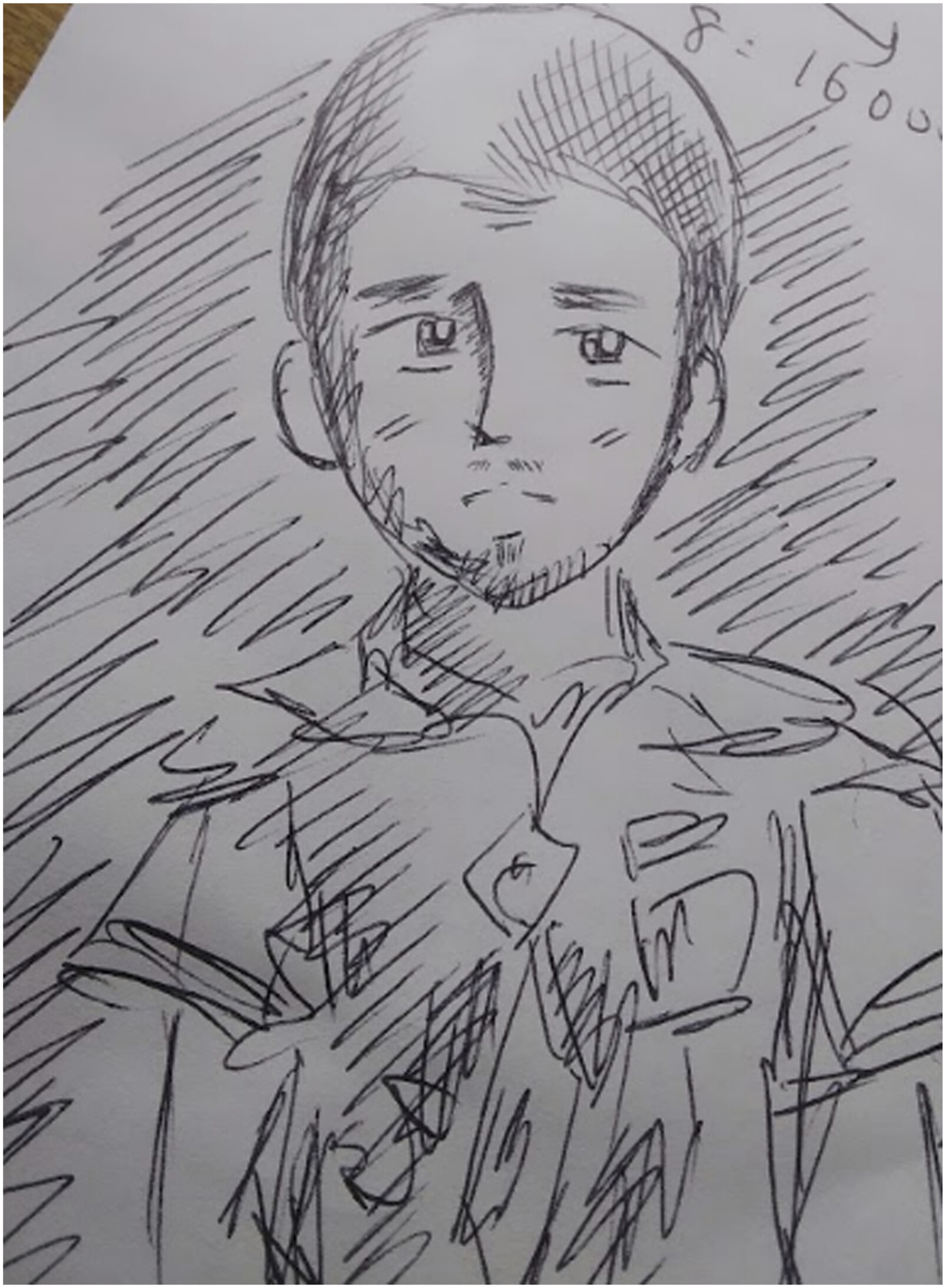
Reeling from the isolation beset by his father, Oliver explained suppressing the emotional pain as buying him time to quell the suicidality he endured. Oliver used sketching as a distracting strategy, and submitting
Photograph 1 titled Doodle; he explained that it provided a way of “diverting [his] attention to something else,” especially at the height of his father’s abuse and his own lack of capacity for deconstructing his suicidality:
With drawing, it’s like a detachment. So, I’m able to, you know, divert my attention to something else and in that temporary estrangement from those consuming thoughts, I’m able to at least have some space to kind of recuperate and recharge.
Foregrounding an etched caricature of a somewhat forlorn man (a fictional character; not the study participant), the scribbles and jagged lines within and outside the character might have reflected the intensity and messiness of Oliver’s emotional pain. But Oliver instead suggested the sketch was without meaning in its content, but deeply therapeutic in the art of doodling about nothing in particular. This nothingness provided respite from the pressures of trying to interrogate an array of cause–effect factors central to his suicidality. In this regard, suppressing isolation and emotional pain with doodling punctuated and paused Oliver’s ruminating suicidal thoughts to feel less emotions and reduce his suicide risk.
Describing a lack of support systems, Ismail, a 26-year-old queer transgender South Asian man, explained how religiosity was used by his family to justify their cissexism against him as a transgender Muslim man, invoking his isolation and emotional pain. Herein, Ismail explained that he had always “been one to look for distractions” to suppress the emotional pain, which included visiting art galleries as a way of distracting himself from suicidal thoughts and navigating hopelessness:
To a degree it [suppressing isolation and emotional pain] has helped. I feel like it’s also impacted me negatively in many ways because it has meant that I don't have—have not interrogated certain feelings … for a very long time. But I feel like in the grand scheme of things, it helped because it kept me alive.
Similar to Lee and Oliver, Ismail recognized distraction as a survival measure. However, these strategies and ultimately the struggles with suicidality were solitary, as Ismail went on to clarify: “It’s not something that I could put on someone else,” despite recognizing that it was “definitely something that I just needed people around me for.” Ismail also conceded that he felt pressured to “perform masculinity a lot more” since starting his gender transition. Here, amid his struggles with suicidality, Ismail bought into masculine ideals for outwardly being “more of like the big guy” because he did not “feel it internally” during the early stages of his gender transition. Grappling with suicidality at the intersections of cissexism and masculine norms, Ismail’s tactics for suppressing isolation and emotional pain were ultimately recognized as worsening his suicidality.
In summary, suppressing isolation and emotional pain emerged as solitary practices for participants buying time at the height of their suicidality, whereby masculine ideals for self-reliance were implicated (and entangled) as distracting strategies and respite for staying alive. Time limited however, participants also recognized the need for bridging those strategies to processing the underbelly of their suicidality more fully, to ease their suicide risk.
Processing the Underbelly of Suicidality
Moving beyond suppression to processing the underbelly of suicidality, participants engaged the work of interrogating the diverse ways minority stressors and masculinities fed their suicidality. In doing so, participants labored to deconstruct and ideally disarm the factors heightening their suicide risk.
Describing minority stressors linked to past abuse by his ex-partner and familial rejection for being gay, Omar, a 29-year-old West Asian cisgender gay man, explained his use of music and lyrics, and self-help podcasts as a cathartic emotional outlet to unpack feelings linked to his suicidality. Submitting
Photograph 2 titled Listening to Music and Podcasts, Omar clarified his preference for processing his feelings solitarily, wherein he “liked to be alone” because it was “more peaceful, more happier” with background songs and dialogue:
Listening to music—it’s very helpful in my experience because music helps you process your feelings. Sometimes … let’s say when you’re heartbroken … listening to sad songs can help because you want to cry, you want to release these emotions, you want to feel them.
Listening to music and podcasts in the privacy of his own home, Omar was in touch with his own feelings, as he detailed his autonomy for where and what he could listen to as a means for processing the underbelly of his suicidality. Conceding that “it was very hard for [him] to ask for help” as a man and that he was also unable to confide in others due to past traumas, “I no longer trust to tell others [his struggles],” Omar gave himself permission to feel his emotions by himself as a protective measure. This included describing Miley Cyrus’ song titled “Flowers” (that was about her independently dealing with a painful break-up with an abusive ex-boyfriend) as “empowering,” that helped Omar feel both validated and invigorated to “move on quicker and gain [his] sense of self-worth.”
Explaining how journaling helped him reflexively visualize the context and potential implications of his suicidality, Ibrahim, a 34-year-old West Asian cisgender queer man, noted the therapeutic value of expressive writing (and reading what he had written) about how and why he wanted to end his life as a mechanism for dealing with multiple minority stressors. This reflexive process aided some level of thought reframing for Ibrahim, pausing his ruminating suicidal ideations and plans at the height of his distress and suicidality:
When I want to kill myself, I would write it. Once I see it, I was like—when your eyes see it, I think it’s different. Even if you say it out loud, like either say it out loud and hear it, or just write it and see it, you think it’s more real and then you just, “no, I don’t want that.” Then I’ll start writing why I’m feeling this way and what did I do before to help me divert from this thought.
Here, overlapping stressors including HIV stigma, the lack of structural support as an asylum-seeker, and having to navigate tensions in reconciling his sexual identity and maintaining relationships with family and friends back in his home country came to the fore as underbelly issues to be deconstructed. Intentionally, Ibrahim also reimagined his masculinity, claiming strength in addressing his suicidality vulnerabilities as a racialized queer man living with HIV. In doing so, he freed himself of the constraints imposed by his stoicism and emotional restraint—masculine characteristics he was socialized with as a West Asian man that previously worsened his experience of minority stress and suicidality.
Explaining how his suicidality manifested at the height of the COVID-19 pandemic when he was still a teenager living in India with his parents, Vivek, a 19-year-old South Asian cisgender gay man, now living in Ontario, explained how being trapped at home in India inhibited “the emotional maturity that [he] needed, to have an [intimate] relationship that sustained.” With lockdown measures in place and having to endure societal hostility toward queer people, Vivek felt trapped, isolated, and hopeless about the possibility of freely exploring and embracing his sexual identity as a young gay man. In this tumultuous context, Vivek went on daily runs that provided an outlet for processing the underbelly of his suicidality. Exercising was key to “help [him] focus [his] mind on trying to solve problems,” as Vivek secured some relief and partial remedy in understanding the causative agents for his suicidality, and his need to escape those conditions. This introspective work—and the ability to separate and visualize something better—aided Vivek’s mental health. That said, Vivek also recognized the pandemic hardships as impacting everyone, and he reflected on the support and protections he was receiving in India amid feeling trapped within a cisheterosexist society:
At some point I did feel a little bit selfish because I had so much to be grateful for that a lot of people didn’t have … I did talk to my parents about the fact that I didn’t really enjoy living there [India]. I think at the time my mom was hurt by that … and so to see her hurt kind of made me withdraw a little bit more.
Embodying masculine norms and expectations that emphasize a son’s responsibility to his parents’ well-being, the pressures grew for Vivek to conceal his own mental health struggles for his parents’ well-being, despite realizing that he needed to leave India for his own good. Ironically, the protections intended by Vivek were dual—to save his family from the shame of having a gay son and to afford himself a more open and authentic life elsewhere. Again, in processing the underbelly of his suicidality, Vivek engaged the work of deciding how to best live rather than die.
Diverse resources and resiliencies for processing the underbelly of suicidality were used by participants. Herein, there were alignments to masculine norms of self-reliance and strength to engage their introspective processing work. In addition to recognizing these cause–effects pathways, many participants also began engaging professional and relational supports when building mental health strategies, as a way of bolstering their mental health resilience in the long term.
Building Mental Health Strategies
Many participants bridged the work of processing their suicidality to building mental health strategies. These included engaging professional and relational supports, as a means to manage their suicidality and promote their mental health resiliencies in the long term.
Foregrounding the compounding effects of substance use and discrimination shaped by his racial and sexual minority identity, Elan, a 47-year-old mixed-race cisgender gay man, explained how he contemplated suicide amid wanting to escape unrelenting feelings of isolation and hopelessness. Specifically, Elan described being “othered” and devalued because of his mixed-race background, substance use, and queerness, for instance, facing “outright rejection as soon as someone finds out [he is] mixed race” at gay clubs and being shunned by others at the height of his substance use. Describing his rock bottom as leaving no alternative but to enlist psychiatric care, Elan credited his psychiatrist “for the fact that I’m alive today”:
I was diagnosed with borderline personality disorder and PTSD and methamphetamine dependency. And yeah, we [Elan and his psychiatrist] had to clean up the meth and we had to deal with the borderline … And I laugh about it now, but yeah. At the time, like when he diagnosed me, like some of the diagnoses made sense to me … at least I know what I’m working with … I was actually kind of grateful to have something to work with.
Elan’s narrative about acting on his mental illness crisis is among the most often told stories in men’s suicidality, wherein diagnoses are made, and treatment accepted as a last resort and life-saving epiphany. Unstuck from suppressing with substances, Elan suggested that working with a clinician who “made [him] feel safe” and “helped [him] see that [he] could get through it [trauma and suicidality]” was the crux for navigating his multiple minority stressors and managing his suicidality. Elan added, “I think he [psychiatrist] allowed himself to be vulnerable with me and that helped me be vulnerable with him.” Here, masculine hierarchies were forgone, and instead, a therapeutic relationship centered on norming vulnerability, safety, and mutual care was the foundation for sustainably addressing Elan’s mental illness.
Detailing the struggles he endured during the early stages of his gender transition, Ismail, the 26-year-old South Asian transgender man who was previously quoted, explained how incompatibility between the way he looked and how he
wanted to look as a man fed his insecurities and amplified his suicidality: “I was feeling extremely suicidal, especially when I was still presenting as a girl [at the beginning of his gender transition].” It was not until Ismail started his weekly testosterone-based hormone replacement therapy (gender-affirming care) that he finally felt that he could comfortably embody and embrace his masculinity, which in turn transformed the ways he perceived himself. Ismail added:
I have a beard now, like, which is so great. Like my energy levels are great. My voice is deeper. Like every time I’m on the phone with someone, like I always get “sir” “boss” or you know, like “buddy” … I’ve never gotten misgendered even like, since the beginning of taking testosterone … testosterone has just been like a major lifesaver for me, honestly. Like I don’t know if I would’ve been here if I didn’t start [testosterone].
In the context of Ismail’s masculinity, the fact that he was validated by others for his gender identity and expression underscored the co-constructed nature of being seen as a man and alleviated some of the minority stressors he had previously endured. Being on testosterone replacement therapy, Ismail’s body ascetics melded his manly mind and body, revealing the power of affirming his gender as aiding Ismail’s mental health. The gender-affirming care in and of itself was positioned as key to Ismail managing his suicidality. Further, rather than a binary, Ismail also recognized his inclusivity and comfort with all the ways he could now embrace and perform his gender: “As I feel like I am more outwardly seen as a man comparatively to before, I’m more willing to embrace femininity.”
Chen, a 22-year-old East Asian queer transgender man, explained how the interconnected experiences of racism and cissexism influenced his decision to hide key aspects of himself and his cultural background, including his mother tongue to assimilate to Western cultures. This however resulted in Chen feeling more displaced and isolated, and lacking a sense of sociocultural belonging, all of which heightened his suicidality:
Because I have been at some point in my life very assimilated [to North America] and I really hated myself for it. And I have gone through high school without speaking Chinese or eating Chinese food. So, when I met my siblings and like … you won’t imagine how shit my native language was, even though it was like my mother tongue, because I haven’t spoken it.
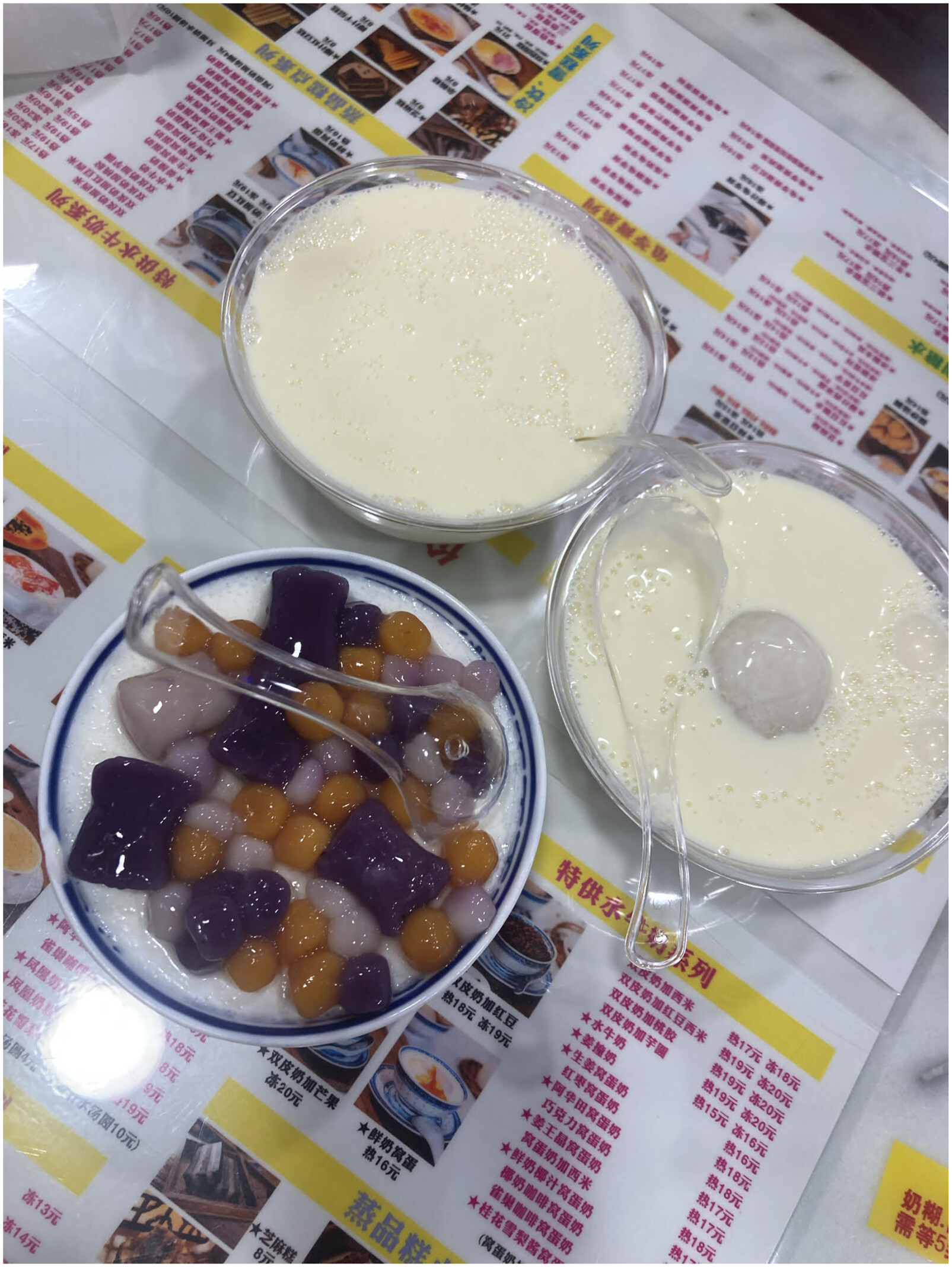
Addressing the layered effects of multiple minority stressors, Chen was determined to reconnect with his cultural roots as a way of belonging to and honoring his East Asian identity for the benefit of his mental health. Submitting
Photograph 3 titled “Dessert,” featured was a traditional East Asian dessert—two bowls of skimmed milk and a colorful bowl of taro balls (which is typically mixed in with the milk). Symbolically indulging in this famous East Asian delicacy with his brother when he was back in China, Chen emphasized his need and efforts for aligning to his Chinese cultural identity, which included embracing family as a source of relational support:
I’m trying to like, tell myself that I am worth nurturing. And also, it is something that, like, it is one of my strongest cultural ties because I don’t have access to a lot of like Chinese community here [Canada]. I keep wanting to cook for like a bigger community or like, at least my family. I don’t want to just feed myself.
For Chen, re-embracing Chinese cultural norms centered around being with (and for) others was crucial for mending the void and lack of belonging he previously experienced. Specifically, Chen aspired to “reclaim [the culture] as something as part of [him],” embracing collectivist values to bolster his mental health, and perhaps waylay some of the minority stressors he endured as a racialized transgender man in Canada. Also reflected here were Chen’s masculine values, where collectivist care was embraced as what Chinese men legitimately do. Elaborating on this, Chen added, “I think that’s what a healthy masculinity feels like to me—is to like care for who you consider family deeply and to support them emotionally and physically.”
With participants building mental health strategies to manage their suicidality—including professional care and relational supports—it was clear that the wide-ranging contexts were reliant on specific culturally and gender-responsive remedies.
Discussion and Conclusion
In featuring racialized GBTQ men’s diverse experiences with minority stressors, and the ways in which they reckoned with and resisted masculine norms to waylay and manage their suicidality, the current article contributes to existing evidence (
Han, 2021;
Johnson et al., 2025;
Rana et al., 2024) by offering Canadian-specific insights. In what follows, we discuss what these findings mean within the broader context of building culturally and gender-responsive mental health promotion and suicide prevention programs for racialized GBTQ men in Canada.
In the current study, suppressing isolation and emotional pain emerged as a legitimate holding pattern for managing suicidality among racialized GBTQ men, as they navigated experiences of multiple minority stress. While these findings may contrast past evidence that have broadly elucidated the maladaptive consequences of emotional suppression that can amplify risks of suicidality (
Pettit et al., 2009;
Kaplow et al., 2014), we argue that the employment of suppression as a strategy for managing suicidality is highly contextual and may confer protection in some circumstances. For racialized GBTQ men in the current study, the suppression of isolation and emotional pain was partly characterized by the concealment of their sexual and gender identities driven by a lack of social support and heightened threats of racism and cisheterosexism from their families and sociocultural communities. Reflecting minority stress complexities, this adds a new dimension for understanding how concealment of sexual/gender identities—and the suppression of isolation and emotional pain—can offer temporary refrains and respite from inequities (
Pachankis et al., 2020) and quell the worsening of suicidality, resonating with
Klonsky and May’s (2015) Three-Step Theory of Suicide that established pain, hopelessness, and lack of connectedness as central factors in one’s progression from suicidal ideations to suicide attempts. For some participants in the current study, conforming to masculine norms including stoicism and emotional restraint to suppress their isolation and emotional pain could have also been a way to preserve their social capital as men and withstand the compounding experiences of marginalization linked to their subordinate masculine status as sexual/gender minority men (
Lu et al., 2019) and racialized and/or immigrant men (
González, 2025;
Nyaga & Torres, 2017;
Sowad & Lafrance, 2024). That said, we acknowledge that suppressing isolation and emotional pain is not a long-term suicidality management strategy, given its negative impacts on sexual and gender minority people’s mental illness, suicidality, and self-identity injury in the long term (
Singh et al., 2022).
As racialized GBTQ men worked to process the underbelly of their suicidality, they utilized diverse strategies including journaling, listening to music, and physical exercise to interrogate their emotional pain and etch pathways for quelling their suicidal thoughts. The benefits of such adaptive work have been widely reported in past research, with
Pachankis and Goldfried (2010) describing the value of engaging in expressive writing in improving individuals’ psychosocial functioning, which can extend to influence positive responses to feelings of isolation, hopelessness, and emotional pain. Similarly, the use of music and physical exercise can confer cognitive and somatic benefits that aid mood regulation, coping with loneliness (
Martín et al., 2021), and lower likelihood for anxiety and depression (
Davidson et al., 2013;
Zaatar et al., 2024), all of which are helpful in building environments for racialized GBTQ men to deconstruct the underbelly of their suicidality. In the context of the current study, participants frequently processed their suicidality alone, primarily due to on-going struggles with racism and cisheterosexism that inculcate fears for getting external support, and racialized GBTQ men’s tendency to draw on self-reliance to manage their suicidality. That said, while helpful in affirming their resilience, agency, and identity as racialized GBTQ men, these internal strength-based resources for processing suicidality are finite, wherein the isolation of this solitary self-work may actually worsen mental health (
Meyer, 2015). Further, it may divert attention from the larger socio-structural inequities invoked by racism and cisheterosexism—issues that are primarily responsible for racialized GBTQ men’s minority stressors and suicidality risks in the first place (
Meyer, 2015).
In building mental health strategies to manage their suicidality, racialized GBTQ men reimagined their masculinities, resisting stoicism and self-reliance to instead embrace their vulnerabilities and bridge to professional and relational supports. While this resonates with past research emphasizing the need to reject rigid harmful masculinities and promote healthier masculinities as a suicide prevention strategy (
Trail et al., 2021), our findings add how reimagining masculinities can norm help-seeking and waylay various forms of minority stressors deterring racialized GBTQ men from accessing and/or engaging mental healthcare (
Patterson et al., 2025). For racialized transgender men and transmasculine people, the specific benefits of gender-affirming care as a mental health strategy are tied to their agency and autonomy as they construct and express their masculinity (
Johnson et al., 2025). In addition to decreasing depression and suicidality risks among gender minority men (
Tordoff et al., 2022), gender-affirming care also redefines how and who gets to construct, express, and perform masculinity, all of which are central in the promotion of healthy masculinities among racialized GBTQ men. That said, it must be acknowledged that gender-affirming care remains highly individualized wherein processes of gender affirmation and actualization differ for each person (
Koehler et al., 2026). In terms of garnering relational supports via cultural connections, collectivist values underpin the ways in which it helped racialized GBTQ men navigate minority stress and manage their suicidality. This supports previous findings that collectivism and cultural connections foster a sense of belonging (
Dong et al., 2023) and aid positive mental health outcomes (
Moore et al., 2022). This also affirms
Parmenter et al.’s (2021) emphasis on community resilience (characterized by collectivism) as a long-term mental health strategy for racialized sexual and gender minorities, as a way to overcome oppression and exclusion within and beyond the queer community. Indeed, cultural connection can redefine how collectivism embeds subaltern immigrant masculinities in Western contexts (
Sowad & Lafrance, 2024).
These findings have several implications for the development of culturally and gender-responsive mental health promotion and suicide prevention programs for racialized GBTQ men. First, community-led mental health promotion programs for racialized GBTQ men should acknowledge how racism and cisheterosexism are interconnected to uniquely impact their strategies for managing suicidality—whether to suppress their isolation and emotional pain or process the underbelly of their suicidality. That said, strategizing equity-focused efforts tailored to their unique needs and concerns might include hiring racialized queer counsellors to lead mental health promotion efforts and/or creating support groups tailored for racialized GBTQ men. This can help create safe and supportive avenues for racialized GBTQ men to reduce their isolation and thoughtfully engage emotion work toward interrogating and addressing the minority stressors that fuel their suicidality. At an institutional level, family-focused initiatives are also warranted in providing culturally sensitive, queer-affirming support to racialized families with children or members who self-identify as sexual and gender minorities. Co-led by community partners and individuals with shared identities and lived experiences, families can be equipped with the resources and tools needed to reconcile their own sociocultural beliefs and support for family members who are racialized GBTQ men—a key strategy in mitigating the latter’s suicidality risks without them having to rely on individual resiliencies to manage their suicidality. Systemically, investments are needed to build cultural adaptability and gender-responsiveness into the Canadian mental healthcare system. This includes training clinicians and other support persons to meet racialized GBTQ men where they are at, while being aptly resourced to work through diverse cultural and gendered experiences. Further, given that access to mental healthcare and gender-affirming care are key for racialized GBTQ, political will and funding are needed to tailor services that bolster racialized GBTQ men’s resiliencies for managing suicidality in the long run.
There are limitations to consider in this study. The cross-sectional nature of the study design does not capture life course changes linked to racialized GBTQ men’s suicidality. Further, there may have been socio-political events influencing participants’ safety and mental health that were not explicitly discussed. The focus on a Canadian-based sample, a country with legal provisions and policies (at the federal level) that protect sexual and gender minority people, also limits transferability of the findings to other countries with different legislations that negatively impact sexual and gender minority people. To address these limitations, future work might usefully conduct longitudinal studies that span multiple countries with diverse sociocultural norms and legislations pertaining to sexual and gender minority health. Methodologically, the English-language requirement in the current study, the use of online formats, and required literacy regarding taking photographs may have excluded some groups within the target population. Future studies might incorporate the use of different languages as inclusion criteria—to align with the diversity of racialized groups in Canada. Future work might also seek to engage under-represented sub-groups (e.g., Black, Indigenous, Afro-Caribbean, Middle Eastern, and Latin American) to test and elaborate the current study findings.
In conclusion, by delineating how multiple minority stress and masculinities interconnect to influence racialized GBTQ men’s experiences of and strategies for managing suicidality, the current study indicates the need for tailoring policy, and training men’s mental health promotion support workers and designing suicide intervention programs in Canada. Herein, racialized GBTQ men would be better able to equitably optimize their mental health outcomes in the long term. Further, it is key to note that the thematic findings do not exist in a linear fashion. Instead, they are context-specific and entwined with the ever-evolving circumstances of racialized GBTQ men’s lives.