


Leading Virtual Reality (VR) and Augmented Reality (AR) in Education: Bibliometric and Content Analysis From the Web of Science (2018–2022)
Abstract
Introduction
Innovation and Academic Contribution
Difference in the Application and Effects of VR and AR Technology in Education
| Technology | Key similarities | Key differences | Applications in education |
|---|---|---|---|
| Augmented reality (AR) | • Both have distinct advantages and can be useful in a variety of educational settings (Park, 2022). • Both AR and VR may also be utilized to make interactive and gamified learning experiences for students (Chan et al., 2022) • Both can make the learning process more engaging and pleasurable (Zhang et al., 2022) • Potential to significantly improve the educational experience and make learning more interactive, immersive, and effective (Verner et al., 2022). | • Overlays digital information on the user’s perspective of the actual world (Verner et al., 2022) • Focused on enhancing and making the real world more interactive and informative (Cook et al., 2021) | • Enables digital information to be superimposed on the actual environment, such as displaying text, photos, or videos on top of a real-world item Can be used to improve students’ understanding of real-world objects and concepts (Solmaz et al., 2021). • Utilized in areas such as history, science, and art to give students with more context and knowledge. • Example: Overlay information about the human body on a real person, allowing students to see and interact with the body in ways that a traditional textbook or model would not allow (Morimoto et al., 2022). This provide students with a more vivid and realistic understanding of what it was like to be there than a traditional textbook or lecture (Bansal et al., 2022). |
| Visual Reality (VR) | • VR creates completely new educational experiences (Zhang et al., 2022). • Immerses the user in a wholly fake environment (Chan et al., 2022) | • Virtual field excursions or simulations of historical events may be created (Chan et al., 2022) • Example: Used to imitate real-life experiences that would be difficult or impossible to experience in person, such as visiting a distant nation or researching the human body (Bansal et al., 2022) |
| Type | Example of applications in Education |
|---|---|
| Augmented Reality (AR) | Several VR apps available for educational purposes, such as: • Merge Cube, which allows students to explore the water cycle, view fossils, and more (Merge Cube, 2023) • Google Expeditions, which allows users to see 3D objects in the classroom such as volcanoes (Google Expeditions, 2023) • JigSpace, which provides interactive 3D models of complex concepts such as anatomy, are examples of AR applications in education (JigSpace, 2023). |
| Virtual Reality (VR) | • InMind VR 2 (Cardboard)- InMind 2 VR (Cardboard) is an action/arcade virtual reality game that incorporates decision making strategy and human brain neuroscience. It is based on the Pixar/Disney film “Inside Out,” and it enables players to go inside patients’ brains in quest of neurons that will aid in the treatment of mental disorders (Tilovberdiyevich, 2023, p. 2). • Anatomyou- Anatomyou is an educational smartphone application that uses virtual reality to show human anatomy to the user from a new perspective It enables users to go within the body and study Human Anatomy in immersive virtual reality, much as they would in a genuine minimally invasive procedure (Anatomyou VR, 2023). • VR Lessons by ThingLink – VR Lessons by ThingLink is a collection of interactive 360 image and video journeys on topics such as science, language, and arts. It can be used to create unique experiences with interactive images, videos, and 360° media. It is a great teaching tool for student interaction due to the variety of media it can embed. It is also compatible with ClassVR and provides an overview of controls and limitations when viewing ThingLink 360 images and videos in virtual reality (VR) mode (Hippalgaonkar et al., 2023). • Learn Languages VR—Study Languages VR is a language learning software that creates realistic environments for users to improve their language abilities using virtual reality (VR. It is compatible with iOS, Android, PC, and Gear VR. It has a chatbot and voice recognition technologies to assist users in improving their fluency (Mondly, 2023). • Virtual Lab Environment to Conduct STEM Experiences—A virtual lab environment is a computer-simulated laboratory that enables students to engage with and perform experiments in a three-dimensional (3D) virtual space. It offers a fun, entertaining, and practical learning experience for STEM (Science, Technology, Engineering, and Mathematics) education (Aljuhani et al., 2018). |
Leading Intention of Teachers and Students in Using AR and VR
Classroom Teaching and Learning Mode Matching the AR/VR Applications
Conducting Assessment of AR/VR’s Viability and Possible Acceptance in the Classroom
Purpose of Study
Methodology
| Key research areas | Boolean search with Keywords | Search results |
|---|---|---|
| Trends of research Virtual and Augmented Reality respectively in the Web of Science database | “Virtual Reality in Education” Refined by: • Leading publications from top 5 countries: USA, Peoples’ Republic of China, Germany, Japan, and England • Publication years 2018 to 2022 | 4,414 results from Web of Science Core Collections Downloaded the top1,000 articles for Bibliometric analysis in Vosviewer Link: https://www.webofscience.com/wos/woscc/summary/c5df038e-9951-4a4a-ba01-9db2eceb7642-486274d1/relevance/1 |
| “Augmented Reality in Education” Refined by: • Leading publications from top 5 countries: USA, People’s Republic of China, Germany, Japan, and England • Publication years 2018 to 2022 | 1,969 results from Web of Science Core Collection Downloaded the top1,000 articles for Bibliometric analysis in Vosviewer Link: https://www.webofscience.com/wos/woscc/summary/67d3fcae-ce58-4350-8617-6fd1973aa078-4863defb/relevance/1 | |
| Relationship between “Virtual Reality” OR “Augmented Reality”] | [“Virtual Reality in Education” OR “Augmented Reality in Education”] Refined by: • Leading publications from top 5 countries: USA, People’s Republic of China, Germany, Japan, and England • Publication years 2018 to 2022 | 5,231 results from Web of Science Core Collection Downloaded the top1,000 articles for Bibliometric analysis in Vosviewer Link: https://www.webofscience.com/wos/woscc/summary/0051e2ba-23af-4030-b4c9-cc07900af2cd-4863f83c/relevance/1 |
| Leading Virtual Reality and Augmented Reality in Education | [“Leading Virtual Reality in Education” OR “Leading Augmented Reality in Education”] Refined by: • Leading publications from top 5 countries: USA, People’s Republic of China, Germany, England, and Italy • Publication years 2018 to 2022 | 885 results from Web of Science Core Collections Downloaded all articles for Bibliometric analysis in Vosviewer Link: https://www.webofscience.com/wos/woscc/summary/92067853-35e6-4fe8-aff8-0473af55603e-488128a3/relevance/1 |
Findings
Part 1: Bibliometric Analysis
Question 1: What Are the Trends of Research on Virtual and Augmented Reality in Education According to the Web of Science Database?

(a) Virtual Reality in Education


(b) “Augmented Reality in Education.”
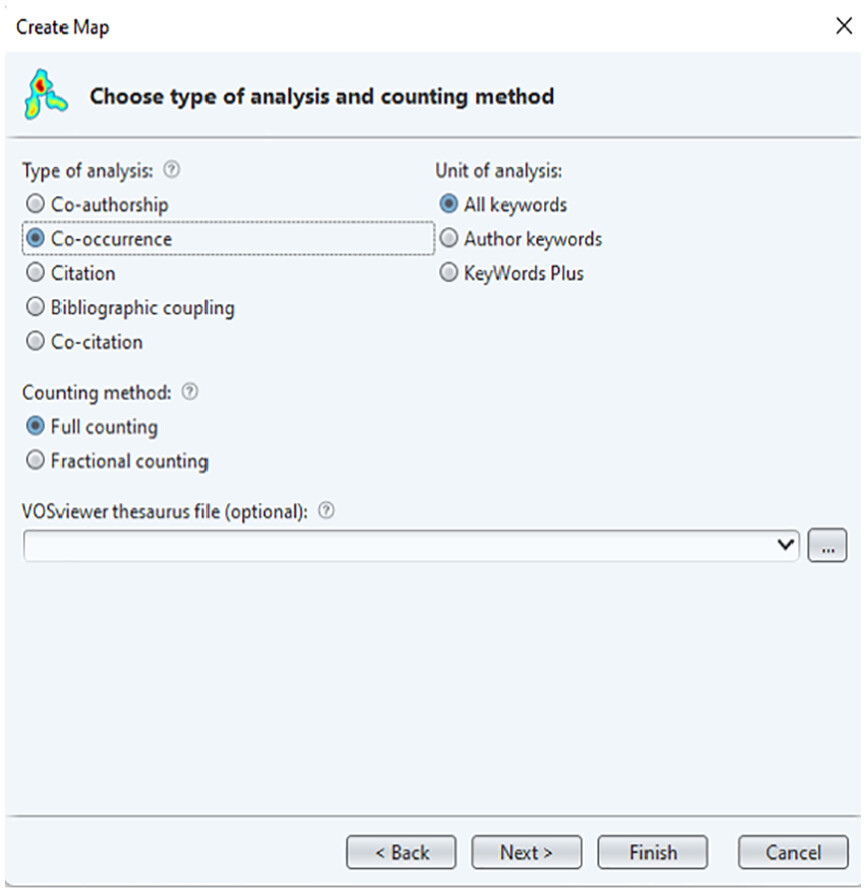

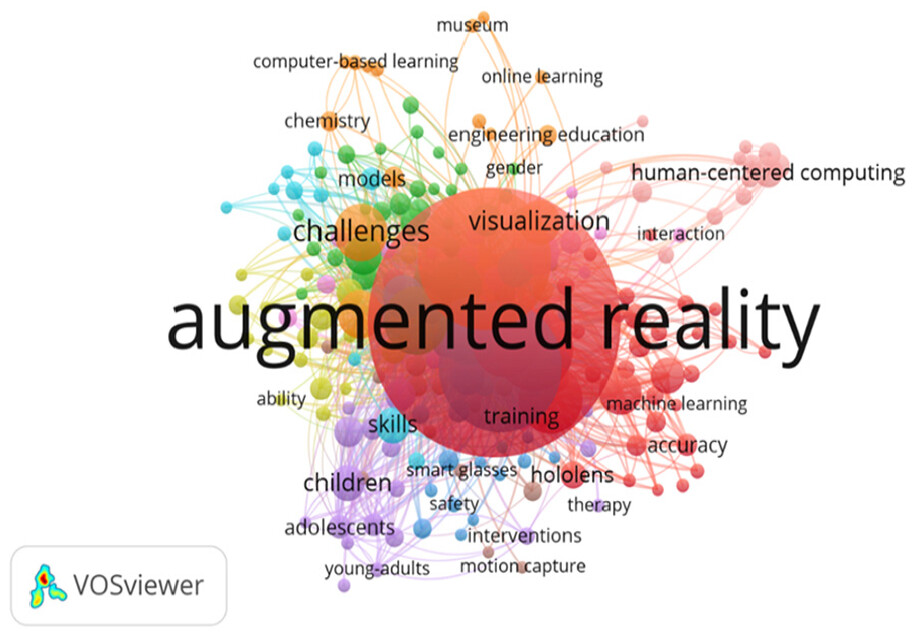
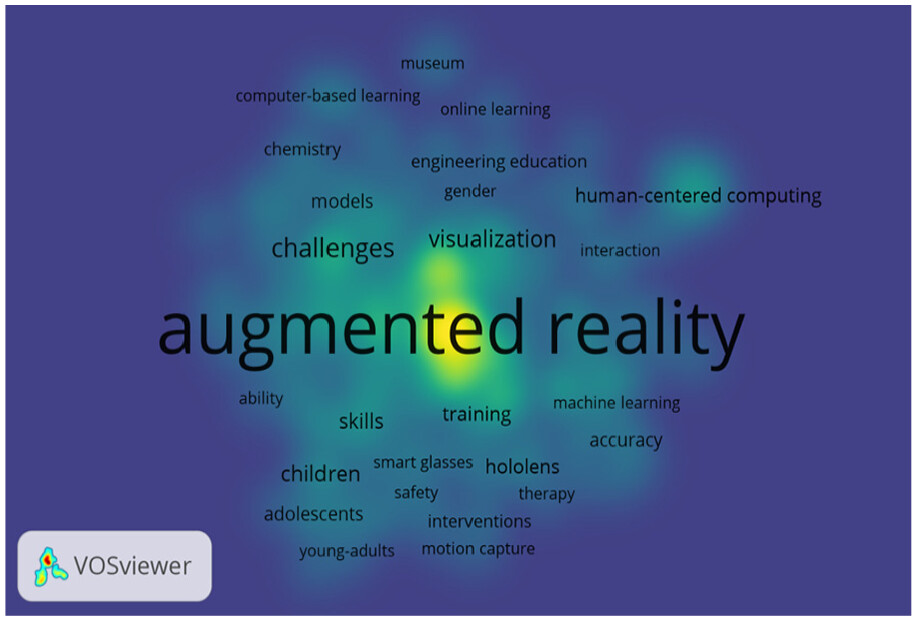
(c) “Virtual Reality in Education” OR “Augmented Reality in Education.”
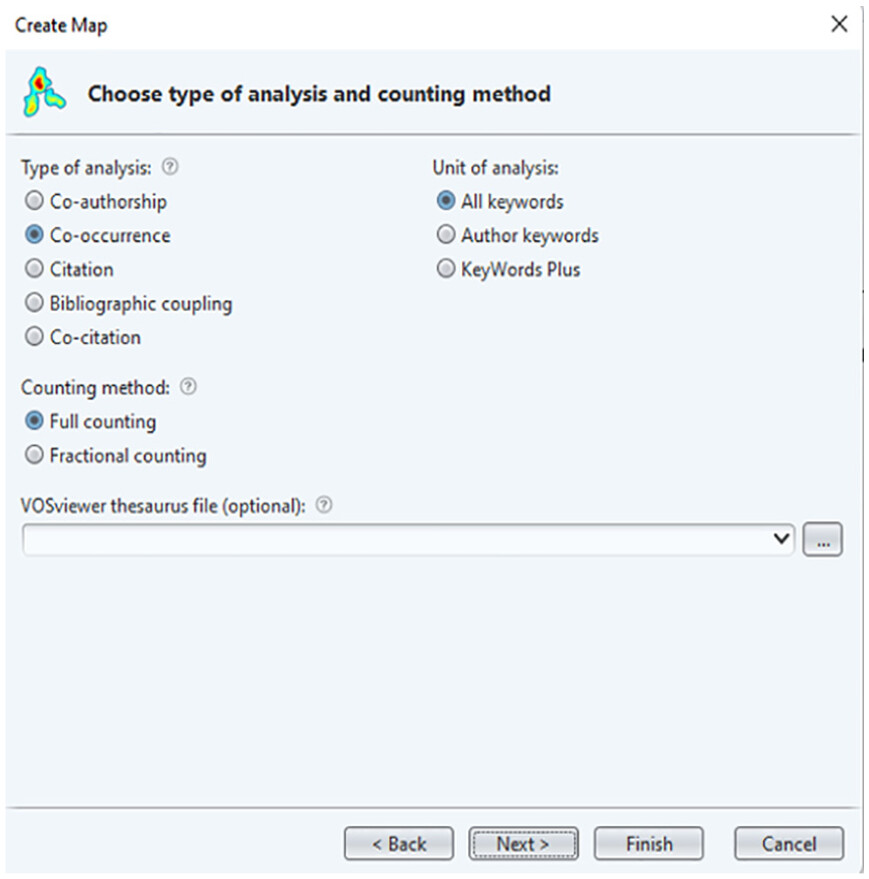


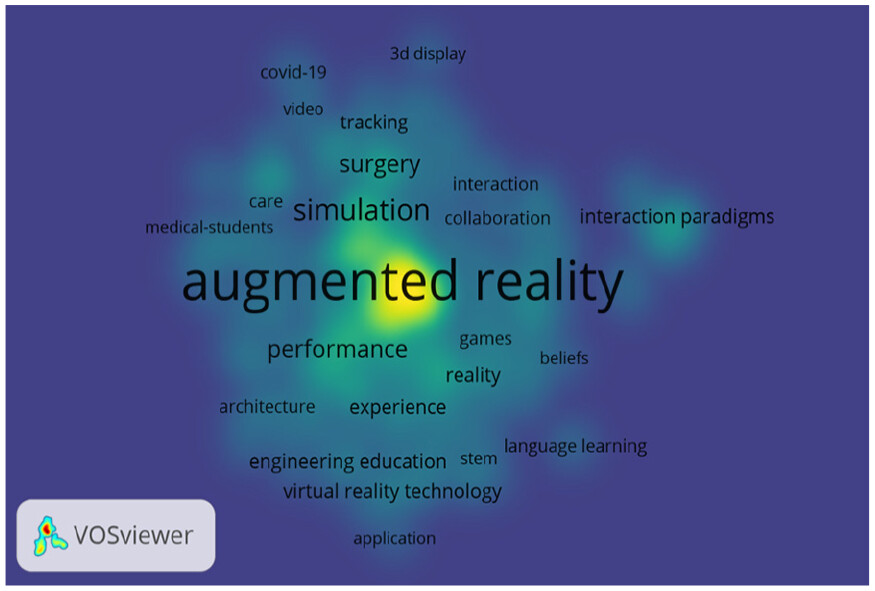
Bibliographic Coupling Based on Universities for “Virtual Reality in Education” OR “Augmented Reality in Education”



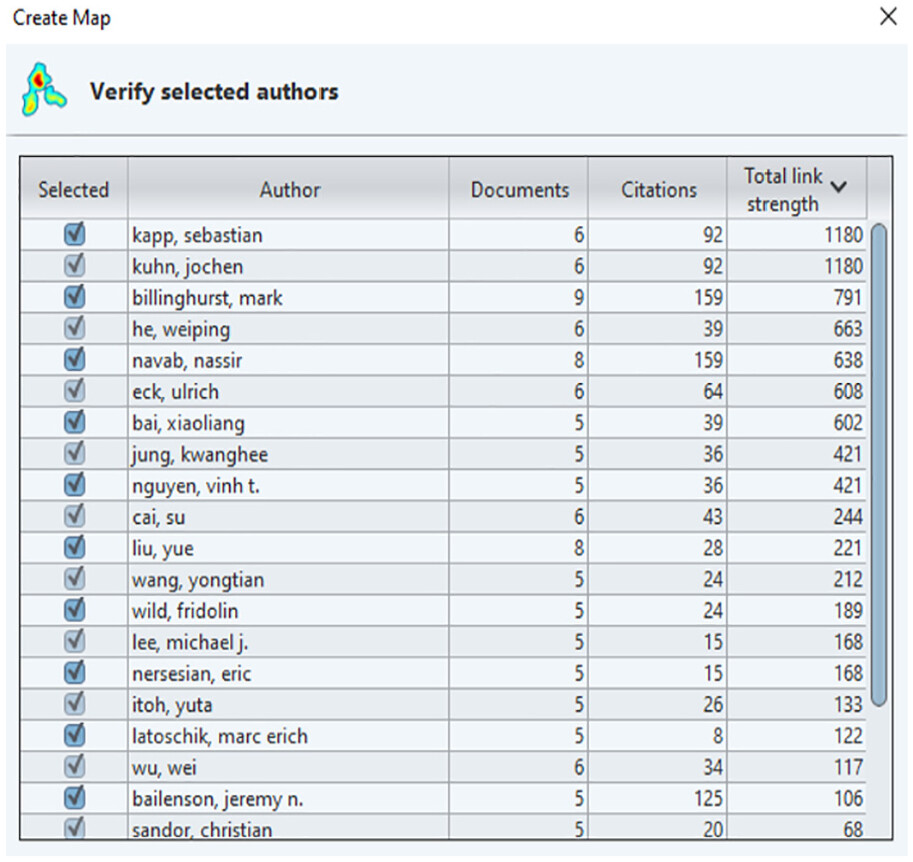
Bibliographic Coupling Based on Authors for “Virtual Reality in Education” OR “Augmented Reality in Education”


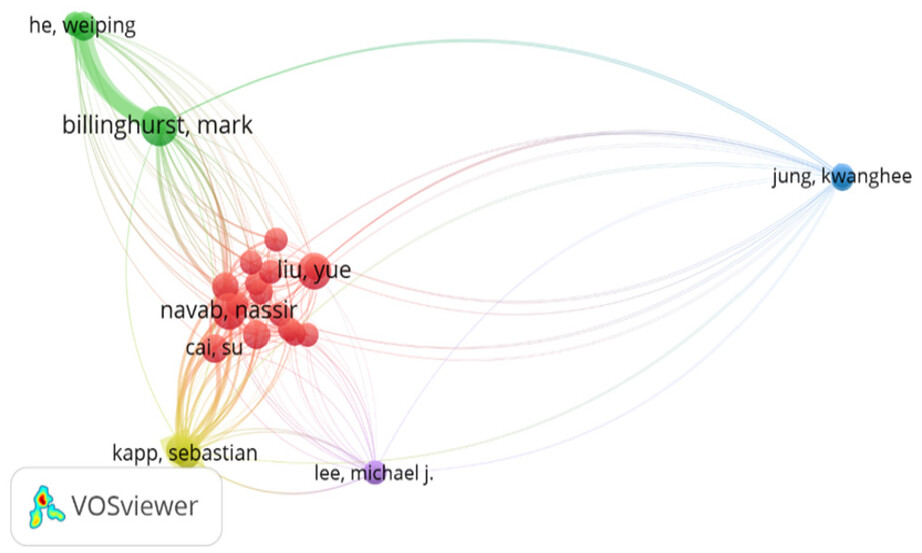
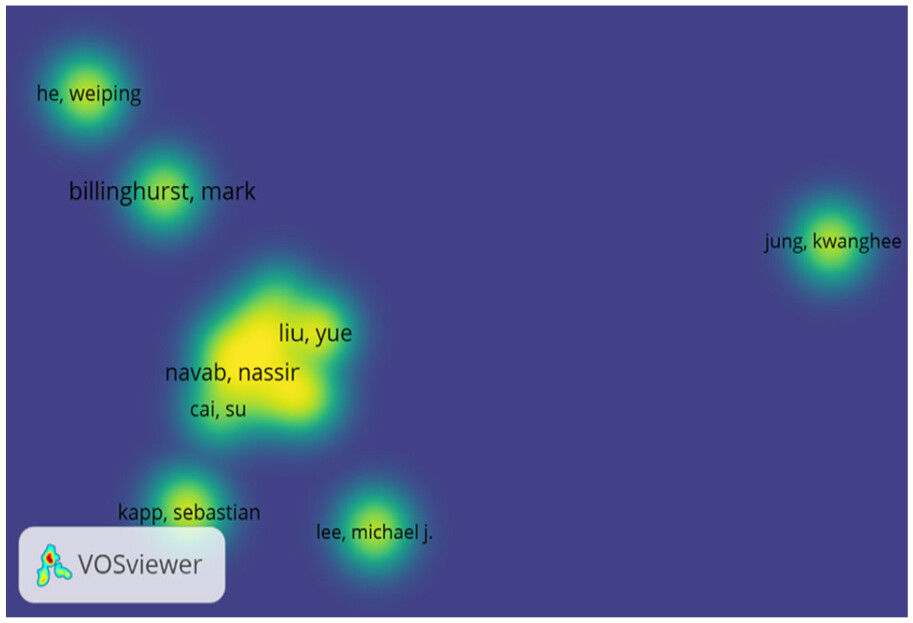
Bibliographic Coupling Based on Sources of Journals
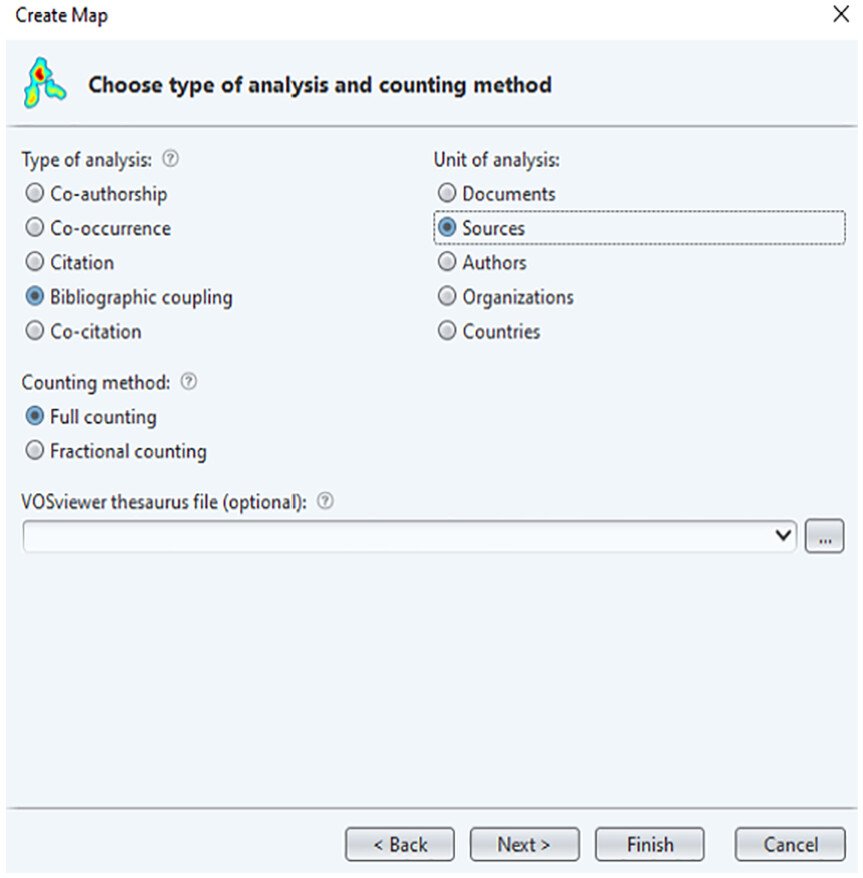


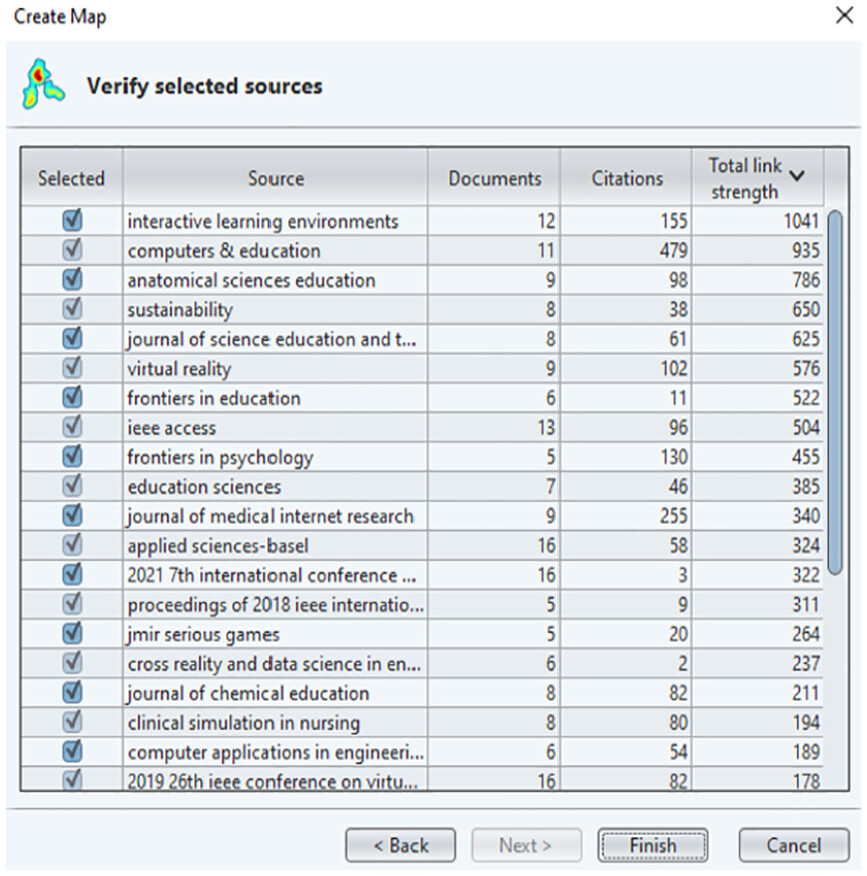
Part 2: Bibliometric and Content Analysis
Question 2: How Do Educators Among Top Countries Lead the Use of Virtual and Augmented Reality in Education Based on the Bibliometric and Content Analysis From the Web of Science?
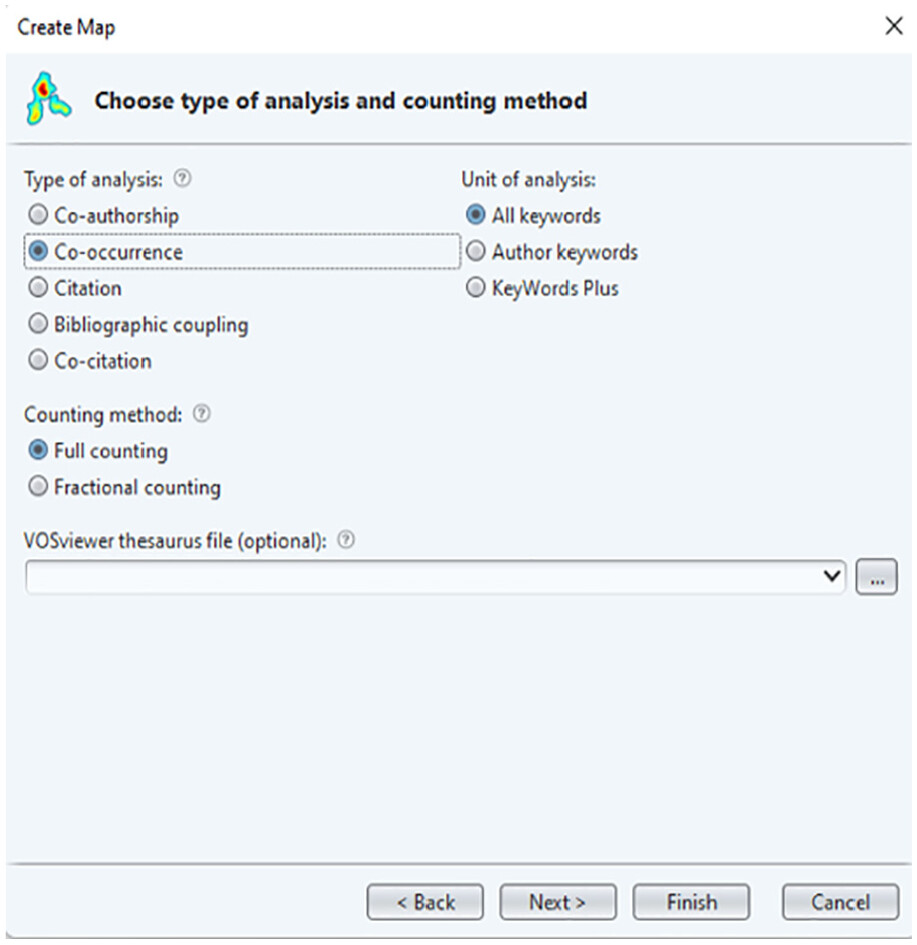

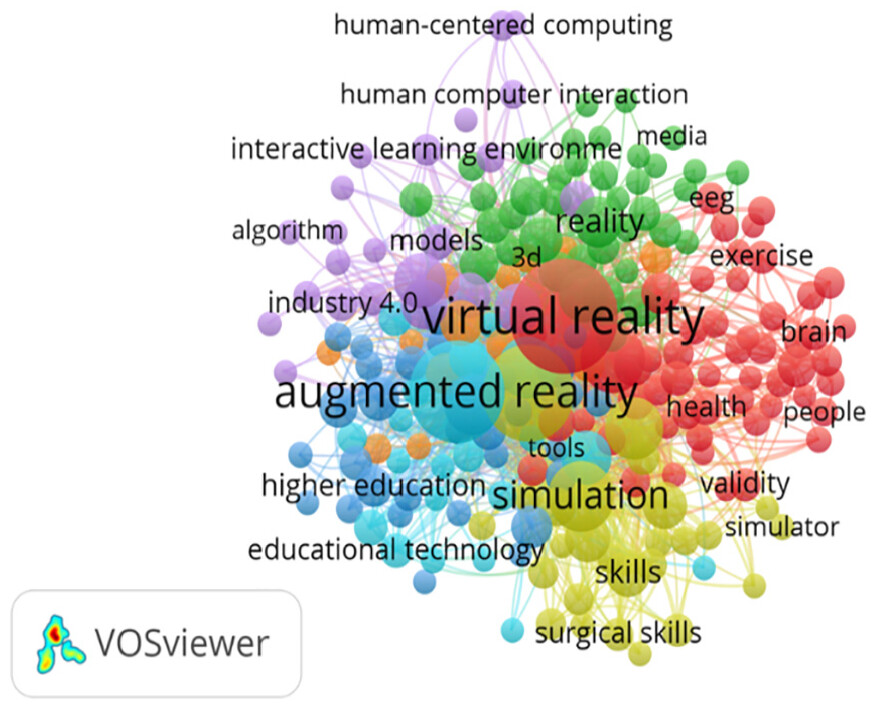

Question 3: What Are the Research Gaps to be Highlighted for Suggestions for Future Studies on Virtual and Augmented Reality in Education Based on the Bibliometric and Content Analysis From the Web of Science?
Implications of Study
| Implications | Descriptions |
|---|---|
| Implications to theory | The growth of augmented reality (AR) and virtual reality (VR) technology in education has the potential to alter classroom learning and enhance student outcomes. AR and VR may be utilized to create immersive, technological learning experiences that enable students to learn by doing rather than reading (Chan et al., 2022). This is consistent with constructivist educational theories, which contend that learners learn better when they are actively participating in the construction of information in a learning-by-doing situation (Choi, 2022) AR and VR have several educational uses, including providing visual assistance for real-world learning, gamifying technology to improve the learning experience, and enabling students to explore new areas without leaving the classroom (Solmaz et al., 2021). These technologies may also be utilized to solve some of contemporary education’s most serious issues, such as changing away from fact-based teaching techniques and toward more participatory ways (Guray & Kismet, 2023) |
| Implication to the application to design and VR systems | AR and VR have the potential to alter the educational instructional design by offering immersive learning experiences that captivate students and help them better comprehend complex concepts (Chan et al., 2022). AR/VR technologies have the potential to animate scientific textbooks, build interactive 3D models, and give hands-on experience in low-risk virtual environments (Guray & Kismet, 2023). Furthermore, AR/VR may be utilized to build interactive classrooms in which students learn via discovery and experimentation (Verner et al., 2022). |
| Implications to Education | AR/VR technologies have been demonstrated in studies to enhance student results and boost engagement in the classroom (Solmaz et al., 2021)making them a significant tool for instructional design. The federal government should fund in research to advance these technologies, as well as assist initiatives such as VR laboratories, loan programs, and other measures to speed AR/VR adoption in education . Ensuring equal access to these technologies is also critical for ensuring that all students can benefit from AR/VR in education (Bansal et al., 2022). Also, schools and universities are investing in infrastructure and budgeting for AR/VR integration into their curricula (Goharinejad et al., 2022). Workshops and tutorials are required to promote awareness and comprehension of the possible educational implications of AR/VR (Choi, 2022). Finally, AR/VR has the ability to enhance student results while engaging students creatively with new opportunities. |
| Need for study and research questions | Significance of findings from content analysis and bibliometric analysis |
|---|---|
| Need for Content: 1. What are the trends of research on Virtual and Augmented Reality in Education according to the Web of Science database? | Content: AR/VR research should focus on converting explicit knowledge into digital information for teaching/learning through shared databases and interconnected educational networks (Choi, 2022; Chun & Yoo, 2019). |
| Need for Process: 2. How do educators among top countries lead the use of virtual and augmented reality in Education based on the bibliometric and content analysis from the Web of Science? | Process: Adapting software for labs and classroom use Ensuring equitable access to AR/VR in higher education (Su et al., 2022), developing the technologies required to enable breakthrough AR glasses and VR headsets, assisting learners in grasping abstract concepts and gaining hands-on experience in low-risk virtual settings (Su et al., 2022) |
| Need for Context 3. What are the research gaps to be highlighted for suggestions for future studies on Virtual and Augmented Reality in Education based on the bibliometric and content analysis from the Web of Science? | Context: Matching and finding the best and most effective solutions tailored to specific needs across different fields and levels of learners (Guray & Kismet, 2023) |
Limitation of Study
Summary
Declaration of Conflicting Interests
Funding
ORCID iDs
References
 17(9), 23–30. https://doi.org/10.14400/JDC.2019.17.9.023
Cite
Cite
Cite
Download to reference manager
If you have citation software installed, you can download citation data to the citation manager of your choice
Information, rights and permissions
Information
Published In

Keywords
Rights and permissions

Authors
Metrics and citations
Metrics
Publication usage*
Total views and downloads: 26095
*Publication usage tracking started in December 2016
Altmetric
See the impact this article is making through the number of times it’s been read, and the Altmetric Score.
Learn more about the Altmetric Scores
Publications citing this one
Receive email alerts when this publication is cited
Web of Science: 44 view articles Opens in new tab
Crossref: 103
- The personalisation paradox: How generative AI shapes conservation intentions through emotional and cognitive pathways
- Augmented reality, virtual reality and gamified learning in early childhood education: A scoping review with a practice-led prototype case
- Empirical Analysis of Extended Reality Adoption in STEM Education: A Faculty-Centric Study Using Statistical and Predictive Modeling
- Assessing the efficacy of virtual reality and simulation software in promoting environmental awareness among students with intellectual disabilities
- Architectural Vision of Overtourism
- MoodScape: Emotion-Informed Terrain Synthesis for Virtual Reality System
- How Augmented Reality Shapes Online Shopping Behavior Among Consumers: The Experience of Bangladeshi Consumers
- Innovations in Geometry Teaching with MiritiBoard VR 2.0 Glasses: Customizations and Usability Evaluation
- Proceedings of the Joint International Conference: 5th Conference on Engineering and Entrepreneurship and 11th Textile Conference
- Proceedings of The 6th International Conference on Education Development and Studies 2025
- View More
Figures and tables
Figures & Media
Tables
View Options
View options
PDF/EPUB
View PDF/EPUBAccess options
If you have access to journal content via a personal subscription, university, library, employer or society, select from the options below:
I am signed in as:
View my profileSign out

I can access personal subscriptions, purchases, paired institutional access and free tools such as favourite journals, email alerts and saved searches.
loading institutional access options
Alternatively, view purchase options below:
Access journal content via a DeepDyve subscription or find out more about this option.
