
Intended for healthcare professionals
Free access
Research article
First published online February 21, 2025

Effectiveness of Green Financing Activities and Performance Management on Banking Sector: An Empirical Study

Abstract

Environmental issues affect all features of the world's financial system and have a force on how they conduct their daily business. All business sectors are experiencing an increase in ecological issues, but the banking industry is in a special position due to its ability to influence the growth of the economy as a whole. The concept of “green banking” has strained a set of focus recently in green finance publications as a result of the growing threat posed by global atmosphere transformation. Consequently, the primary goal of the investigation was to determine the influence of green financing activities and performance management on the Indian banking sector. The primary data was collected by a survey from a cross-sectional study of 302 personnel of chosen Indian banks. The empirical results showed that green credit, investment, and carbon finance substantially correlated with banks’ financial flow levels. Also, shows that green insurance and securities have a slight impact on the financial flow of banks. Consequently, substantial strategy implications and prospect potential investigative initiatives in the relevant field are highlighted.

1 Introduction

Green finance is becoming more significant to the banking sector as a result of efforts to protect banks and society at large against unpredictable future economic issues (Akomea-Frimpong et al., 2022). In their pursuit of economic advancement, financial expansion, and profit maximization, humans have been undermining the environment necessary for the survival of the human species (Sarma and Roy, 2021). Environmental concerns are becoming more prevalent across all corporate sectors, but banking has a unique position because of its capacity to impact national economic development (Sharma and Choubey, 2022). Sustainable finance, environmental finance, climate finance, and green investment are all terms used to describe green finance (Banga, 2019). Green finance is defined as financial institutions’ investments and policies that support economic growth. Green finance is more specifically the allocation of capital and financial system investments for environmental or green projects (Rahman et al., 2022). The green aspects of green finance recommend allocating financial resources to the economy's corporate governance, social inclusion, renewable technology, green building, and environmental preservation initiatives (Volz, 2017).
The financial sector will need to play a key role in assigning funds to sustainable investments and avoid financing activities that hurt the environment given the large investments required to bring about a “green transformation” towards sustainable, low-carbon development (Rashid and Uddin, 2018). Many central banks and authorities in both developing and established nations have already begun addressing this challenge in practice as awareness of the need for the financial system to take account of environmental and climate hazards impacting the real economy has grown (Shakil et al., 2014). Even though the last two decades have seen significant economic progress, their efforts in recent years can be attributed to this (Liu et al., 2022). Concern about wealth inequality and the depletion of natural resources has been growing throughout time (Ibe-enwo et al., 2019). The term “green banking” has gained popularity in the banking industry for this reason. Green banking refers to “eco-friendly socially responsible banking” that serves as a financial intermediary in funding economic activity and conducts all other operations in line with achieving goals towards a healthy environment for both the current and future generations (Hossain et al., 2020).
Green banking is encouraging eco-friendly behavior and lowering the financial industry's carbon footprint (Bukhari et al., 2019). This can be accomplished in a variety of ways, including switching to online banking from banking institutions, paying bills electronically instead of by mail, opening money market and Certificate of Deposit (CD) accounts with small local banks rather than with big multi-branch financial institutions, and identifying the financial institution in your community that is doing the most to support neighborhood green initiatives (Akhter et al., 2021).
A company's commitment to its corporate social responsibility can be reaffirmed by adopting green strategies, which can also be used as a benchmark to improve a firm's performance (Ellahi et al., 2021). Regarding the implementation and execution of proper and efficient environmental practices, which are crucial measures for modern-day companies, this is also regarded as a challenge for the majority of industries globally (Maltais and Nykvist, 2020). It is crucial to highlight that investors are increasingly basing their selections on a company's environmental commitment (Molina-Azorín et al., 2009). Environmental accounting, often known as green accounting, involves the costs and impacts of environmental pollution. The company's financial aspect, which has a long-term effect on its economic policies and the environment, is closely related to the total statistics (Laguir et al., 2018). Many of the initiatives and activities of the corporations are included in the negative externality advantages analysis, which also evaluates the environmental products and services generated (Wang and Zhi, 2016). The nation will benefit financially from this study. Green financing can help the Indian Banking sector to achieve several goals, such as enhancing energy security, lowering carbon emissions, and fostering sustainable development. India is anticipated to keep up its emphasis on green finance and step up its efforts to create a more sustainable and environmentally friendly future. According to this investigation, there is a connection between green banking behaviors and the financial flow level of banks, suggesting that a prosperous business might stimulate the economy.

1.1 Research Contribution

The Contribution of this study is to evaluate the impact of green finance initiatives on the banking industry's cash flow to look at the growth of the field of green banking research and calculate the percentage that each construct contributes to the variance in the variables. Global industrialization has sparked the pursuit of the population's ever-growing needs and demands, and it has come to represent prosperity and the growth of a financial system. On the other side, it has caused the ordinary situation to be overused, which has upset the ecological balance. Environmental and economic performance are always considered when developing a green performance indicator system. Traditional banks’ operating activities are unrelated to the atmosphere, but their environmentally responsive practices would have a significant exterior impact on the atmosphere. To promote the clean energy sector, financing should be expanded to include diverse energy-related fields like renewable, alternative, and energy efficiency projects. In their capacity as conscientious citizens of the world, banks are concerned about environmental developments and play a critical role in supporting and completing public programs towards meaningful car-free elimination of bad behavior globally using sustainable or green finance methods.

1.2 Research Objectives

The main objective of this investigation is
To analyze the efficiency of green financing activities on the financial flow of the banking sector.
To examine the expansion of research into green banking, and to determine the proportion by which each construct accounts for the variance in the variables.

1.3 Research Question RQ1

Do green financing activities like green credit, insurance, securities, investment, and carbon finance impact the financial flow of the banking sector?
RQ2: Is there any relationship between green financing activities and the financial flow level of the banking sector?
The remaining sections of the work are structured in the following manner: The applicable literature on green banking practices, green finance, and the sustainability concert of banks-hypothesis are covered in Section 2. Research tools, sample and data collecting, and techniques of study are introduced in Section 3. The outcomes are accessible in Section 4, and the discussion is found in Section 5. The study's main implications for policy and major shortcomings were then covered.

2 Literature Review

The analysis of literature reviews looks at how well the banking industry performs in terms of green finance, including carbon financing, green credit, insurance, and securities. Table 1 shows an Analysis of the Review.
Table 1. Analysis of Review.
 Authors/Research  
CitationsourcesmethodsStudy's aimFindings
Xu et al. (2020)Hengjie Xu, Qiang Mei et al.Meta-analytic approachTo examine the connection between green financing and business sustainability performance.Enterprise green effectiveness and discover a strong association between good green business practices and sustainable funding.
Rehman et al. (2021)Alam Rehman et al.Structural equation modelingTo investigate the connections among several factors.The accomplishment of green banking practices is significantly influenced by policy, daily operations, and investments.
Kalyar et al. (2020)Masood Nawaz, Kalyar et al.Convenient SamplingDetails were acquired through 238 textile businesses in Pakistan's Punjab region.The economic success of enterprises is significantly impacted directly by GSCM operations as well as implicitly by their contribution to the environment.
Zheng et al. (2021)Guang-Wen, Zheng et al.Structural equation modelingTo inspect the components of green finance and how they affect financial institutions’ sustainability performance in emerging markets like BangladeshFeatures of green lending from a societal, economic, and ecological perspective all benefited banks’ sustainability results significantly.
Guang-Wen and Siddik (2023)Zheng Guang–Wen and Abu Bakkar SiddikStructural equation modelingLook into the connection between GI, GF, and EP during the COVID-19 outbreak and Fintech adoption (FA).FA has major consequences on GI, GF, and EP, while GF greatly enhances EP and GI.
Yan et al. (2022)Chen Yan et al.Structural Equation modelingThe adoption of fintech affects the resource efficiency of economic firms in a developing nation.The interaction between the embrace of FinTech and banking organizations is successfully mitigated by innovations in green and sustainable finance.
 
Chen et al. (2022)Jing Chen et al.Structural equation modelingTo investigate how GB practices, affect Bangladeshi private commercial banks (PCBs) green finance sources and environmental performance.Bank employees, workflow, and strategy-related GB initiatives had considerable advantages for sustainable finance, in contrast to client-related GB practices, which were not substantial.
Zhang et al. (2022)Xin Zhang et al.Convenient sampling techniqueTo gather the most important data from Bangladeshi PCB bankers.Sustainable banking practices considerably raise banks’ options for green finance and their ecological sustainability.
Ellahi et al. (2023)Anum Ellahi et al.Structural Equation ModelTo identify the progress of green banking
practices in the banking sector
Education appears to have a significant positive impact on green banking awareness in the selected sample.
Taneja and Özen (2023)S Taneja and E ÖzenConvenience samplingTo evaluate the impact of green finance initiatives on bank performance in terms of environmental protection.The study recommended that banks support the use of sustainable environmental technology as it is critical to improving bank performance and reputation in the minds of clients.
Gulzar et al. (2024)Rafia Gulzar et al.Structural equation modelingTo investigate the significant influence that green banking policies have on banks’ environmental performanceThe study emphasizes the positive impact of green banking on employee practices, operational procedures, customer engagement, and policy adherence, contributing significantly to the promotion of green finance.
Gulzar et al. (2024)Rafia Gulzar et al.Partial least squares structural equation modelingTo investigate the profound impact of green banking practices on bank environmental performanceThe study emphasizes the positive impact of green banking on employee practices.

2.1 Related Works

In 2020, Xu et al. (2020) examined the connection between green banking and enterprise green performance. Studied the proposed hypotheses, using Comprehensive Meta-analysis Tools (CMA) 2.0 for a meta-analysis and the Hunter and Schmidt approach for statistical evaluation. The study demonstrated that firm type and area modest the association between green business and organization green efficiency and finds statistically from green finance and business sustainability, there is a strong connection that is beneficial.
In 2020, Alam Rehman et al. (2021) examined the relationship between green banking practices and their immediate and long-term effects on environmental performance. The analysis was collected and tested using a structural equation modeling methodology and acknowledged the policy-making and financial reserves in green initiatives. Findings showed that legislation, day-by-day performances, and reserves have major effects on the acceptance of green banking practices.
In 2020, MasoodNawaz, Kalyar et al. (2020) investigated how various aspects of green supply chain management (GSCM) techniques impact businesses’ financial performance both directly and indirectly. Information was collected from 238 textile enterprises in the Punjab area of Pakistan using a convenience sample technique. The outcomes showed that GSCM activities (green purchasing, design, customer cooperation, green information systems, and green manufacturing) have a sizable immediate effect on the monetary success of organizations, individually as well as through their environmental sustainability.
In 2021, Guang-Wen Zheng et al. (2021) investigated the components of green finance and how they affect financial institutions’ sustainability performance in emerging markets like Bangladesh. Given the features of the information set the modeling of structural equations approach was employed to achieve the research objectives. Empirical research showed a connection between the sustainable development goals’ monetary, societal, and ecological elements and green business and demonstrated that the societal, monetary, and banks’ long-term sustainability efficiency was greatly enhanced by the ecological benefits of green finance.
In 2022, Zheng Guang-Wen and Siddik (2023) investigated the relationship between green finance (GF), green insurance (GI), and environmental performance (EP) during the COVID-19 outbreak and Fintech adoption. Consequently, the research effort empirically used evidence taken from 302 banking employees in an emerging market, and structural equation modeling (SEM) was used to look at the GI's mediating role and the relationship between the Fintech adoption (FA), GF, and EP. The empirical findings showed that FA considerably affects GI, GF, and EP and that GF greatly improves EP and GI.
In 2022. Chen Yan et al. (2022) investigated how the adoption of fintech affects the resource efficiency of financial firms in a developing country like Bangladesh. To assess the association with the researched factors, statistics were acquired from 351 employees of foreign banks that operated in Bangladesh during January and March of 2021 utilizing a practical sample technique. Results indicated that the association involving financial technology adoption and bank entities’ environmental sustainability might be successfully mitigated by alternative financing and innovative green technologies.
In 2022, Jing Chen et al. (2022) determined how green bond (GB) practices affected Bangladesh's private commercial banks (PCBs) environmental and social performance and resources of green finance. The fundamental information came from a cross-sectional study of 322 Bangladeshi PCB workers who work in the finance sector. For the significant correlations existing alone between research variables, the interpretive structural modeling (SEM) technique was applied. The research results showed that Bank employees, routine business operations, and regulatory GB practices have significantly beneficial impacts on sustainable finance, compared with financial client-related GB practices, which have not been statistically noteworthy.
In 2022, Xin Zhang et al. (2022) investigated how green banking practices affect the environmental performance of banks and green funding. A final response rate of 352 was recorded after the strategy of convenient sampling was adopted to collect initial information from Bangladeshi PCB banks. To assess the relationship throughout the study factors, SEM was utilized. The outcomes showed that sustainable banking practices greatly increase businesses’ options for green funding and sustainable development.
In 2023, Anum Ellahi et al. (2023) examined the individual's perception and response to the green practices as adopted by the banks. Their research is exploratory and attempts to find the association between green banking awareness and customers. They used the SEM as a measurement model and 400 responses were obtained using a convenience sampling technique. Their result showed that customers are receptive to the change brought on by the banks’ green initiatives and are willing to adopt them.
In 2023, Taneja and Özen (2023) investigated the impact of green finance initiatives on banks’ environmental performance. Their findings demonstrate the importance of fostering sustainable environmental technology since they reveal that environmental support strategies and policies have a significant impact on banks’ environmental performance. Overall, the reviewed study provides valuable insights into the intricate relationship between green finance, sustainability, and environmental performance. They emphasize how important green banking policies and practices are to encourage environmental responsibility and sustainable development in both developed and developing nations.
In 2024, Rafia Gulzar et al. (2024) examined the significant effects of green banking practices on banks’ environmental performance, with a particular emphasis on Indian private and public sector banks. The survey included 500 bank employees. They used partial least squares structural equation modeling (PLS-SEM), Their research sheds light on several green banking-related topics, including consumer involvement, operational processes, employee-related practices, and policy adherence. Most importantly, their findings greatly advance the cause of green finance and have a beneficial impact.
In 2024, Rafia Gulzar et al. (2024) investigated the profound impact of green banking practices on bank environmental performance, with a specific focus on both private and public sector banks operating in India. They used PLS-SEM. Their findings highlight several areas of green banking, including personnel habits, operational processes, consumer interaction, and policy adherence, and greatly contribute to the promotion of green financing, with major positive consequences.

2.2 Research Gap

Empirical studies suggest employing a meta-analytic approach to investigate the relationship between green finance and the sustainability performance of businesses (Xu et al. (2020). Analyze the effects of sustainable supply chain management on businesses’ financial performance, both directly and indirectly, and explore the relationship between green banking practices and their short- and long-term effects on environmental performance (Kalyar et al., 2020; Rehman et al., 2021). It examines the relationship between the adoption of green finance, ecological efficiency, and the mediating effect of green novelty, as well as how various aspects of green business affect the sustainability of banking organizations in developing nations like Bangladesh (Guang-Wen and Siddik, 2023). In a developing country like Bangladesh, the adoption of fintech has an impact on financial organizations’ environmental practices. It is also important to ascertain how green banking methods impact banks’ ecological performance and where PCBs can obtain green financing (Zhang et al., 2022). Figuring out how banks’ ecological performance and green funding are impacted by green banking practices. Moreover, no further studies have been done on how green finance and performance management affect the banking industry in northern India. This work thereby closes a particular information gap. Research on green finance in Bangladesh offers valuable insights into its impact on financial institutions and the environment (Zheng et al., 2021). However, some gaps need further exploration. Long-term studies are needed to understand the sustainability and effectiveness of green finance initiatives (Zhang et al., 2022). Research has mainly focused on private commercial banks, neglecting other institutions’ perspectives (Yan et al., 2022). Further investigation is needed into the challenges and opportunities faced by various institutions, especially in rural areas (Taneja and Özen, 2023). Additionally, there is limited research on the socio-economic implications of green finance. Comparative studies across different regions and countries can provide insights into the effectiveness of green finance strategies.

2.3 Theoretical Framework

Sustainable Finance's Priority Theory claims that the pace at which economic actors in a nation or area exert every effort to meet sustainable finance targets is a true indicator of the importance placed on the sustainable finance topic. It acknowledges that economic agents may prioritize achieving sustainable financial goals over other key priorities. It provides an avenue for economic agents to express how much weight or importance they place on these goals. Setting sustainable finance goals as a top priority does not guarantee that they will be met; sustainable finance goals can still be met even if they are not prioritized (Ozili, 2022).
The Resource-Based Perspective on Sustainable Finance claims that some nations have better human resources than others, giving them a comparative advantage over other nations in reaching their sustainable finance targets and making the switch to sustainable finance. It acknowledges that certain nations have a disproportionate amount of human-made resources; because development is a process that is both human-made and dependent on the quantity of human-made resources available, the resource theory of sustainable finance acknowledges the variations in the degree of development among nations. Inequalities in human-made resources can serve as a pretext for discrimination against nations that fall short of their targets for sustainable finance; the theory ignores the reality that the development of human-made resources is a process that requires time (Cunha et al., 2021
The term “socially responsible investing” (SRI) describes the process of allocating investment assets in ways that balance the financial goals of investors with their dedication to social issues like environmental health, social justice, economic progress, or peace. While the majority of large fund managers have implemented socially responsible investments (SRIs), the explicit inclusion of environmental, social, and governance (ESG) factors in the process of choosing a portfolio is a relatively recent development. In general, SRI funds have two unique characteristics. One possibility is that they could persuade businesses to alter their conduct. Class-action lawsuits, media campaigns, shareholder resolutions at annual general meetings, and private discussions between shareholders and management teams are just a few of the many tools available to shareholders, particularly institutional investors, to influence corporate and managerial behavior. Analyzing a portion of the shareholder (Saci et al., 2022).

2.4 Hypothesis Development and Conceptual Model
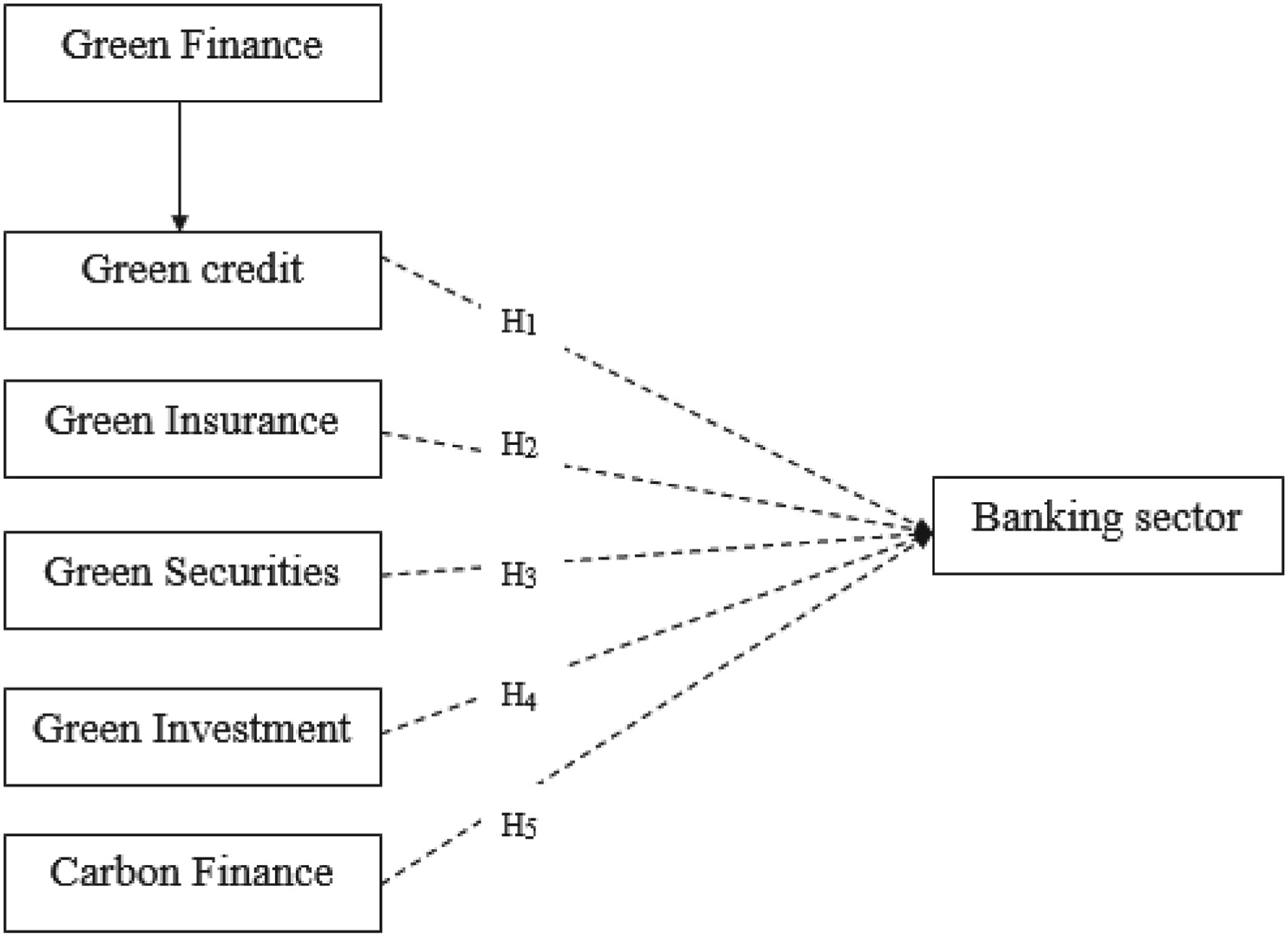
The study established the following hypothesis based on the problem definition, objectives, and research question. The conceptual structure for this investigation is displayed in Figure 1.
Figure 1. Conceptual framework.
The globe is increasingly being threatened by climate change. Resources can be transferred through financial channels to support industrial transformation and improvements by putting the green credit strategy into practice. The green credit strategy is a way to direct the flow of money and maximize how financial resources are allocated, both of which are essential for the shift to a carbon-neutral economy (Zhang et al., 2021). To mobilize financial resources and allocate them to profitable initiatives, banks are the main financiers of green credit, which makes them essential partners in economic expansion and development. Green credit and banking profit may, however, be at odds. Commercial banks are less eager to invest in green finance because it won’t always boost their financial performance (Li et al., 2022) Financial development gains from the growth of green credit, which also lessens its environmental shortcomings. In other words, green credit could affect a company's financing constraints, which in turn could affect the company's economic performance (Xu et al., 2020). Reducing pollution without significantly decreasing the production and use of non-energy things is referred to as “green investment.” By considering this, the following hypothesis is proposed.
H1: Green credit significantly impacts the financial flow levels.
Many individuals are becoming more and more concerned about sustainability, particularly in the corporate sphere. The next trend in the insurance sector to watch is sustainability and green insurance. The design, manufacture, and usage of these environmentally friendly items, as well as the liabilities connected to their manufacture and use, are covered by green insurance packages (Chen et al., 2021). The goal of Green Insurance is to safeguard business environmental value proposition. Risk management for climate change involves a wide range of both established and developing corporate operations. To correctly comprehend these risks, and create, and source the appropriate insurance cover from specialized insurers located all over the world, specialized skill is essential. By considering this, the following hypothesis is proposed (Hu et al., 2023)
H2: Green insurance impacts the financial flow levels.
According to the World Bank, a green bond/ security is a security for a debt that is released to raise money for initiatives that are relevant to the preservation of nature or the climate. Governments offer sovereign green bonds to raise money for these kinds of initiatives (Bal et al., 2013). Any asset-backed securities with funds produced to finance loans for environmentally friendly projects are also referred to as “green securitization (Kassi et al., 2023).” By considering this, the following hypothesis is proposed.
H3: Green securities directly impact the financial flow levels.
The green investment aims to encourage commercial actions that have a constructive effect on the atmosphere. Due to increased awareness and enthusiasm, green investments may garner favorable public attention, which will make financing much easier. Investing entails putting money or capital into a project in the hope of earning more money or making a profit (Tran et al., 2020). This can relate to financial services that invest in those things as well as the investment in the underlying technologies, initiatives, or ventures (Ellahi et al., 2023). It is important to note that financial instruments cannot be environmentally friendly in and of themselves; rather, their greenness stems from the assets that they represent or activities that they are used for. By considering this, the following hypothesis is proposed.
The monetary worth of the complete harm caused by emitting a metric ton of greenhouse gases into the atmosphere serves as the societal price of carbon, which is a measurement of the economic damage resulting from those consequences. Global carbon emissions reduction is the goal of carbon finance (Labatt and White, 2011). It works as a financial tool to encourage and offer chances for businesses and people to lower their carbon emissions. Companies utilize carbon credits to make up for the carbon they produce by complying with emission limits or funding environmentally friendly initiatives (Spencer and Stevenson, 2013). A credit for carbon emissions is essentially a financial tool that certifies the avoidance or removal of metric tons of carbon dioxide or another comparable greenhouse gas from the environment. By considering this, the following hypothesis is proposed.
H5: Carbon finance impacts the financial flow levels.

3 Research Methodology

3.1 Variables Description

Dependent variable: Dependent variable is the financial flow level of the banks. Financial flow level of banks: The distribution and flow of money within the banking system is referred to as the “financial flow level of banks.” This covers money coming in and going out, investments, and other financial operations that support banks’ general ability to make ends meet and run smoothly. Assessing a bank's liquidity, solvency, and capacity to sustain lending and other financial services is made easier by having a thorough understanding of its financial flow level. The study looks at how banks participate in green financing initiatives and how these initiatives affect their overall performance management in the banking industry. The main goal is to comprehend the levels of financial flow linked to green financing and how they affect banks’ overall performance in this industry (Xu et al., 2020). Independent variables are as follows. Green credit: Loans or credit facilities provided by financial institutions specifically for environmentally friendly and sustainable projects, businesses, or initiatives. Banks provide loans for eco-friendly projects or businesses, contributing to sustainable initiatives with a positive environmental impact (Zhang et al., 2021). Green insurance: Insurance products designed to cover risks associated with environmental or sustainable activities, such as renewable energy projects or eco-friendly practices. Financial institutions offering insurance products adapted for environmentally conscious activities, ensure coverage for risks associated with green practices (Chen et al., 2021). Green securities: Financial instruments, like bonds or stocks, issued by companies or entities to raise funds for environmentally sustainable projects or initiatives. Banks issue financial instruments, like bonds or stocks, to raise funds for projects focused on sustainability and ecological well-being (Bal et al., 2013). Green investment: Allocating funds to support and promote environmentally responsible projects or companies that contribute to sustainability and ecological well-being. Banks direct funds toward environmentally responsible projects or companies, supporting initiatives that align with ecological and sustainable goals (Tran et al., 2020). Carbon finance: Financial mechanisms and instruments aimed at reducing greenhouse gas emissions, often involving the trading or offsetting of carbon credits. Financial strategies within banks addressing carbon emissions, often involve investments in projects that reduce greenhouse gases or participating in carbon credit markets (Labatt and White, 2011).

3.2 Data Collection

The study employed a descriptive study to investigate from a conceptual perspective, presenting both theoretical and real-world implications. The intended audience for the survey, which would be conducted employing sampling at random, were consumers of the top five Indian banks, particularly the State Bank of India, HDFC Bank, ICICI Bank, and Punjab National Bank of India. A poll will be used to gather details on green banking from the districts of North India. Samples were collected using Google Forms which has been subsequently distributed to banks through email. The study's respondents are 342 bank employees. To find frequency analyses of the replies obtained and descriptive analyses of the components, statistical tools like SPSS were employed in the research design. Other required statistical investigations will also be carried out.

3.2.1 Sampling Technique

342 employees of particular Indian banks participated in the survey for a cross-sectional study on green banking. To ensure that every member of the population had an equal chance of being chosen, the participants were chosen using a random sampling technique. By using this technique, the sample is more representative, which increases the generalizability of the study's findings to the overall community. In short, random sampling reduces bias and enables researchers to make more general conclusions on green banking in North Indian districts by gathering relevant information through a survey.

3.2.2 Sample Description

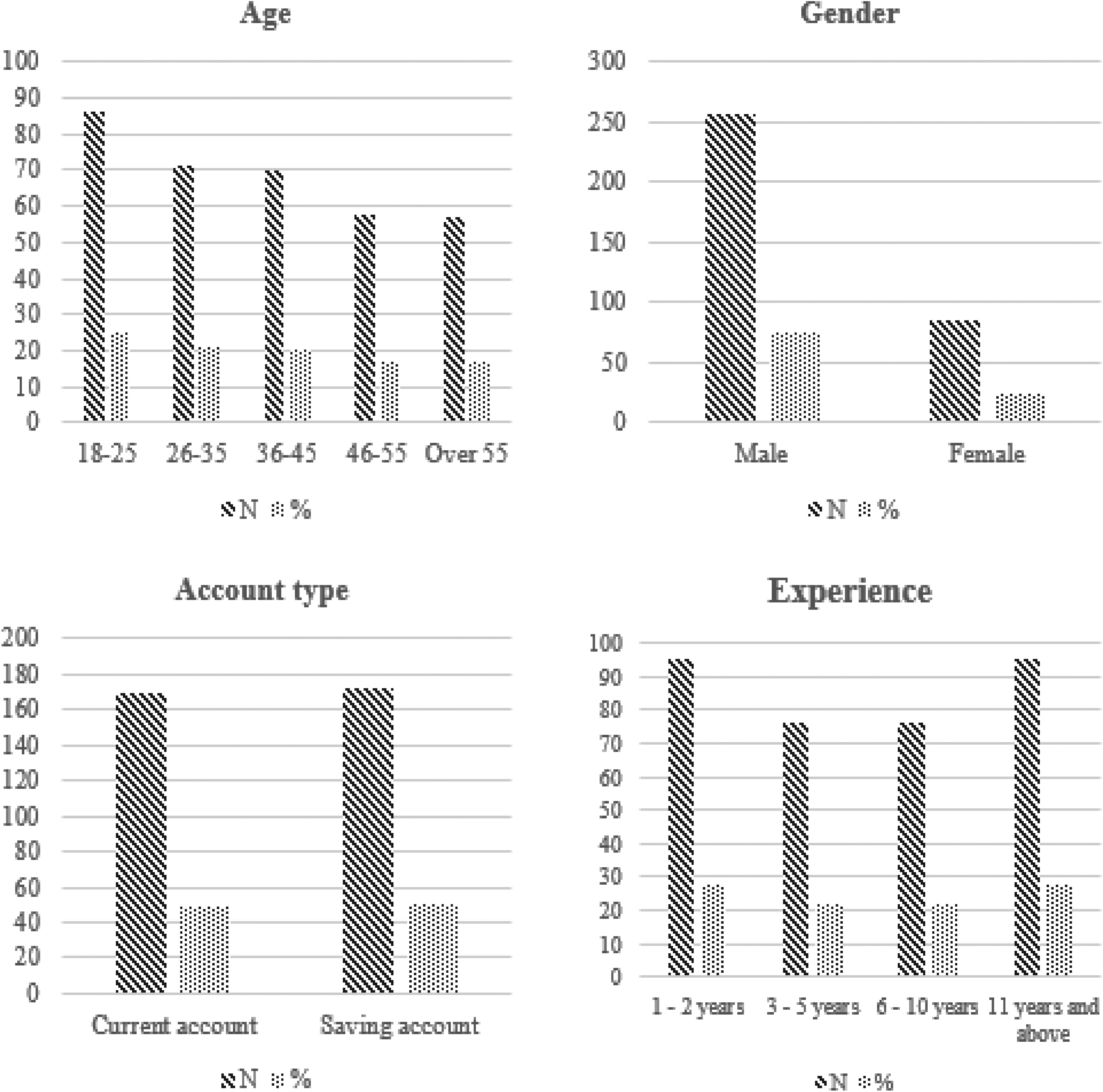
The categorization of those surveyed by age is shown in Figure 2. 25.1% of the people polled (N = 86) are between the age ranges of 18 and 25 years; 20.8% (N = 71) are between the ranges of 26 and 35. 20.5% of the people who took part are between those in the age range of 36 and 45, 17% (N = 58) are between the ranges of 40 and 55, and 16.7% are over the age of 55. This indicates that individuals between the ages of 18 and 25 have developed a greater interest in banking. According to the information retrieved, Table 2 indicates that men represented 75.1% of those who took the survey (257 out of 342) and women comprised just 24.9% (85 out of 342). The distribution of responders about the type of account is indicated in Table 2. The table clearly shows that the highest proportion of people (49.7%) have a current account, followed by the remaining people (50.3%), who have savings accounts. Also, Table 2 illustrates the people's experience with the banks. The table clearly shows that the highest proportion of people (27.8%) have been connected with banks for 1–2 years, followed by the people (22.2%), who have been connected with banks for 3–5 years, also the people (22.2%), who have been connected with the banks for 6–10 yrs. Then, the remaining people (27.8%), have been connected with the banks for more than 11 years.
Figure 2. Characteristics of respondents.
Table 2. Measures and Constructs.
MeasuresConstructs
Green creditDeveloped to assist in reducing climate change
Encourages ecologically responsible behavior
Monitor and control the usage of services and products.
Increase the number of resources accessible for the operations.
Maintain the viability of the ecosystem.
Green insuranceSustainable transition claims are supported.
Design components for residence insurance and flexibility
Green strategy components are included.
Altering Insurance to be more sustainable
Create a culture that is tolerant of risk.
Green securitiesAdapting climate finance solutions
Allowing the idea of sustainable development into practice
Providing a financial incentive to address important social concerns
Promote green commercial initiatives.
Helps in opening up debt capital markets to financing
Green investmentDiverse portfolios with greater responsibility
Financial risk is lower.
Expanding carbon markets quickly
Build forth favorable public perception.
Earn substantial returns
Carbon financeReducing carbon emissions worldwide
Encourage business growth and offer opportunities.
Successfully spreads the co-benefits philosophy.
Mitigating climate change's overall effects
Purchase carbon credits produced by green initiatives.
Financial flow levelsProvide customers with prompt service.
Offering the services at the time specified
Flexible hours of operation
Transactions are safe.
Express enthusiasm for problem-solving

3.2.3 Questionnaire Design

The survey application for this study is split into two sections. Demographic details about those who took part, including their age, gender, type of account, and experience of people with banks, are included in the first section. However, the second section includes the customers’ assessments of how much they concur with the consequences of green finance and the effectiveness of banks. To answer the questions in Part 2, five measurement scales were used, with 1 denoting very dissatisfied, 2 denoting dissatisfied, 3 denoting moderates, 4 denoting satisfied, and 5 denoting very satisfied. Table 2 shows the measures and constructs in the questionnaire.

3.3 Research Design

To provide a diverse statistical analysis, the primary data gathered from the surveys were examined using SPSS 26 and AMOS 24. In the data analysis section, SEM is used. First, the measurement model is assessed for the reliability and validity of the measures. Then, the structural model is evaluated for model fitness and to test causal relationships between variables. SPSS v26 and AMOS v24 were used to perform the analysis.

4 Data Analysis and Interpretation

The measurement model's exploratory factor analysis (EFA), confirmatory analysis (CFA), and hypothesis testing in the structural model are all covered in the section on empirical findings.

4.1 Measurement Model

The results of the EFA utilizing principal component analysis (PCA) are presented in Table 3. The financial flow levels (FFLs) of the sample banks as well as five different facets of green finance, such as green credit (GC), GI, green securities (GS), green investment (GN), and carbon finance (CF), were among the six perceived dimensions of the eigenvalue of each factor generated that the EFA was used to analyze. The adequacy of the data for factor analysis was evaluated by measuring the correlations matrix, and sufficient correlation between measurements was found. The eigenvalue parameters were used to determine the number of factors that needed to be maintained. Kaiser (1974) states that the calculated Kaiser–Meyer–Oklin value of 0.871 is regarded as suitable. Bartlett's sphericity test significance threshold reached p < .000, indicating the quality of fit of the correlation matrix. The findings demonstrated coherence within the six-dimensional model, which represented a total variance of 71.93%. The commonalities of the 35 measures varied from 0.694 to 0.991. Three items (GC4, GC5, GI1, GI5, GS4, GS5, GN1, GN2, CF1, CF2, and FFL5) were eliminated after the EFA because their factors had not loaded well enough.
Table 3. EFA Assessment.
 GCGIGSGNCFFFL
GC1   0.694  
GC2   0.853  
GC3   0.783  
GI2    0.815 
GI3    0.809 
GI4    0.780 
GS10.775     
GS20.816     
GS30.832     
GN3 0.698    
GN4 0.816    
GN5 0.864    
CF3  0.991   
CF4  0.733   
CF5  0.714   
FFL1     0.859
FFL2     0.816
FFL3     0.847
FFL4     0.815
Variance explained = 71.93%, KMO = 0.871, Bartlett's test of sphericity = p < .000.
Table 4. CFA Assessment.
MeasuresItemsLoadingsCRαAVE
Green credit (GC)GC10.7140.7240.7150.606
GC20.859
GC30.816
Green insurance (GI)GI20.8470.9320.9360.738
GI30.819
GI40.778
Green security (GS)GS10.8160.7650.7680.692
GS20.864
GS30.799
Green investment (GN)GN30.7960.8230.8130.532
GN40.733
GN50.808
Carbon finance (CF)CF30.7750.8870.9000.754
CF40.816
CF50.832
Financial flow levels (FFLs)FFL10.8720.8680.8630.618
FFL20.782
FFL30.734
FFL40.766
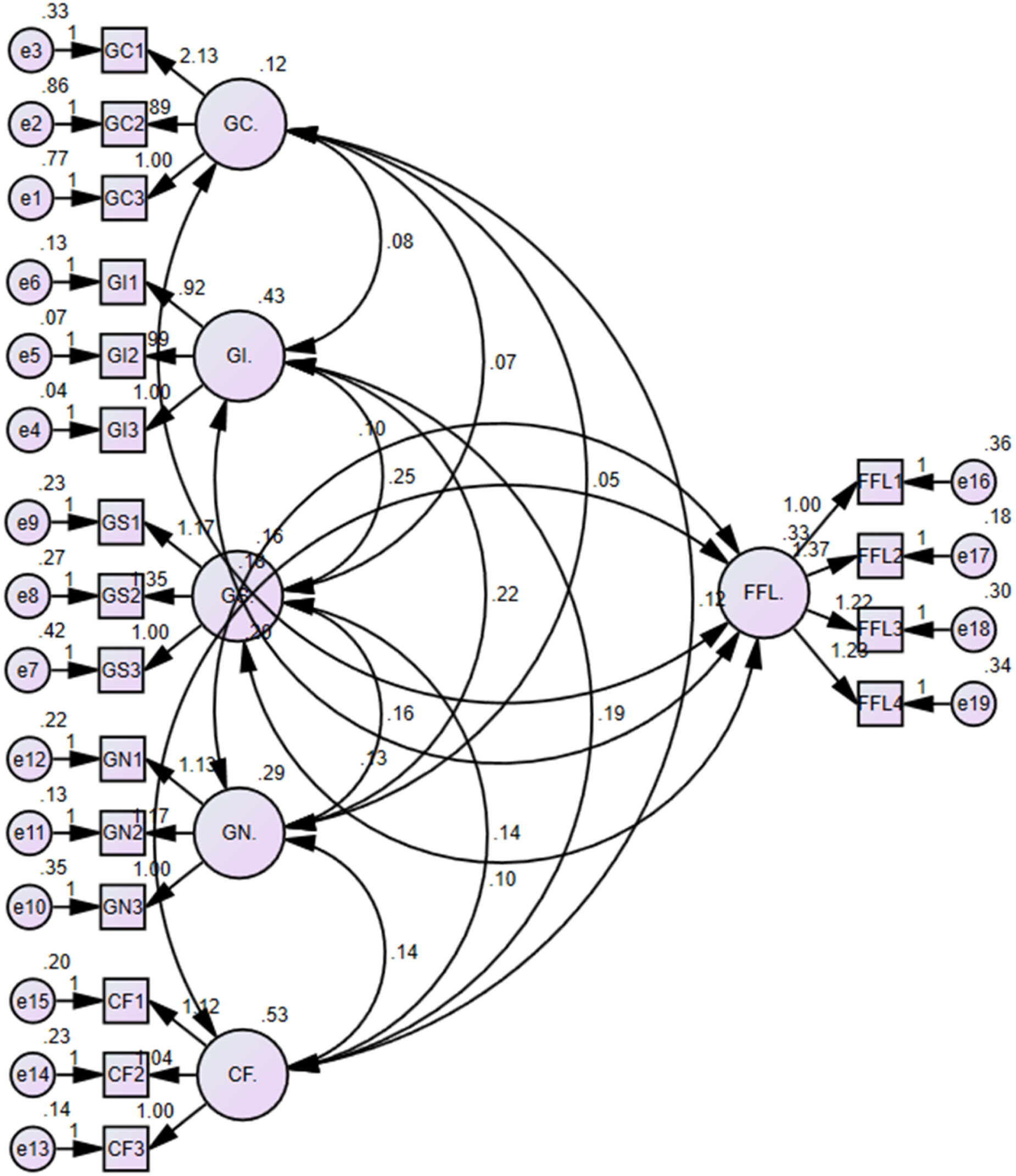
Figure 3. Measurement model diagram.
Table 4 and Figure 3 present the CFA assessment of various financial measures. For GC, the items GC1, GC2, and GC3 have loadings of 0.714, 0.859, and 0.816, respectively. The composite reliability (CR) and Cronbach's alpha (α) for GC are 0.724 and 0.715, with an average variance extracted (AVE) of 0.606, indicating acceptable internal consistency and convergent validity. GI includes items GI2, GI3, and GI4 with loadings of 0.847, 0.819, and 0.778, respectively. The CR for GI is high at 0.932, with a Cronbach's alpha of 0.936 and an AVE of 0.738, demonstrating strong reliability and validity. GS is measured by GS1, GS2, and GS3, which have loadings of 0.816, 0.864, and 0.799, respectively. The CR and Cronbach's alpha for GS are 0.765 and 0.768, with an AVE of 0.692, suggesting good internal consistency and convergent validity. GI includes GN3, GN4, and GN5 with loadings of 0.796, 0.733, and 0.808, respectively. The CR for GI is 0.823, Cronbach's alpha is 0.813, and the AVE is 0.532, indicating moderate reliability and validity. CF is assessed with items CF3, CF4, and CF5, having loadings of 0.775, 0.816, and 0.832, respectively. The CR and Cronbach's alpha for CF are high at 0.887 and 0.900, with an AVE of 0.754, indicating excellent reliability and convergent validity. Finally, FFLs are measured by FFL1, FFL2, FFL3, and FFL4 with a loading of 0.872, 0.782, 0.734, and 0.766. The CR for FFL is 0.868, Cronbach's alpha is 0.863, and the AVE is 0.618, suggesting strong internal consistency and validity.
To assess discriminant validity, the difference between the AVE square root value and the correlation coefficient among the components was used (Hair, 2009; Kaiser, 1974). The values of the AVE square root varied between 0.673 and 0.790, surpassing the inner construct squared correlations displayed in Table 5. The Hetero–Monotrait (HTMT) value was also computed in this study for robustness, and it outperforms the Fornell–Larcker Criterion (FLC) under a range of circumstances. Table 5 displays the HTMT values, which are smaller than 0.90, showing that there is no discriminant validity issue (Hair et al., 2013). The findings allow us to infer that the presence of discriminant validity among the variables analyzed has been validated and is acceptable.
Table 5. HTMT and FLC Values.
 GCGIGCGNCFFFL
Hetero–Monotrait (HTMT)
 GC      
 GI0.415     
 GC0.5460.477    
 GN0.5340.6970.597   
 CF0.7760.5630.7980.864  
 FFL0.5780.6970.8270.5740.748 
Fornell–Larcker criterion (FLC)
 GC0.778     
 GI0.3590.859    
 GC0.4940.9330.831   
 GN0.2640.6150.7220.729  
 CF0.4800.4060.4830.3690.868 
 FFL0.8830.3380.4300.3090.4310.786

4.2 Structural Model

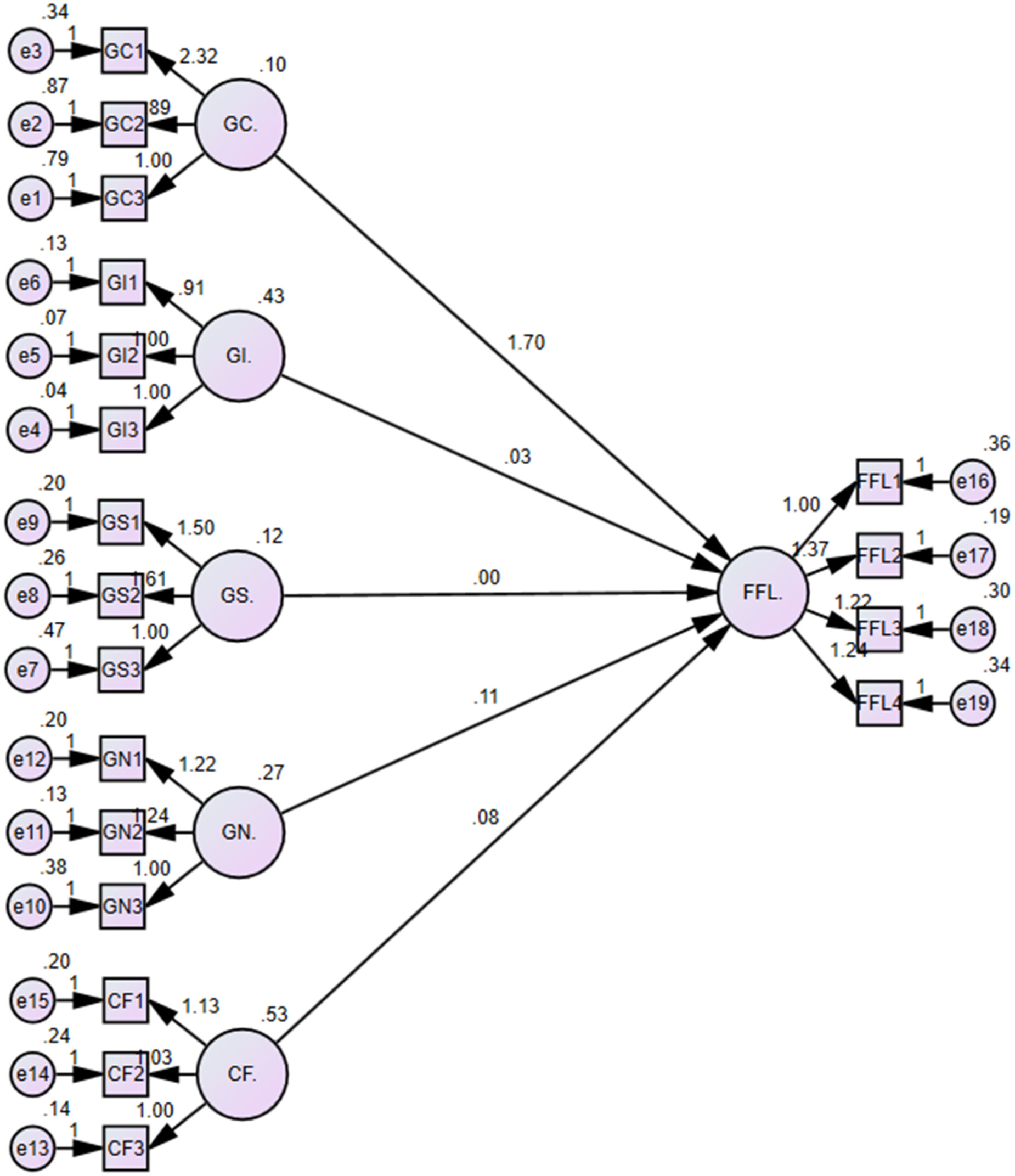
Figure 4 demonstrates the study's structural model and the influence of the relationships between the latent variables and components. It may be inferred that green finance practices (GC, GI, GS, GN, and CF) have a favorable impact on banks’ FFLs. In addition, model fit indicators were used to assess the adequacy of the structural model. Table 6 shows that the structural model fit indices were within acceptable standard ranges. The structural model fit indices were χ2/df = 1.324; goodness of fit index = 0.924; standardized root mean square residual = 0.049; root mean square error of approximation = 0.054; Tucker-Lewis index = 0.928; incremental fit index = 0.945; comparative fit index = 0.953; normed fit index = 0.911; and p-value = .000. Based on the results of the various indices, it was possible to determine that the overall structural model was satisfactory.
Figure 4. Structural model diagram with standard coefficients.
Table 6 provides a summary of the model evaluation, detailing the relationships between various green finance measures (GC, GI, GS, GN, CF) and FFL. Each relation is tested with a corresponding hypothesis, and the table includes unstandardized and standardized coefficients, t-values, significance levels (Sig.), and remarks on the acceptance or rejection of each hypothesis.
For the relationship between GC and FFLs, hypothesis H1 is tested. The unstandardized coefficient (B) is 0.587, with a standard error of 0.059 and a standardized coefficient (β) of 0.487. The t-value is 9.913 with a significance level of 0.000, indicating a statistically significant positive relationship. Thus, H1 is accepted. Hypothesis H2 examines the relationship between GI and FFLs. The unstandardized coefficient is −0.091, with a standard error of 0.078 and a standardized coefficient of −0.076. The t-value is −1.16 with a significance level of 0.247, which is not statistically significant. Hence, H2 is rejected. The relationship between GS and FFLs is tested in hypothesis H3. The unstandardized coefficient is −0.043, with a standard error of 0.106 and a standardized coefficient of −0.033. The t-value is −0.406 with a significance level of 0.685, indicating no significant relationship. Therefore, H3 is rejected. Hypothesis H4 assesses the relationship between GN and FFLs. The unstandardized coefficient is 0.216, with a standard error of 0.090 and a standardized coefficient of 0.175. The t-value is 2.403 with a significance level of 0.017, showing a statistically significant positive relationship. Consequently, H4 is accepted. Finally, hypothesis H5 explores the relationship between CF and FFLs. The unstandardized coefficient is 0.192, with a standard error of 0.049 and a standardized coefficient of 0.199. The t-value is 3.936 with a significance level of 0.000, indicating a statistically significant positive relationship. Thus, H5 is accepted.
Table 6. Evaluation of Model Summary.
  UnstandardizedStandardized   
  coefficientscoefficients   
RelationHypothesisBstd. errorβtSig.Remark
GC→FFLH1.587.059.4879.913.000Accepted
GI→FFLH2−.091.078−.076−1.16.247Rejected
GS→FFLH3−.043.106−.033−.406.685Rejected
GN→FFLH4.216.090.1752.403.017Accepted
CF→FFLH5.192.049.1993.936.000Accepted

4.3 Discussion

The study provides an understanding of the significance of green financing operations in the context of economic performance and environmental sustainability by examining their effects on the financial flow levels of the Indian banking industry. Regarding the effect of green finance initiatives on the financial flow of India's banking industry, the paper tackles two main research concerns. Firstly, it examines whether green credit, insurance, securities, investment, and carbon finance influence the financial flow levels within banks. The findings reveal that while green credit, investment, and carbon finance have a statistically significant positive impact on financial flows, green insurance, and securities do not show a significant relationship (Zhang et al., 2021). This indicates that certain forms of green financing are more effective in mobilizing financial resources within banks towards environmentally sustainable projects, thereby contributing to economic growth while mitigating environmental risks. Secondly, the study explores the overall relationship between green financing activities and the financial flow level of the banking sector (Chen et al., 2021). It confirms that green credit and green investment play a crucial role in enhancing financial flows, aligning with global trends towards sustainable finance practices. However, the limited impact of green insurance and securities suggests that these instruments may require further development or regulatory support to realize their potential to drive financial flows within the banking sector (Ellahi et al., 2023). These findings have significant implications for policymakers, banking institutions, and stakeholders interested in promoting sustainable finance. Policymakers can use these perceptions to formulate policies that incentivize banks to prioritize green credit and investment, thereby fostering a more resilient and environmentally responsible financial system. Banking institutions, on the other hand, can leverage these findings to strengthen their environmental sustainability strategies, attracting socially responsible investors and enhancing their market competitiveness.

5 Conclusion, Suggestions, and Limitations

5.1 Conclusion

Over the past 20 years, there has been a noticeable surge in interest in the fields of green banking and financing from researchers, educators, and industry experts in both developed and developing nations. As a result, the goal of this study was to ascertain how the Indian banking system was affected by green finance operations and money flow levels. To accomplish the aforementioned research goals, primary data were employed in this study. Information was gathered from bankers at the chosen Indian banks using standardized questionnaires. The empirical results of many models showed that the entire study model was accurate and valid. The outcome indicates that GC, GN, and CF have significant positive impacts on FFLs, whereas GI and GS do not show significant effects.

5.2 Suggestion and Study Implications

The implications for the management of the current study are extensive. According to the study, it will no longer be impossible to improve environmental reputation and foster environmental care if green banking initiatives are performed successfully. Therefore, the bank may generate new and fascinating prospects through effective resource planning of green initiatives, which can raise their profile and enable them to gain the confidence of current as well as prospective consumers. The investigation will urge the banking sector to participate in ecological corporate social responsibility (CSR) and use green internal policies since “social banking” is a key element of “green banking,” and doing so will help to increase consciousness among numerous stakeholders. The study is extremely important for building successful and efficient green banking strategies for environmentalists, policymakers, and other stakeholders.

5.2.1 Practical Implications

The findings of this study offer valuable perceptions for various stakeholders including researchers, academics, managers, bankers, government officials, financial institutions, and investors. By demonstrating the favorable impact of green finance initiatives on financial flow levels in North Indian banks, the study highlights opportunities for enhancing banks’ performance management through increased allocation to environmentally friendly projects such as waste management, energy efficiency, renewable and alternative energy, and green industrial growth. Practical recommendations include the organization of symposiums, seminars, and educational training sessions to raise awareness among bank staff and customers about green financing initiatives. These efforts can contribute to improving environmental sustainability while also potentially enhancing the reputation and competitiveness of banks in the region.

5.2.2 Theoretical Implications

Theoretically, this study validates the relationship between green banking practices and financial flow levels in Indian banks, contributing to the existing literature by providing empirical evidence from a region where such studies are scarce. The conceptual framework employed in this research offers a structured approach to understanding how green banking activities influence overall financial performance. By filling gaps in current knowledge, the study covers the way for further research into the broader implications of green banking on CSR and environmental management strategies within the banking sector. Insights gained can inform future studies exploring similar dynamics in different geographical and institutional contexts, thereby expanding the theoretical understanding of green banking's impact on sustainable financial practices.

5.3 Limitations and Future Research

The impact of demographics on the claimed association in this qualitative research can also be examined, as well as its subsequent qualitative validation. The study was done in the Indian banking industry, however, a thorough investigation in many nations at various developmental phases could yield insightful results. In addition to bank workers, other stakeholders can also be studied from the perspective of the suggested framework.
The report has very calmly described how banks’ implementation of green practices might affect their financial standing. The research findings offer pertinent and unique perspectives that help academics, strategists, and the government plan efficient green banking initiatives for the “green economy.”
Given the significant contributions made by this work, several shortcomings should be noted for future research. Third, this research's factors are derived from authorized primary information. Future studies may use secondary as well as primary information to evaluate the state of green banking systems in India. This would provide the study with more substance and a deeper understanding of the subject by enabling a more communicative image of the clients.

Declaration of Conflicting Interests

The author declared no potential conflicts of interest with respect to the research, authorship, and/or publication of this article.

Funding

The author received no financial support for the research, authorship, and/or publication of this article.

References

Akhter I., Yasmin S., Faria N. (2021). Green banking practices and its implication on financial performance of the commercial banks in Bangladesh. Journal of Business Administration, 42(01), 1–23.
Akomea-Frimpong I., Adeabah D., Ofosu D., Tenakwah E. J. (2022). A review of studies on green finance of banks, research gaps, and future directions. Journal of Sustainable Finance & Investment, 12(4), 1241–1264. https://doi.org/10.1080/20430795.2020.1870202
Bal Y., Faure M., Liu J. (2013). The role of China’s banking sector in providing green finance. Duke Envtl. L. &Pol’y F, 24, 89.
Banga J. (2019). The green bond market: A potential source of climate finance for developing countries. Journal of Sustainable Finance & Investment, 9(1), 17–32. https://doi.org/10.1080/20430795.2018.1498617
Bukhari S. A. A., Hashim F., Amran A. (2019). Determinants of green banking adoption: A theoretical framework. KnE Social Sciences, 1–14. https://doi.org/10.18502/kss.v3i22.5041
Chen Q., Ning B., Pan Y., Xiao J. (2021). Green finance and outward foreign direct investment: Evidence from a quasi-natural experiment of green insurance in China. Asia Pacific Journal of Management, 39, 1–26. https://doi.org/10.1007/s10490-020-09750-w
Chen J., Siddik A. B., Zheng G. W., Masukujjaman M., Bekhzod S. (2022). The effect of green banking practices on banks’ environmental performance and green financing: An empirical study. Energies, 15(4), 1292. https://doi.org/10.3390/en15041292
Cunha F. A. F. D. S., Meira E., Orsato R. J. (2021). Sustainable finance and investment: Review and research agenda. Business Strategy and the Environment, 30(8), 3821–3838. https://doi.org/10.1002/bse.2842
Ellahi A., Jillani H., Zahid H. (2021). Customer awareness on Green banking practices. Journal of Sustainable Finance & Investment, 13(3), 1–17. https://doi.org/10.1080/20430795.2021.1977576
Ellahi A., Jillani H., Zahid H. (2023). Customer awareness on Green banking practices. Journal of Sustainable Finance & Investment, 13(3), 1377–1393. https://doi.org/10.1080/20430795.2021.1977576
Guang-Wen Z., Siddik A. B. (2023). The effect of Fintech adoption on green finance and environmental performance of banking institutions during the COVID-19 pandemic: The role of green innovation. Environmental Science and Pollution Research, 30(10), 25959–25971. https://doi.org/10.1007/s11356-022-23956-z
Gulzar R., Bhat A. A., Mir A. A., Athari S. A., Al-Adwan A. S. (2024). Green banking practices and environmental performance: Navigating sustainability in banks. Environmental Science and Pollution Research, 31(15), 23211–23226. https://doi.org/10.1007/s11356-024-32418-7
Hair J. F. (2009). Multivariate data analysis.
Hair J. F., Ringle C. M., Sarstedt M. (2013). Partial least squares structural equation modeling: Rigorous applications, better results, and higher acceptance. Long Range Planning, 46(1-2), 1–12. https://doi.org/10.1016/j.lrp.2013.01.001
Hossain M. A., Rahman M. M., Hossain M. S., Karim M. R. (2020). The effects of green banking practices on the financial performance of listed banking companies in Bangladesh. Canadian Journal of Business and Information Studies, 2(6), 120–128. https://doi.org/10.34104/cjbis.020.01200128
Hu Y., Du S., Wang Y., Yang X. (2023). How does green insurance affect green innovation? Evidence from China. Sustainability, 15(16), 12194. https://doi.org/10.3390/su151612194
Ibe-enwo G., Igbudu N., Garanti Z., Popoola T. (2019). Assessing the relevance of green banking practice on bank loyalty: The mediating effect of green image and bank trust. Sustainability, 11(17), 4651. https://doi.org/10.3390/su11174651
Kaiser H. F. (1974). An index of factorial simplicity. Psychometrika, 39(1), 31–36. https://doi.org/10.1007/BF02291575
Kalyar M. N., Shoukat A., Shafique I. (2020). Enhancing firms’ environmental performance and financial performance through green supply chain management practices and institutional pressures. Sustainability Accounting, Management and Policy Journal, 11(2), 451–476. https://doi.org/10.1108/SAMPJ-02-2019-0047
Kassi D. F., Li Y., Gnangoin T. Y., Tuo S. J., Gnahe F. E., Shaikh R., Yongjie D. (2023). Green credits, green securities, renewable energy, and environmental quality: A comparative analysis of sustainable development across Chinese provinces. Environment, Development and Sustainability, 26, 1–37. https://doi.org/10.1007/s10668-023-03717-9
Labatt S., White R. R. (2011). Carbon finance: the financial implications of climate change. John Wiley & Sons.
Laguir I., Marais M., El Baz J., Stekelorum R. (2018). Reversing the business rationale for environmental commitment in banking: Does financial performance lead to higher environmental performance? Management Decision, 56(2), 358–375. https://doi.org/10.1108/MD-12-2016-0890
Li Y., Ding T., Zhu W. (2022). Can green credit contribute to sustainable economic growth? An empirical study from China. Sustainability, 14(11), 6661. https://doi.org/10.3390/su14116661
Liu H., Yao P., Latif S., Aslam S., Iqbal N. (2022). Impact of Green financing, FinTech, and financial inclusion on energy efficiency. Environmental Science and Pollution Research, 29, 1–12. https://doi.org/10.1007/s11356-02
Maltais A., Nykvist B. (2020). Understanding the role of green bonds in advancing sustainability. Journal of Sustainable Finance & Investment, 1–20. https://doi.org/10.1080/20430795.2020.1724864
Molina-Azorín J. F., Claver-Cortés E., López-Gamero M. D., Tarí J. J. (2009). Green management and financial performance: a literature review. Management Decision 47(7), 1080–1100. https://doi.org/10.1108/00251740910978313
Ozili P. K. (2022). Theories of sustainable finance. Managing Global Transitions, March, 1–21.
Rahman S., Moral I. H., Hassan M., Hossain G. S., Perveen R. (2022). A systematic review of green finance in the banking industry: Perspectives from a developing country. Green Finance, 4(3), 347–363. https://doi.org/10.3934/GF.2022017
Rashid M. H. U., Uddin M. M. (2018). Green financing for sustainability: Analyzing the trends with challenges and prospects in the context of Bangladesh. International Journal of Green Economics, 12(3-4), 192–208. https://doi.org/10.1504/IJGE.2018.097876
Rehman A., Ullah I., Afridi F. E. A., Ullah Z., Zeeshan M., Hussain A., Rahman H. U. (2021). Adoption of green banking practices and environmental performance in Pakistan: A demonstration of structural equation modeling. Environment, Development and Sustainability, 23, 1–21. https://doi.org/10.1007/s10668-020-01206-x
Saci F., Jasimuddin S. M., Hasan M. (2022). Performance of socially responsible investment funds in China: A comparison with traditional funds. Sustainability, 14(3), 1476. https://doi.org/10.3390/su14031476
Sarma P., Roy A. (2021). A scientometric analysis of literature on green banking (1995-March 2019). Journal of Sustainable Finance & Investment, 11(2), 143–162. https://doi.org/10.1080/20430795.2020.1711500
Shakil M. H., Azam M. K. G., Raju M. S. H. (2014). An evaluation of green banking practices in Bangladesh. European Journal of Business and Management, 6(31), 8–16.
Sharma M., Choubey A. (2022). Green banking initiatives: A qualitative study on the Indian banking sector. Environment, Development and Sustainability, 24(1), 293–319. https://doi.org/10.1007/s10668-021-01426-9
Spencer T., Stevenson J. (2013). EU low-carbon investment and new financial sector regulation: What impacts and what policy response. IDDRI Sciences Po.
Taneja S., Özen E. (2023). To analyze the relationship between a bank’s green financing and environmental performance. International Journal of Electronic Finance, 12(2), 163–175. https://doi.org/10.1504/IJEF.2023.129919
Tran T., Do H., Vu T., Do N. (2020). The factors affecting green investment for sustainable development. Decision Science Letters, 9(3), 365–386. https://doi.org/10.5267/j.dsl.2020.4.002
Volz U. (2017). On the role of central banks in enhancing green finance.
Wang Y., Zhi Q. (2016). The role of green finance in environmental protection: Two aspects of market mechanism and policies. Energy Procedia, 104, 311–316. https://doi.org/10.1016/j.egypro.2016.12.053
Xu H., Mei Q., Shahzad F., Liu S., Long X., Zhang J. (2020). Untangling the impact of green finance on the enterprise green performance: A meta-analytic approach. Sustainability, 12(21), 9085. https://doi.org/10.3390/su12219085
Yan C., Siddik A. B., Yong L., Dong Q., Zheng G. W., Rahman M. N. (2022). A two-staged SEM-artificial neural network approach to analyze the impact of FinTech adoption on the sustainability performance of banking firms: The mediating effect of green finance and innovation. Systems, 10(5), 148. https://doi.org/10.3390/systems10050148
Zheng G. W., Siddik A. B., Masukujjaman M., Fatema N. (2021). Factors affecting the sustainability performance of financial institutions in Bangladesh: The role of green finance. Sustainability, 13(18), 10165. https://doi.org/10.3390/su131810165
Zhang X., Wang Z., Zhong X., Yang S., Siddik A. B. (2022). Do green banking activities improve the banks’ environmental performance? The mediating effect of green financing. Sustainability, 14(2), 989. https://doi.org/10.3390/su14020989
Zhang S., Wu Z., Wang Y., Hao Y. (2021). Fostering green development with green finance: An empirical study on the environmental effect of green credit policy in China. Journal of Environmental Management, 296, 113159. https://doi.org/10.1016/j.jenvman.2021.113159

Biographies

Razia Nagina is currently working as Associate Professor at Mittal School of Business, Lovely Professional University, Phagwara, Punjab (India). Her keen research areas are Financial Markets Anomalies, Institutional Investment Behavior, Cointegration of markets, Financial Reporting, Financial Statement Analysis and Consumer Behavior.