




To Pack or Not to Pack: The Current Status of Periodontal Dressings
Abstract
Introduction
Types of Periodontal Dressings
| Sr. No. | Name | Type | Composition |
|---|---|---|---|
| 1 | Ward's Wondrpak | Eugenol dressing | Powder – zinc oxide, powdered pine resin, talc & asbestos |
| Liquid – isopropyl alcohol 10%, clove oil, pine resin, pine oil, peanut oil, camphor & coloring materials | |||
| 2 | Kirkland formula | Eugenol dressing | Zinc oxide, resin, zinc acetate, eugenol, tannic acid and olive oil. |
| 3 | Coe-Pak | Noneugenol dressing | Two pastes |
| First paste – zinc oxide, added oils, gums & lorothidol | |||
| Second paste – unsaturated fatty acids & chlorothymol | |||
| 4 | Cross Pack | Noneugenol dressing | Colophony powder, zinc oxide, tannic acid bentonite & powdered neomycin sulphate |
| 5 | Peripac | Noneugenol dressing | Calcium sulphate, zinc oxide, zinc sulphate, acrylic type of resin & glycol solvent |
| 6 | Septopack | Noneugenol dressing | Amyl acetate, dibutyl phthalate, butyl polymetacrylate, zinc oxide, zinc sulphate |
| 7 | PerioCare | Noneugenol dressing | Two pastes |
| First paste – paste of metal oxides in vegetable oil | |||
| Second paste – gel of rosin suspended in fatty acids | |||
| 8 | Perio Putty | Noneugenol dressing | Methylparabens, propylparabens, benzocaine |
| 9 | Periogenix™ | Noneugenol dressing | Perfluorodecalin, purified water, glycerin, hydrogenated phosphatidylcholine, cetearyl alcohol, polysorbate 60, tocopheryl acetate, benzyl alcohol, methylparaben, propylparaben, & oxygen |
| 10 | Cyanoacrylate dressings | Other | n-Butyl cyanoacrylate |
| 11 | Light cure dressings | Other | Silicon dioxide crystalline – quartz, hydrophobic amorphous fumed silica, urethane dimethacrylate resin |
| 12 | Collagen dressing | Other | Type I collagen derived from bovine tendon mixed with cancellous granules |
| 13 | Stomato adhesive dressing | Other | Gelatin, pectin, sodium carboxymethylcellulose and polysio polysiobutylene |
Eugenol Dressings
Role of Eugenol
Noneugenol Dressings
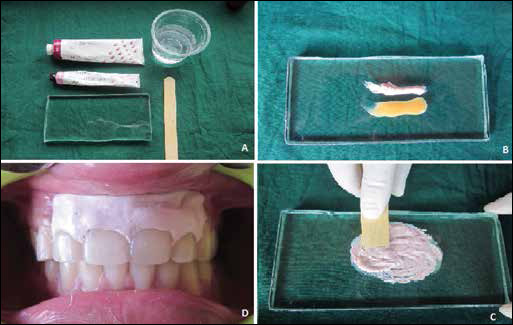
Coe-Pak™
| Pastes | Composition | Specific ingredients | Function |
|---|---|---|---|
| Oils | Oils of clove or eugenol | Principal ingrediant | |
| Rosin | Petrolatum | Plasticity, viscocity | |
| To reduce brittleness, Speeds the reaction | |||
| Base paste | Fatty acids | Fatty acids | Lubrication |
| Chlorothymol | 6-chlorothymol | Bacteriostatic agent | |
| Alcohol | ethyl alcohol | Luting agent, viscocity, micromechanical adhesion | |
| Metal salts | Zinc acetate | Strength, decrease setting time, accelerator | |
| Cellulose | Cellulose asters Sodium carboxy methyl cellulose | Manipulation | |
| Catalyst (accelerator) paste | Oxides | Zinc oxide Magnesium oxide | Principal ingredient, accelerators, modifiers, fillers |
| Oils | Vegetable oils | Plasticizer, masks the action of eugenol as irritant | |
| Chlorothymol | Chlorothymol Chlorodimethyl phenyl | Bacteriostatic agent | |
| Lorothidol | Lorothidol | Fungicyde | |
| Silica | Ethyl Silicate/ sodium silicate | Binder, filler | |
| Resins | Syntheticn resins | Plasticity | |
| Coumarin | Coumadin | Anticoagulant |
Cross Pack
Peripac®
Septo-Pack
PerioCare
Perio Putty
Periogenix™
Dressings Containing Neither Zinc Oxide Nor Eugenol
Cyanoacrylate
Light Cure Dressings
Collagen Dressings
Modifications
Dressing and Chlorhexidine
| Clinical trials: author (ref.) | Reason |
|---|---|
| Ariaudo and Tyrell (35) | Protection of wound from mechanical trauma, stability of the surgical site during healing process |
| Prichard (36) | Patient comfort during healing, good adaptation to underlying gingival and bony tissue, prevention of postoperative hemorrhage or infection, decreasing tooth hypersensitivity, protecting the clot from forces applied during speaking or chewing, preventing gingival detachment from the root surface |
| Wikesjo et al (37) | Prevention of flap displacement in apically repositioned flaps, additional support in free gingival grafting procedures |
| Sigusch et al (38) | Periodontal wound dressing has a positive effect on clinical long-term results |
| Clinical trials: author (ref.) | Reason |
|---|---|
| Loe and Silness (39) | Dressing has little effect |
| Stahl et al (40) | Dressing accumulates plaque |
| Harpenau (41) | No difference in clinical parameters |
| Greensmith (42) | No differences in healing |
| Kidd and Wade (43) | Greater pain experience |
| Plaque accumulation | |
| Subsequent microbial invasion | |
| Nonpack areas showed better wound healing | |
| Lesser pain scores | |
| Jones and Cassingham (44) | Irritates healthy tissue increases chances of infection |
| Allen and Caffesse (45) | No difference in PD, CAL and gingival inflammation |
| Checchi and Trombelli (46) | No statistical differences in pain scores and number of analgesics consumed between the pack and nonpack groups. Postoperative pain with dressing |
| Bose et al (2013) (47) | Pronounced swelling increases plaque accumulation |
| Increases inflammation and GCF | |
| Difficult in eating |
Dressing and Antibacterial Agents
| 1 | Coppes et al (49) in comparison of microorganism types between eugenol and noneugenol dressings, revealed the frequency of Bacteroides melaninogenica to be higher under eugenol-free dressings. |
| 2 | Heaney et al (50) took a bacterial sample from the areas under two periodontal dressings. They revealed that the most frequent microorganisms under Coe-Pak were gram-negative rods, although the incidence of yeasts was higher under ZOE dressing. |
| 3 | Plüss (28) showed that significantly less plaque formed under periodontal packs with chlorhexidine powder than under control packs. |
| 4 | In evaluation of healing process, O'Neil (11) revealed that tested periodontal dressings (Coe-Pak, Cross-Pak, Peripac, Septo-Pak, ZOE) had no antibacterial properties, and ZOE had minimal antifungal properties. |
| 5 | In some in vitro studies (11, 18, 50, 51, 52), antibacterial properties of periodontal dressings against bacterial plaque have been reported to be inconsistent. |
| 6 | Haugen and Gjermo (6) revealed that the tested periodontal dressings (Wondrpak, Coe-Pak and Peripac) had antibacterial effects on salivary microorganisms. |
| 7 | The effect of chlorhexidine supplementation on periodontal dressing was assessed by Othman et al (29). They showed that the durability of chlorhexidine efficacy in periodontal dressing depends on its concentration. |
| 8 | Sustained-release varnish of chlorhexidine as an inhibitor of plaque accumulation under periodontal dressings was evaluated by Zyskind et al (33). The application of chlorhexidine varnish under tested dressings caused less plaque accumulation compared with the control group. |
| 9 | Volozhin et al (52) showed that the frequency of aggressive microorganisms in periodontal pockets of patients with generalized chronic periodontitis reduced when the periodontal dressing consisting of collagen and Lactobacillus casei 37 cell suspension was used. |
| 10 | Ikeda T et al (53) and Woodcock (54) in their studies revealed that biguanides like polyhexamethylene biguanide (PHMB) have better physical properties than chlorhexidine. PHMB has extensive antibacterial activity against a wide range of gram-positive bacteria and fungi and causes destabilization of the bacterial cell membrane. |
Other Medicaments and Dressings
Substitutes for Dressings
Benefits of a Dressing
Physical Effects
Therapeutic Effects
Retention of Packs
Physical Properties of Various Dressings
Biological Properties
Effects on Wound Healing
| 1. | An in vitro cell culture technique suggested that the solubility of the leachable toxic substances in cell culture medium is an important factor responsible for various behaviors of dressings (6) |
| 2. | Haugen et al (96, 97) introduced Wondrpak as the most irritating product, followed by Coe-Pak and Peripac. |
| 3. | Haugen et al (98): Under laboratory conditions, fresh samples of Coe-Pak and Wondrpak cause more hemolysis than other products, and the cytotoxicity of Coe-Pak increases with time. |
| 4. | Nezwek et al (88) and Wennberg et al (89) in their in vitro studies, investigated tissue reactions to some periodontal dressings. They reported that the greatest inflammatory reaction was caused by Wondrpak. Also, Wennberg et al showed that when the contact period increased to 3 days, Peri-pac showed a more severe tissue reaction than Wondrpak. |
| 5. | Smeekens et al (99) in an animal study, suggested that the products that contain eugenol trigger greater inflammatory reactions, although this increase was not significant in other studies. |
| 6. | By using scanning electron microscopy and L-929 cell media, the cytotoxicity of some periodontal dressings was assessed. They showed that all of the materials had an insignificant toxic effect on L-929 cell lines, and Sne-Pack and Coe-Pak dressings were smoother than ZOE (100). |
| 7. | By using cell culture medium, Barricaid was introduced as a cyto-compatible dressing, where human gingival fibroblasts, 3T3 mouse fibroblasts and human osteoblast-like cells (HOBI) were used (16). |
| 8. | Baer and Wertheimer (100), Haugen and Mjör (98) and Saito et al (101) in their studies showed that periodontal dressings can cause greater inflammatory infiltration on the bone and the inflammatory reaction is greater when the dressing is directly placed on the bone compared with the time when it is placed on the periosteum. |
Therapeutic Effects of Antimicrobial Agents in Dressings
Postoperative Pain and Dressing
Periodontal Dressings for All?
Conclusion
Competing Interests
Funding Information
References
Cite
Cite
Cite
Download to reference manager
If you have citation software installed, you can download citation data to the citation manager of your choice
Information, rights and permissions
Information
Published In

Keywords
Rights and permissions

Authors
Metrics and citations
Metrics
Journals metrics
This article was published in Journal of Applied Biomaterials & Functional Materials.
View All Journal MetricsPublication usage*
Total views and downloads: 43151
*Publication usage tracking started in December 2016
Publications citing this one
Receive email alerts when this publication is cited
Web of Science: 18 view articles Opens in new tab
Crossref: 16
- EFFECTIVENESS OF CHITOSAN FILM ON NEUTROPHILS AND MACROPHAGES COUNTS IN THE HEALING OF GINGIVAL INSICION IN WISTAR RATS (RATTUS NORVEGICUS)
- Effect of cocoa pod husk (Theobroma cacao L.) extract on alveolar socket post tooth extraction
- Current updates on Periodontal Dressing available in the Indian market
- Clinical and Patient‐Reported Outcome Measures of Palatal Donor Site Healing Using Polyvinylpyrrolidone–Sodium Hyaluronate Gel as a Dressing Material Following Free Gingival Graft Harvesting: A Randomized Controlled Clinical Trial
- Ceramic soft tissue trimming bur gingival depigmentation: clinical performance and patient experience. A split mouth randomized controlled trial
- Ceramic Soft Tissue Trimming Bur Gingival Depigmentation: Clinical Performance and Patient Experience. “A Split Mouth Randomized Controlled Trial”
- Characterization of Chitosan‐Gallic Acid Graft Copolymer for Periodontal Dressing Hydrogel Application
- Effectiveness of the periodontal dressing upon periodontal parameters during treatment of gingival recession by free gingival graft
- A comparative study of cyanoacrylate-based tissue adhesive and surgical sutures on marginal flap stability following coronally advanced flap
- Can an Alginate-based Wound Dressing Modified with Garden Cress Substitute for COE-PAK as a Wound Dressing? An In Vitro Study
- View More
Figures and tables
Figures & Media
Tables
View Options
View options
PDF/EPUB
View PDF/EPUBAccess options
If you have access to journal content via a personal subscription, university, library, employer or society, select from the options below:
I am signed in as:
View my profileSign out

I can access personal subscriptions, purchases, paired institutional access and free tools such as favourite journals, email alerts and saved searches.
loading institutional access options
Alternatively, view purchase options below:
Purchase 24 hour online access to view and download content.
Access journal content via a DeepDyve subscription or find out more about this option.
